



Monday

Monday 24th November

Story starter
In the remote village of Ballachulish, nestled deep in the Scottish Highlands, an extraordinary event was about to unfold.
Muffin, a magnificent (but rather smelly) highland cow usually loved nothing more than rolling around in muck and chomping on grass, but today she fancied something different.
A peculiar aroma wafted through the air, drawing the curious eyes of the villagers towards it. To everyone's astonishment, Muffin the cow was luxuriating in a hot, steamy bubble bath with her majestic shaggy coat dripping wet and smelling fragrant...
Continue the story (one paragraph).

Monday 24th November
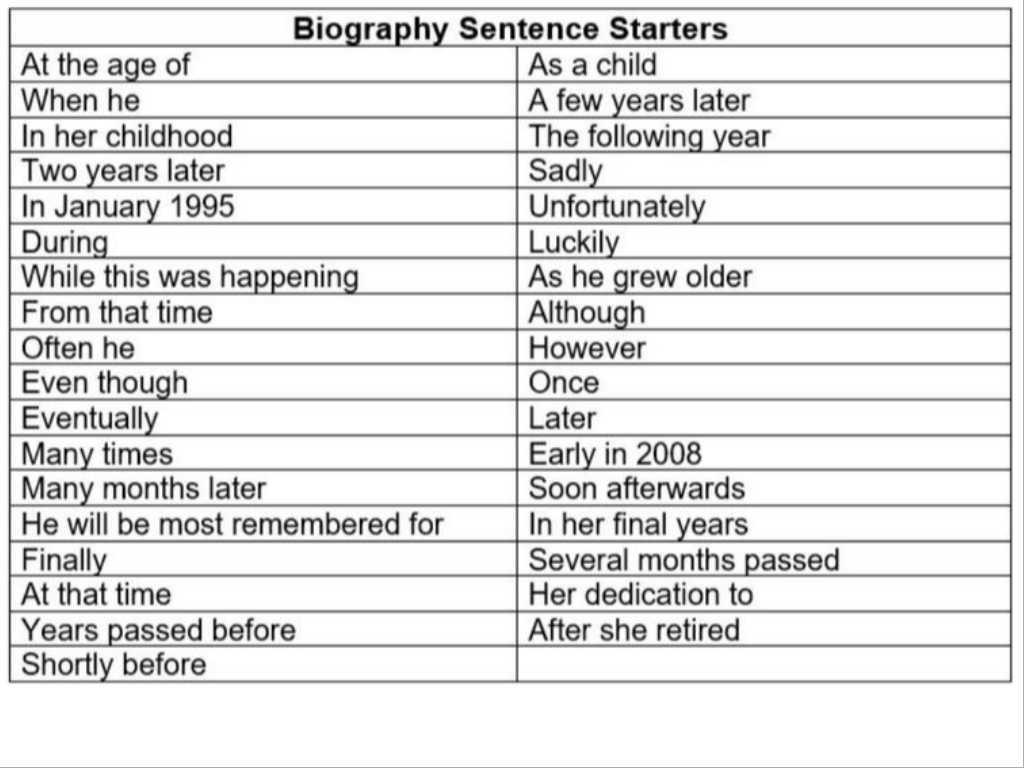
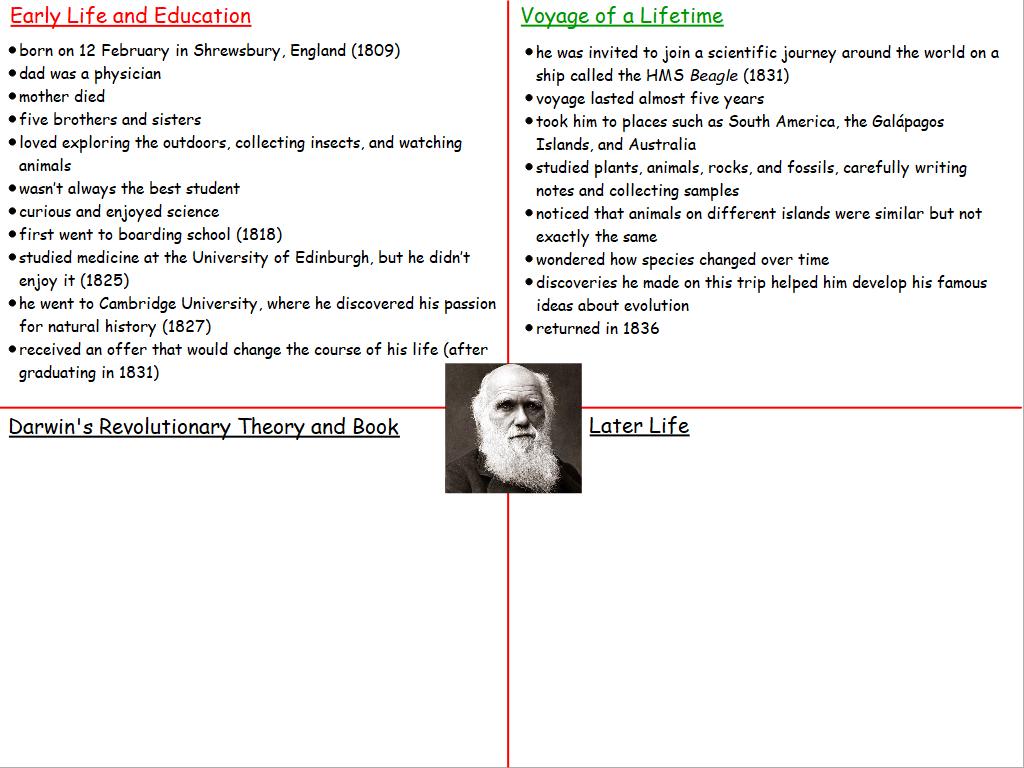
LC: To write paragraph two using cohesive devices.

24.11.25
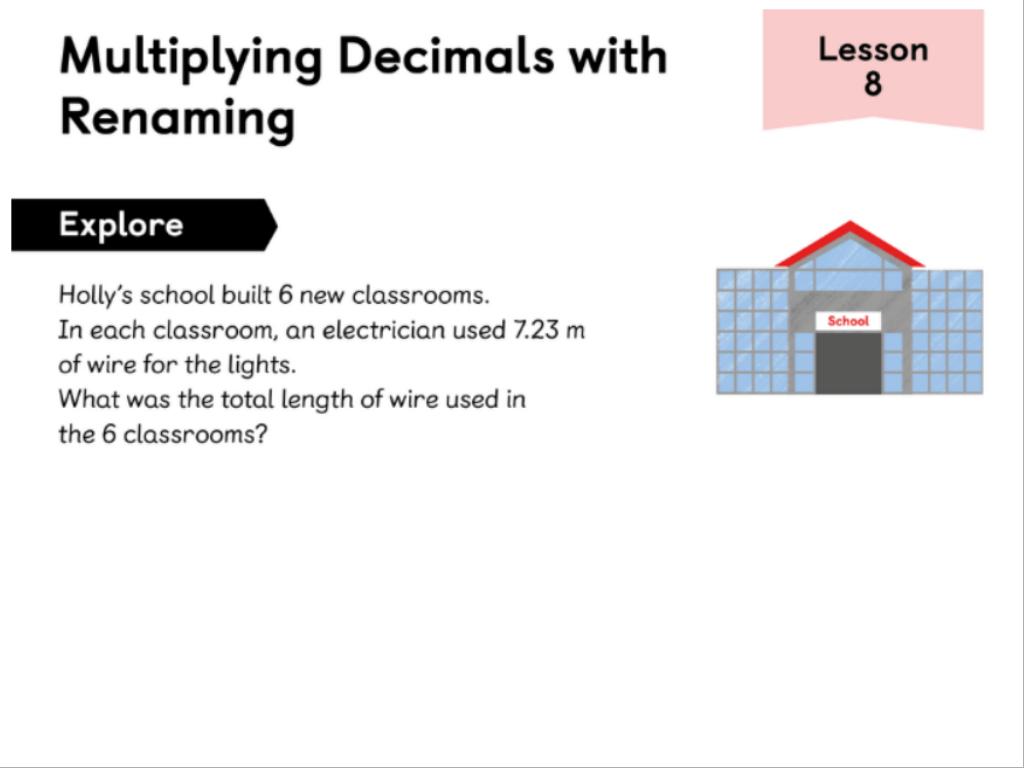
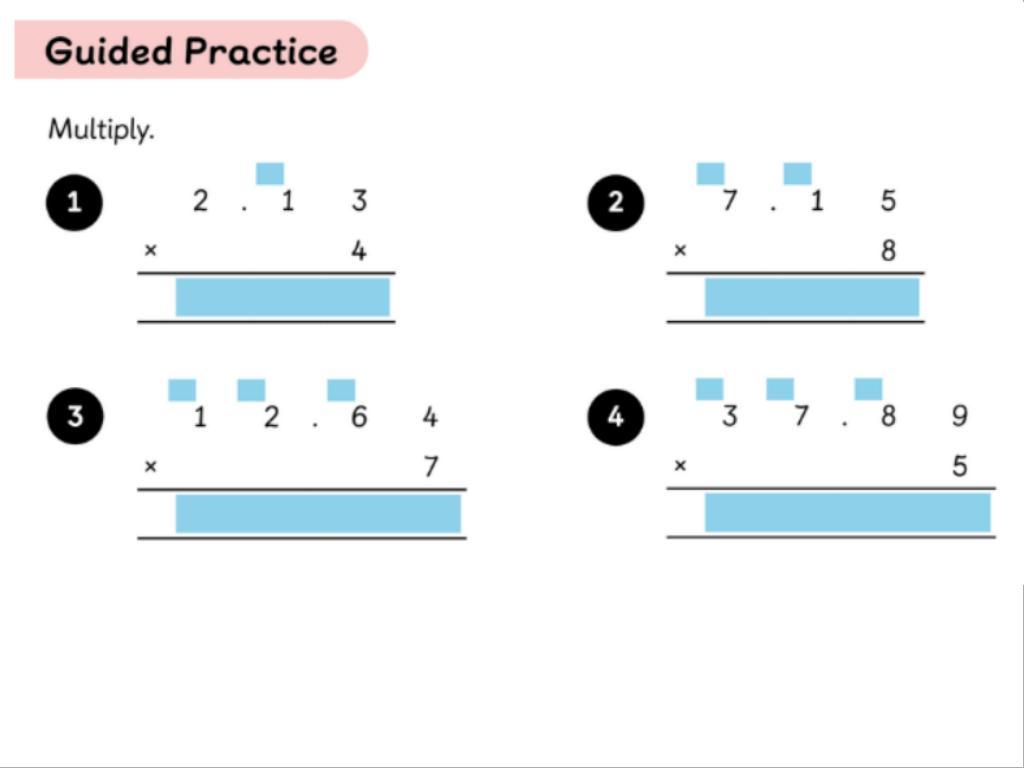
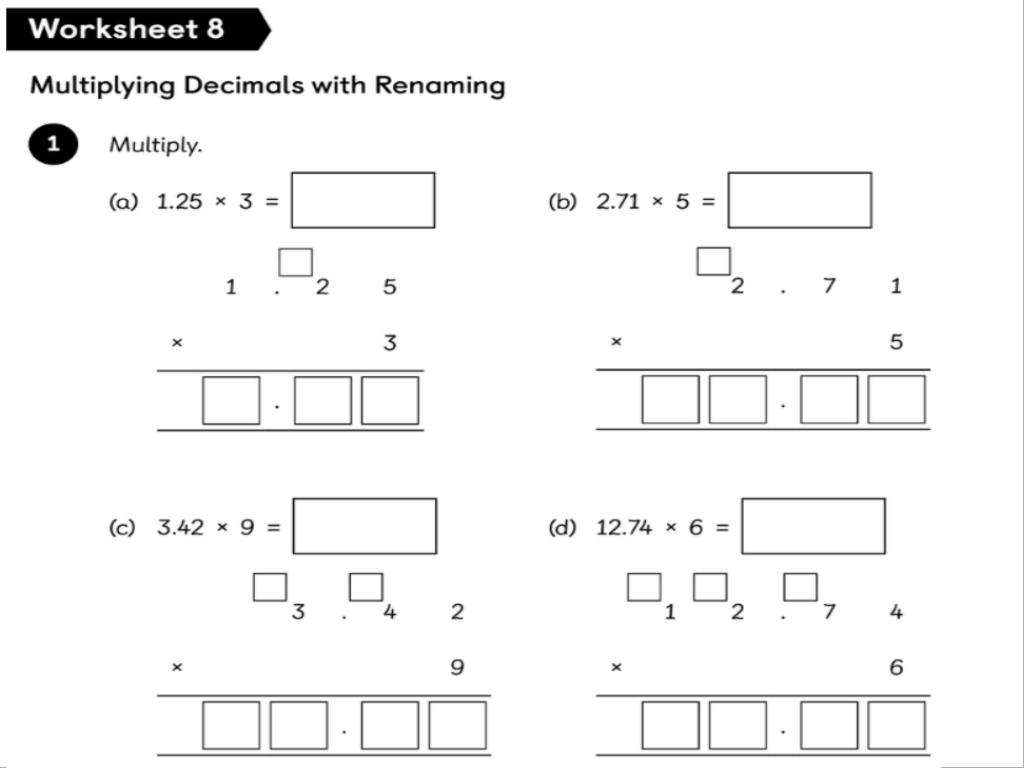
LC: To multiply decimals with renaming


RIC
Eleanor trudged through the narrow forest path, her cloak heavy with dew. Each snap of a twig underfoot made her flinch, and she clutched her satchel tightly, as though it might protect her from the shadows lurking between the trees. Her eyes darted nervously, scanning the twisted branches for any sign of movement, but the forest remained silent, except for the occasional rustle of leaves. Despite the fear that gnawed at her, Eleanor’s jaw set firmly—she would not turn back now.
1. Retrieval - What did Eleanor clutch tightly as she walked through the forest?
2. Inference - Why do you think Eleanor’s jaw “set firmly” despite her fear?
3. Writer’s Choice - Why do you think the author describes the branches as “twisted” and the forest as having “shadows lurking”? How does this choice affect the mood?
Monday 24th November
Comprehension: Victorian Workhouses
In Victorian England, workhouses were institutions designed to house people who were very poor. Life in a workhouse was extremely strict. Families were often separated: men, women, and children had to live apart. Children sometimes slept in dormitories with dozens of other children, while adults worked long hours doing physically demanding tasks.

The work itself was exhausting. Men might break stones for hours, women often cleaned or laboured in the kitchens, and children were sometimes forced to pick oakum—teasing apart old ropes to prepare them for reuse. The food was simple and unappetizing: gruel, bread, and vegetables. There was no meat, and portions were small.
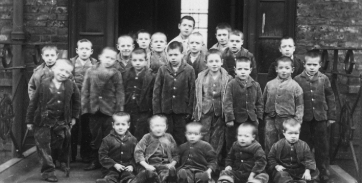
Discipline in the workhouse was harsh. Any misbehaviour, no matter how minor, could result in punishment. Workhouse rules were intentionally strict because the authorities believed that life should be unpleasant to discourage people from becoming dependent on charity. Despite these harsh conditions, the workhouses did offer some safety. People who had nowhere else to live were provided with shelter, food, and basic care, which could be lifesaving in times of extreme poverty.
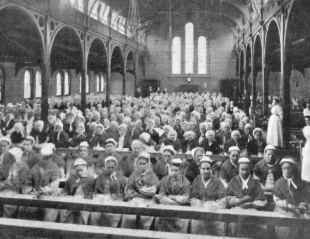
Children often learned practical skills and work habits in the workhouse, but the environment could be grim and lonely. Adults endured repetitive, exhausting tasks daily, and the lack of freedom made life difficult. Yet, for some families, the workhouse remained the only place to survive during hard times.
Questions: Point and Evidence
1. What was the purpose of the workhouse according to the authorities? Give evidence from the text.
2. How were families treated in the workhouse? Give evidence from the text.
3. What types of work did men, women, and children do? Give evidence from the text.
4. Why were the rules and discipline so strict? Give evidence from the text.
5. What were the benefits of living in a workhouse, despite the harsh conditions? Give evidence from the text.

Monday 24th November
LC: To explain how Christian beliefs, teachings, and values link across the key sacraments.
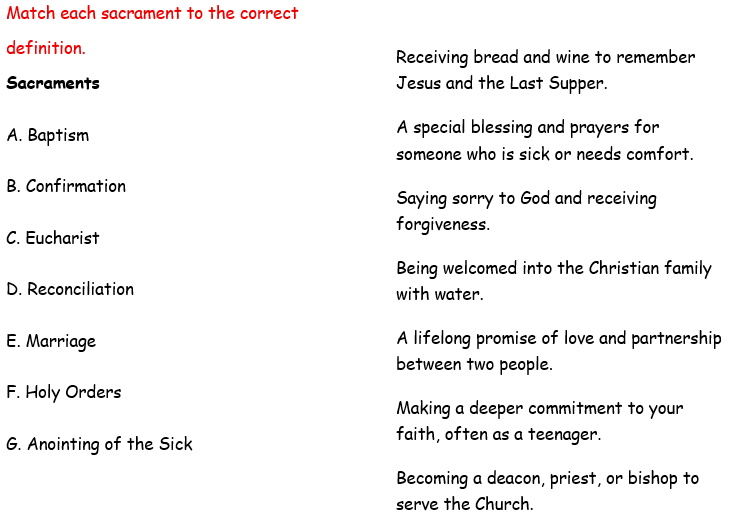
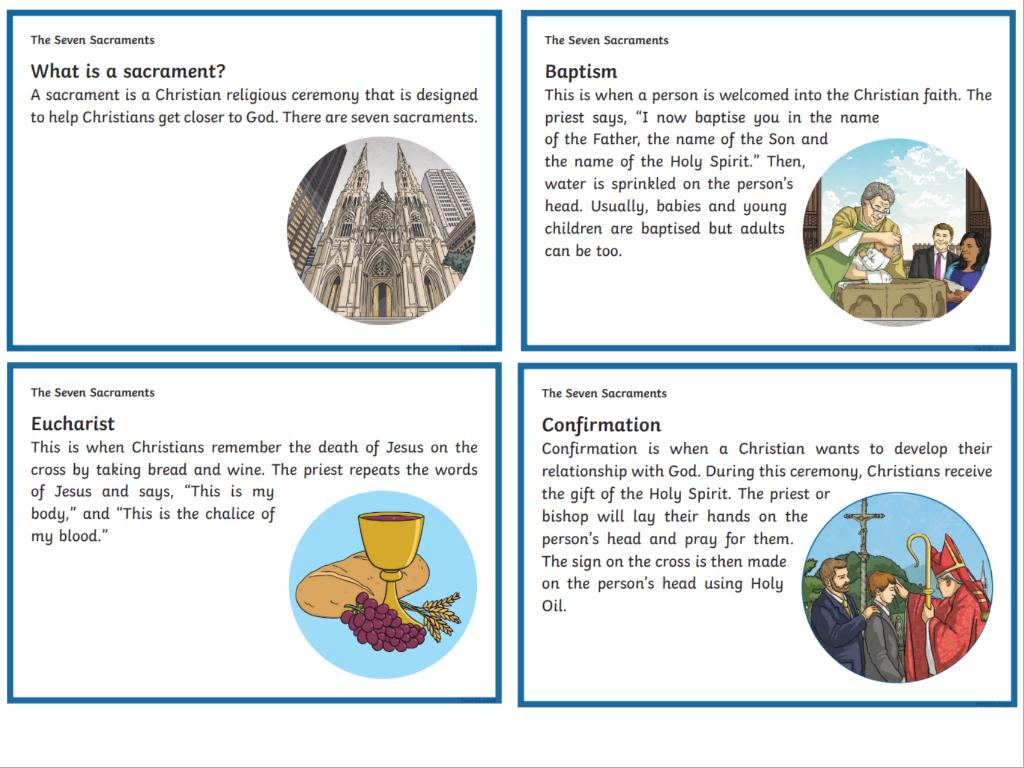
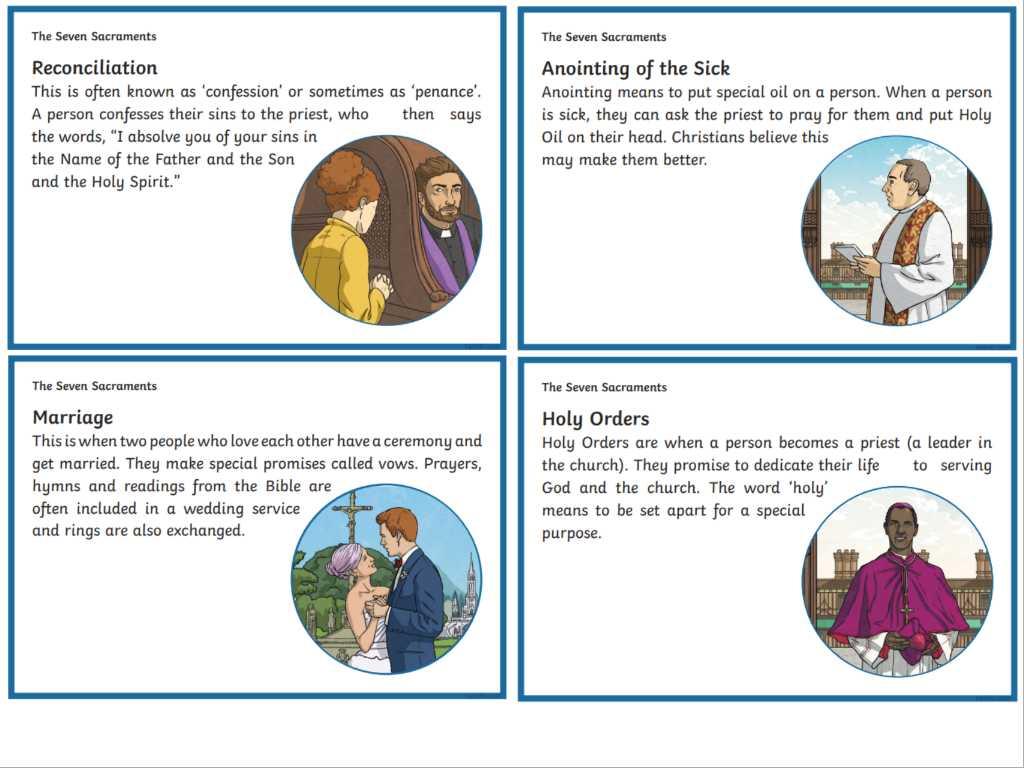
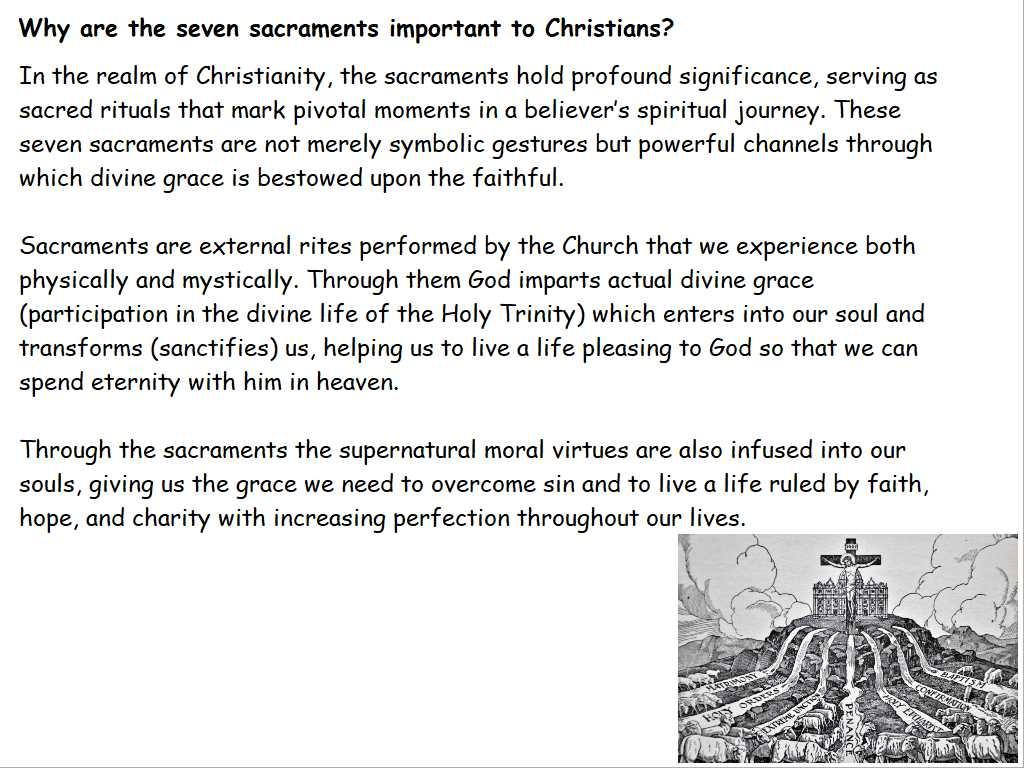
Christians believe that sacraments are special moments when God is especially close. Each sacrament celebrates an important part of life and teaches Christians how to live in a way that reflects Jesus’ example.
1. Baptism
Belief: God welcomes a person into His family.
Teaching: Jesus was baptised and told his followers to baptise others.
Values: Belonging, new beginnings, community.
➡ Shows Christians that everyone is precious and welcome
2. Confirmation
Belief: The Holy Spirit strengthens a Christian’s faith.
Teaching: The disciples received the Holy Spirit at Pentecost.
Values: Commitment, courage, faithfulness.
➡ Encourages Christians to live bravely and follow Jesus.
3. Eucharist (Holy Communion)
Belief: Jesus is present in a special way in the bread and wine.
Teaching: Jesus shared the Last Supper and said, “Do this in memory of me.”
Values: Thankfulness, unity, remembrance.
➡ Reminds Christians to be grateful and care for each other.
4. Reconciliation (Confession)
Belief: God forgives those who are truly sorry.
Teaching: Jesus forgave people and taught others to do the same.
Values: Forgiveness, honesty, peace.
➡ Helps Christians repair relationships and start again.
5. Marriage
Belief: God blesses the loving partnership between two people.
Teaching: Jesus taught about love, commitment, and faithfulness.
Values: Love, trust, loyalty.
➡ Shows Christians how to build strong, caring relationships.
6. Holy Orders
Belief: Some people are called by God to serve the Church.
Teaching: Jesus chose disciples to continue his mission.
Values: Service, leadership, responsibility.
➡ Encourages Christians to help others and put their needs first.
7. Anointing of the Sick
Belief: God brings strength, peace, and healing.
Teaching: Jesus cared for the sick and comforted those in need.
Values: Compassion, hope, care.
➡ Reminds Christians to support people who are struggling.
Summary
Across all seven sacraments, Christians learn to:
-
Follow Jesus’ example
-
Show God’s love to others
-
Belong to a caring community
-
Live with kindness, forgiveness, and faith
-
Recognise important moments in life as gifts from God
Each sacrament connects Christian beliefs (what they believe about God), teachings (what Jesus taught), and values (how Christians should live).
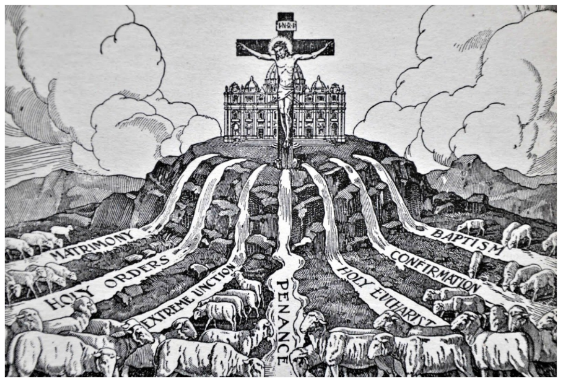
How do Christian Beliefs, Teachings, and Values Link Across the Seven Sacraments?
Christians believe that the seven sacraments are special moments when God is close and helps guide them through life. Together, the sacraments...