

Monday
Question of the day: How many minutes are there in one full week?

Monday 19th October
Match each word to the correct definition.
|
Word |
Definition |
|---|---|
|
1. Stowing |
_____ |
|
2. Entirely |
_____ |
|
3. Flicked |
_____ |
|
4. Flushed |
_____ |
|
5. Scrambled |
_____ |
|
6. Melted |
_____ |
|
7. Ruffled |
_____ |
|
8. Stormed |
_____ |
|
9. Glint |
_____ |
|
10. Fraction |
_____ |
Mixed-up definitions
A. A quick flash or sparkle of light in someone's eyes.
B. Moved quickly and angrily, showing annoyance.
C. Became red in the face, often because of embarrassment or anger.
D. A very small amount or a tiny part of something; a little gap.
E. Messed up or disturbed something, such as someone's hair or feathers.
F. Moved suddenly and quickly, especially when getting up onto one's feet.
G. Put something away carefully, usually in a particular place.
H. Moved the eyes quickly in a particular direction.
I. Sank down or settled gently into a seat.
J. Completely or fully, with nothing missing.
Sentences to support your understanding of the words
1. Stowing: Oliver was stowing his books carefully inside his backpack before leaving the classroom.
2. Entirely: Sophie was entirely convinced that she had heard a noise coming from the empty room.
3. Flicked: Daniel flicked his eyes towards the doorway when he heard someone quietly enter the room.
4. Flushed: Amelia's face flushed bright red when she realised that everyone was looking at her.
5. Scrambled: As soon as the bell rang, Jack scrambled to his feet and rushed towards the door.
6. Melted: Exhausted after the long journey, Dad melted into the soft armchair and closed his eyes.
7. Ruffled: The strong wind ruffled Mia's hair, blowing it in every direction.
8. Stormed: Furious about the unfair decision, Ben stormed out of the room without saying a word.
9. Glint: A mischievous glint appeared in Harry's eyes as he planned his next practical joke.
10. Fraction: Through a tiny fraction of the gap beneath the door, Ella could just make out a thin line of light.
Monday 19th October
LC: To identify and use the structural and language features of a discussion text.
Discussion or persuasion?
TEXT A
Should pupils have homework?
Homework allows children to practise important skills at home. However, it can reduce the time they spend with family and enjoying hobbies.
TEXT B
Why homework should be banned
Homework should be banned immediately! It places unnecessary pressure on children and prevents them from enjoying their free time.
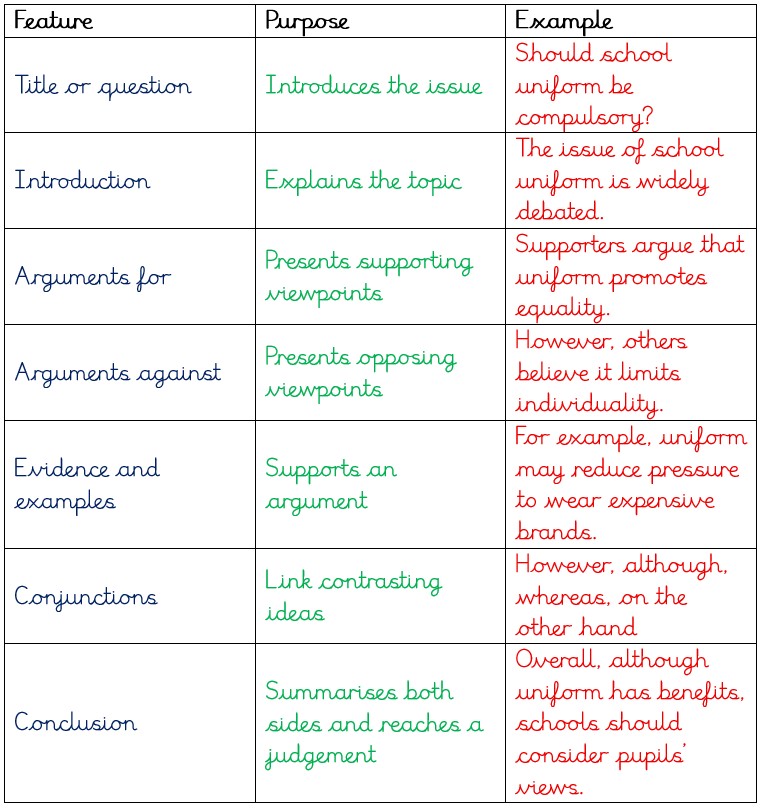
A discussion text explores different viewpoints in a balanced way before reaching a conclusion.
A persuasive text mainly attempts to convince the reader of a particular opinion.
Language features
Writers use specific language to present viewpoints clearly and fairly.
Modal verbs
Show possibility or strength of opinion.
Examples: might, could, should, must
Schools should provide more opportunities for outdoor learning.
Contrastive conjunctions and connectives
Introduce opposing viewpoints.
Examples: however, although, nevertheless, on the other hand
Although homework reinforces learning, it can reduce family time.
Impersonal and formal language
Creates a measured, reasoned tone.
Examples: it could be argued that, research suggests, supporters believe
It could be argued that school uniform promotes a sense of belonging.
Balanced viewpoints
Acknowledge more than one side of the issue.
On one hand, school uniform can promote equality. On the other hand, it may restrict individuality.
Discussion texts do not need to use lots of emotive language. Unlike persuasive writing, they should generally present arguments fairly and objectively.
Identify the features
Identify the structural and language features.
Should mobile phones be banned in schools?The question of whether mobile phones should be banned in schools is widely debated.
On one hand, supporters argue that phones can distract pupils from their learning. Furthermore, banning phones could reduce opportunities for cyberbullying during the school day.
On the other hand, some people believe that phones can be useful educational tools. For example, pupils may use them to access information and support their learning. They may also provide a way for families to contact children in an emergency.
Overall, although mobile phones can have educational benefits, schools should establish clear rules to ensure they are used responsibly.
In the text above, can you find:
-
The opening statement introducing the debate.
-
Two arguments supporting a ban.
-
Two arguments against a ban.
-
Three conjunctions.
-
Two modal verbs.
-
The conclusion and the writer’s final judgement.
19.10.26
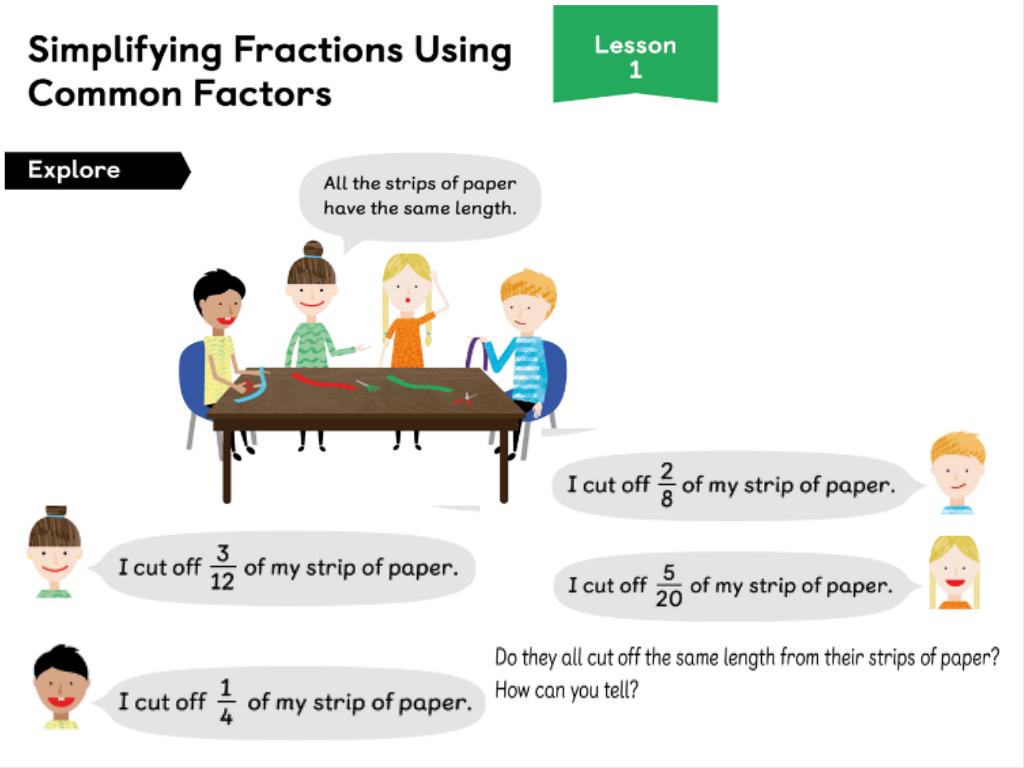
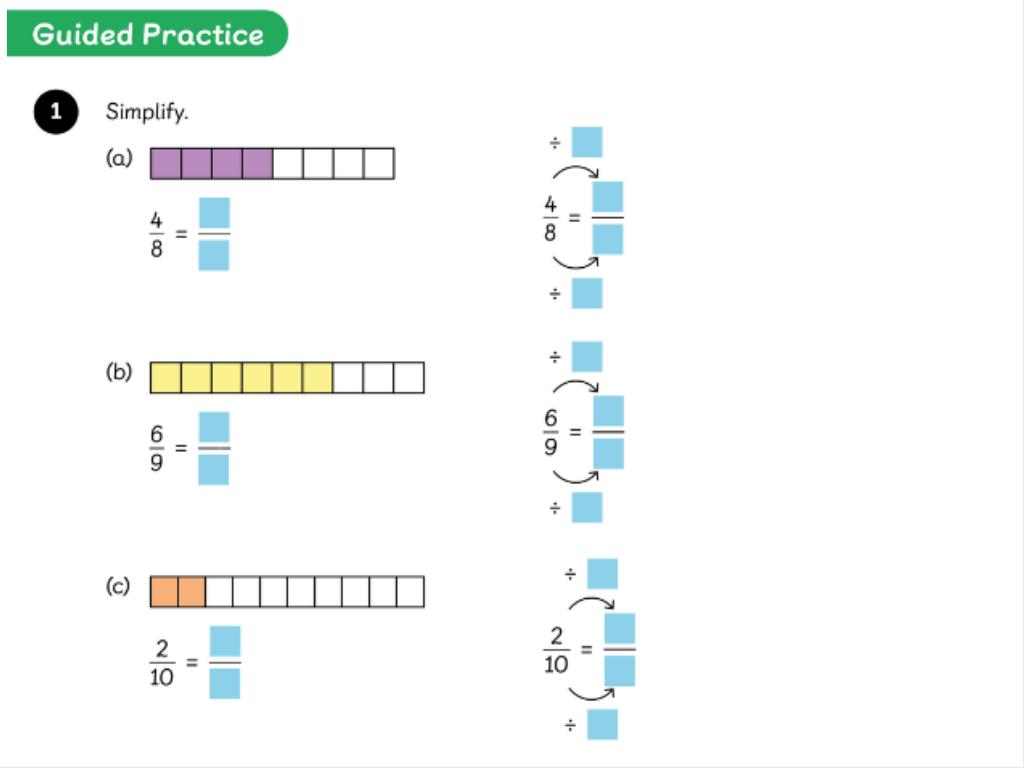
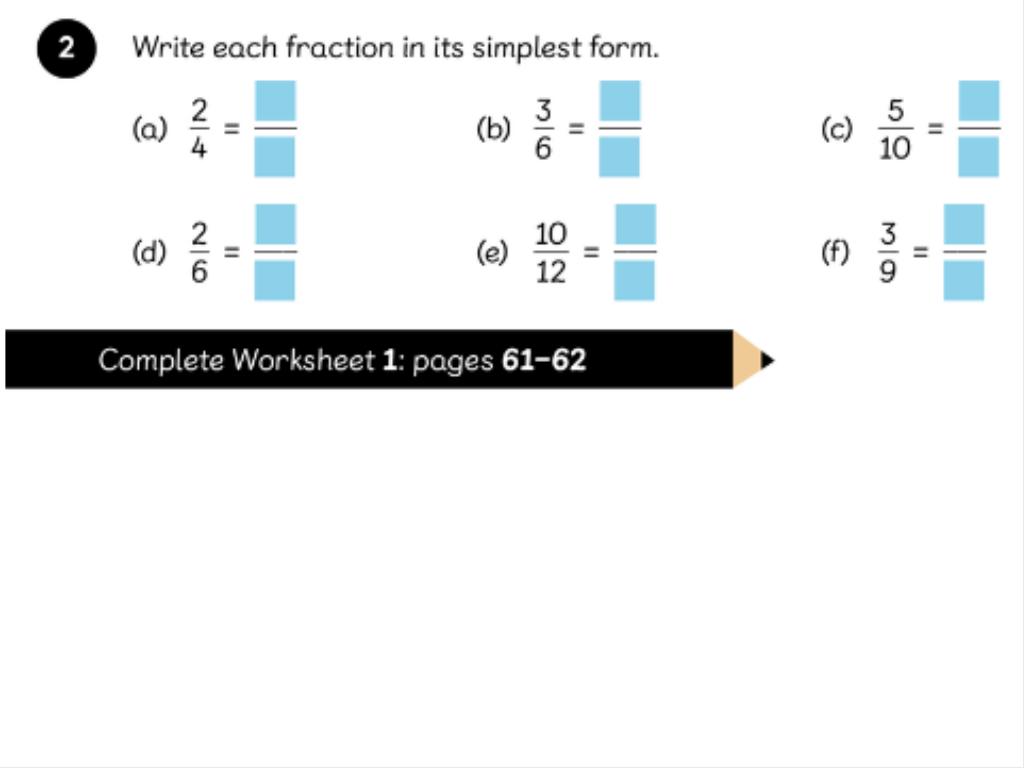
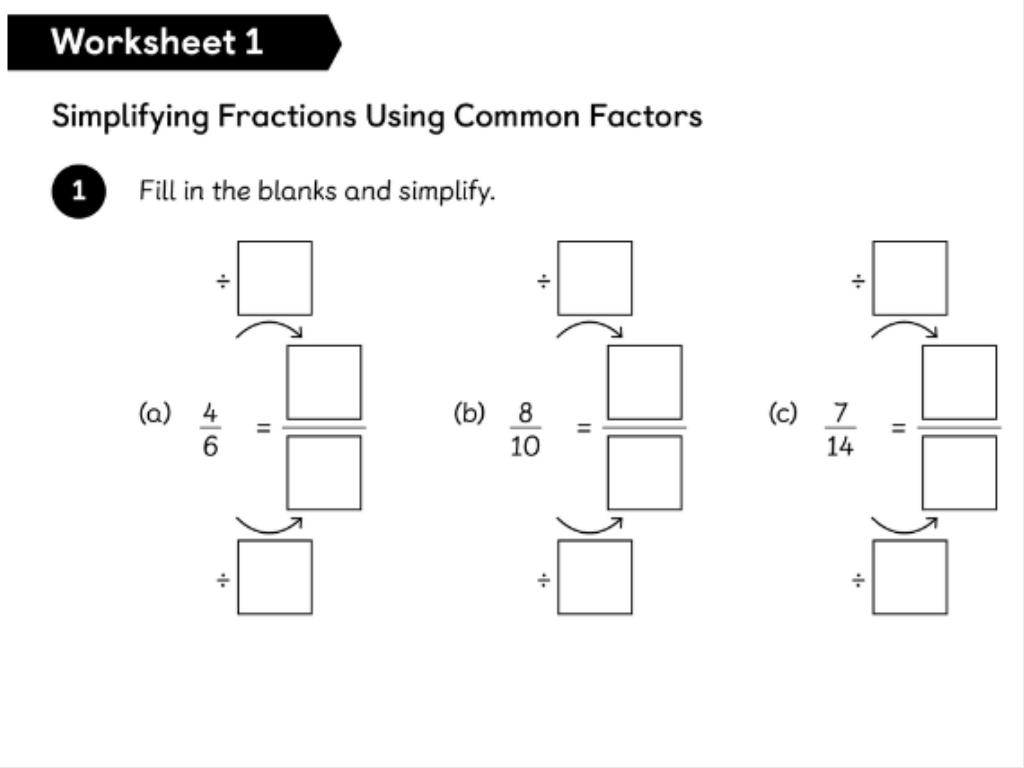
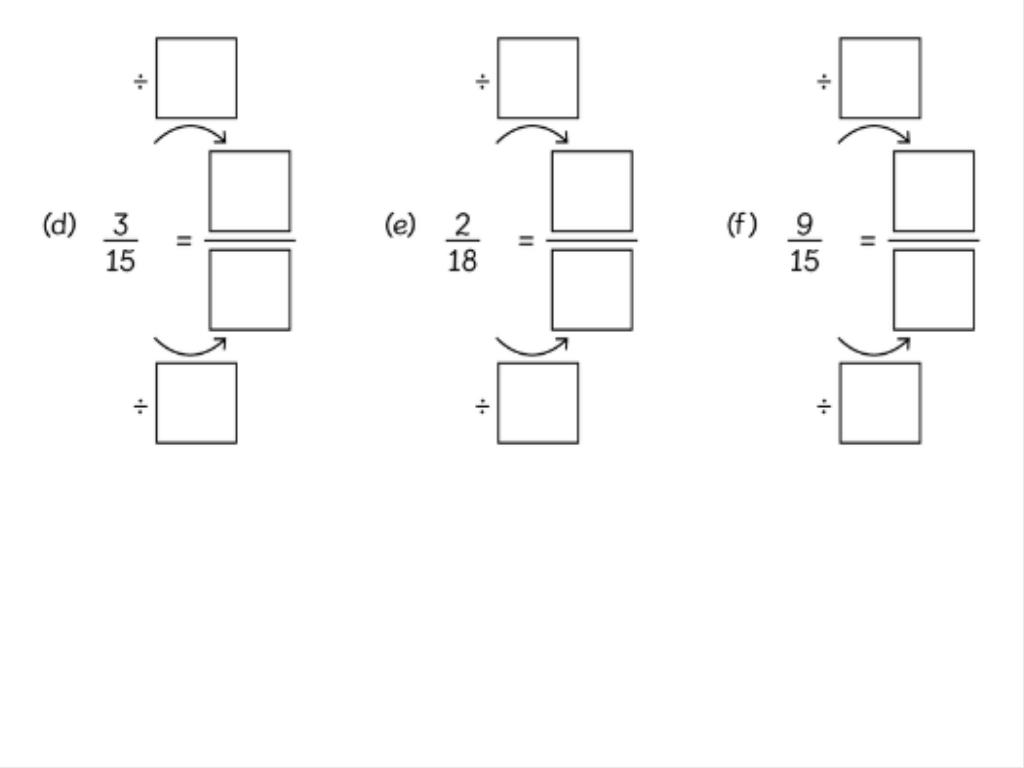
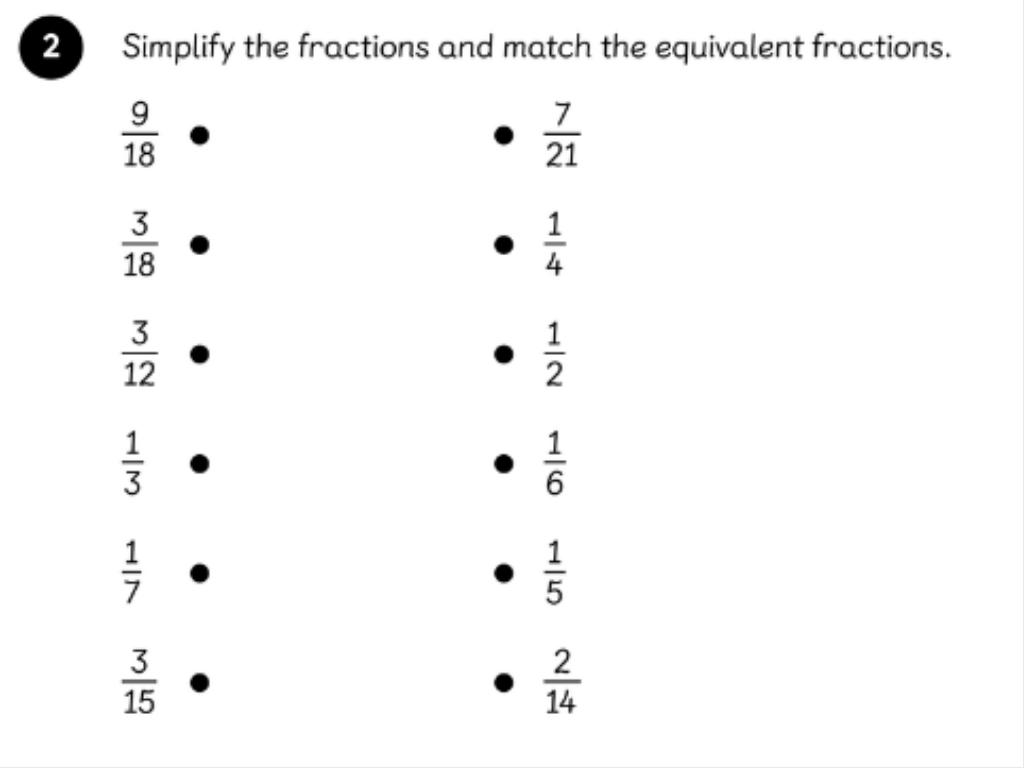
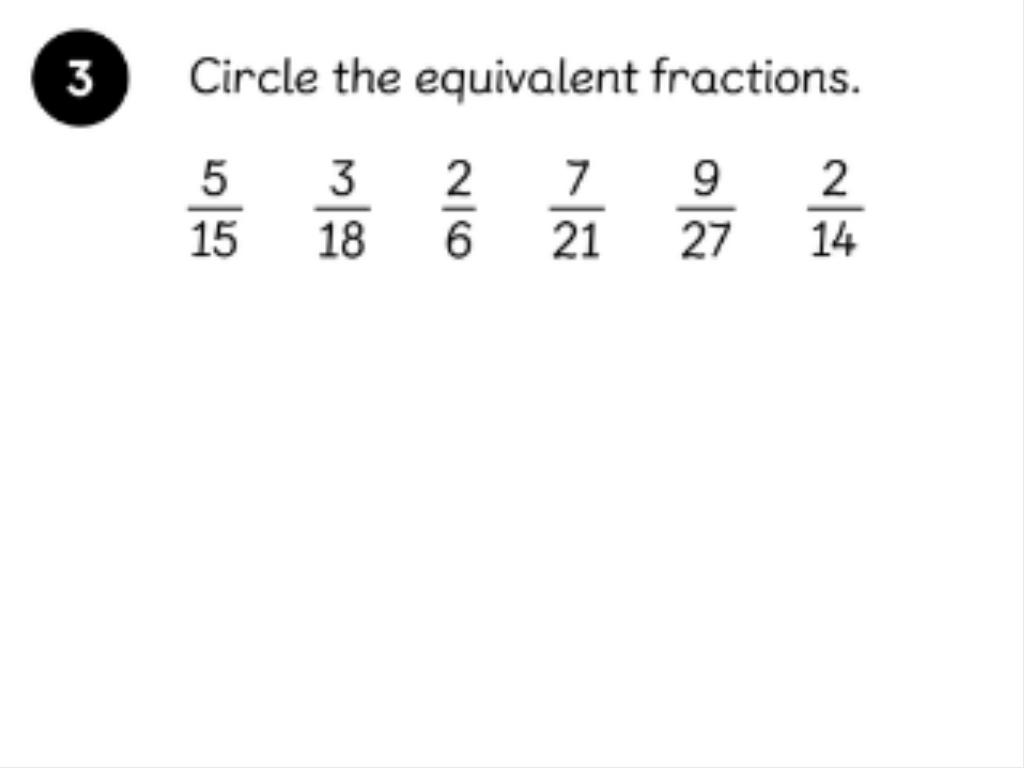
LC: To simplify fractions using common factors
RIC
The sun blazed down on the endless desert, turning the golden sand into a shimmering sea. Ahmed pulled his scarf tightly around his face as the hot wind whipped grains of sand into his eyes. In the distance, a cluster of palm trees stood beside a small pool of water. He quickened his pace, hoping the oasis would provide the shelter and refreshment he desperately needed. Behind him, his footprints were already disappearing beneath the shifting dunes.
Questions
1. Retrieval: What stood beside the small pool of water?
2. Inference: How do you know Ahmed is struggling with the desert conditions? Use evidence from the text.
3. Writer’s Intent: Why has the writer described the sand as “a shimmering sea”? What effect does this have on the reader?
Monday 19th October
LC: to use context clues to define unfamiliar vocabulary

She hesitated before stepping inside. The air was musty, and a thin layer of dust covered the narrow staircase. Above her, a faint flickering light illuminated the walls, casting enormous, distorted shadows that seemed to dance whenever the wind howled through the broken windows.
Despite her growing apprehension, Eleanor continued upwards. At the top, she discovered a small wooden table covered in scattered papers. Some were illegible, their ink blurred by moisture, while others contained strange symbols and hurried notes. One page, however, was remarkably pristine, as though it had been placed there only moments before.
Suddenly, a piercing sound echoed through the tower. Eleanor spun around, her heart pounding. Beyond the glass, the sea churned ferociously, sending waves crashing against the rocks below. Yet the noise had not come from the ocean. It had come from somewhere inside the lighthouse.
She tightened her grip on the mysterious page and peered into the darkness. Whatever had made that sound was still there.
Task 1: Create a glossary
Read around each challenging word. Use the surrounding words and sentences to work out its meaning before checking a dictionary.
Choose at least five words. Write a definition in your own words and use the word in a new sentence.
1. ominous
Context clue: An ominous silence settled over the coastline.
Definition:
Write it in your own sentence:
2. desolate
Context clue: The desolate coastline was silent and empty.
Definition:
Write it in your own sentence:
3. crumbling
Context clue: The walls were crumbling beneath years of wind and rain.
Definition:
Write it in your own sentence:
4. musty
Context clue: The air was musty inside the old building.
Definition:
Write it in your own sentence:
5. flickering
Context clue: A flickering light illuminated the walls.
Definition:
Write it in your own sentence:
6. apprehension
Context clue: Despite her growing apprehension, Eleanor continued.
Definition:
Write it in your own sentence:
7. illegible
Context clue: The ink had blurred, making the notes illegible.
Definition:
Write it in your own sentence:
8. pristine
Context clue: One page was pristine, unlike the damaged papers.
Definition:
Write it in your own sentence:
Definitions
A: Clean, fresh and in perfect condition, with no marks or damage.
B: A feeling of worry, fear or nervousness about what might happen.
C: Giving the impression that something bad or threatening might happen.
D: Having a stale, damp or unpleasant smell, often found in old buildings.
E: Falling apart or breaking into smaller pieces, often because of age or damage.
F: Empty, lonely and lacking people or activity.
G: Moving unsteadily between being bright and dim, or on and off.
H: Impossible or very difficult to read because the writing is unclear.



Monday 19th October
LC: To understand how and why we group animals
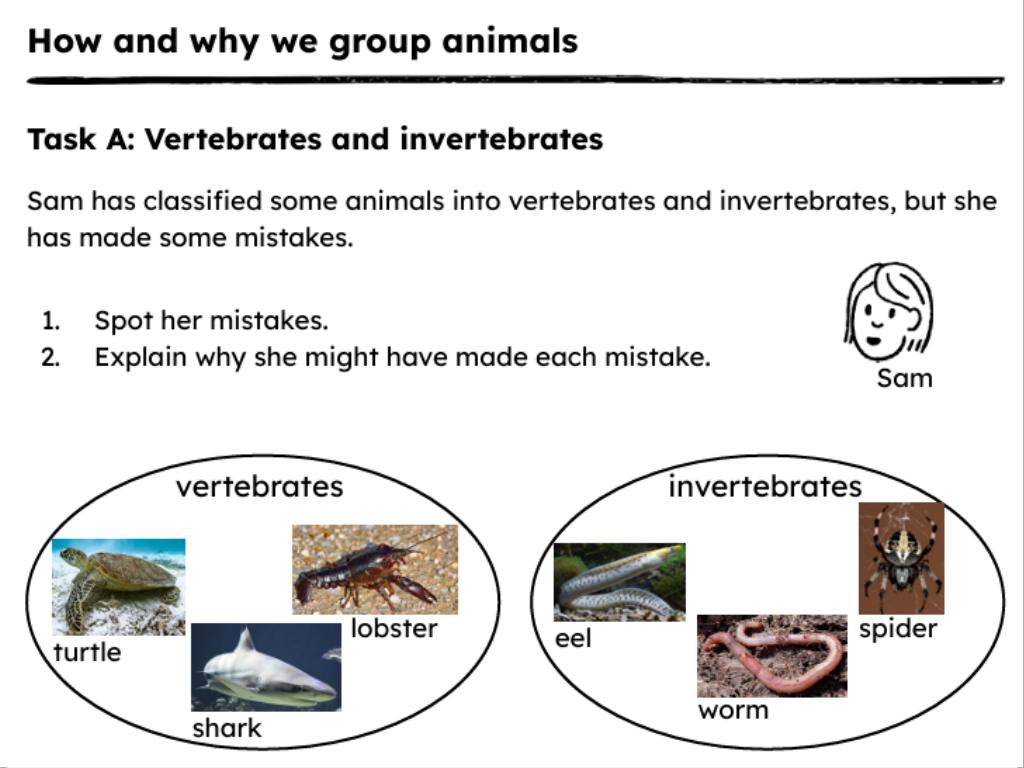
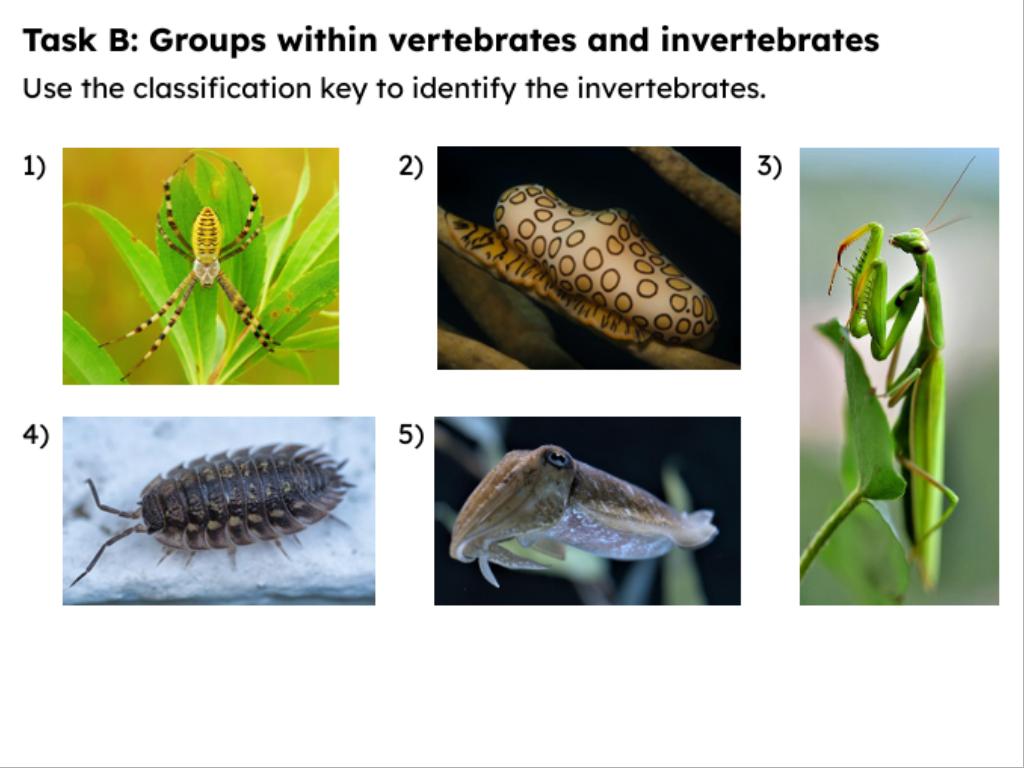
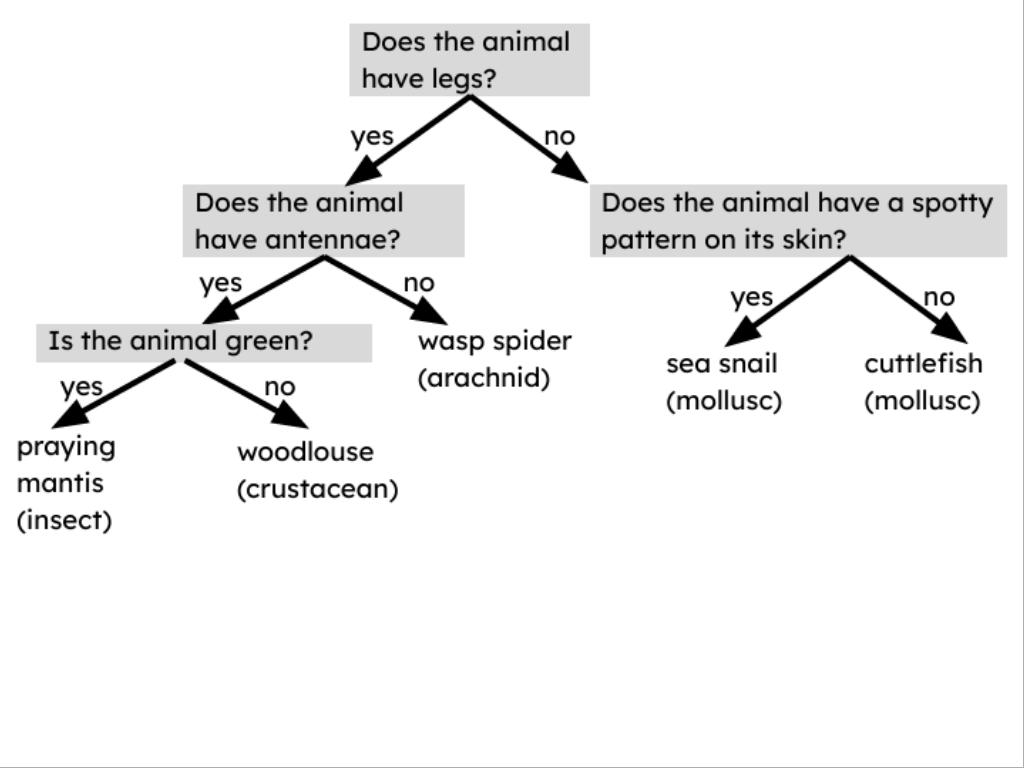
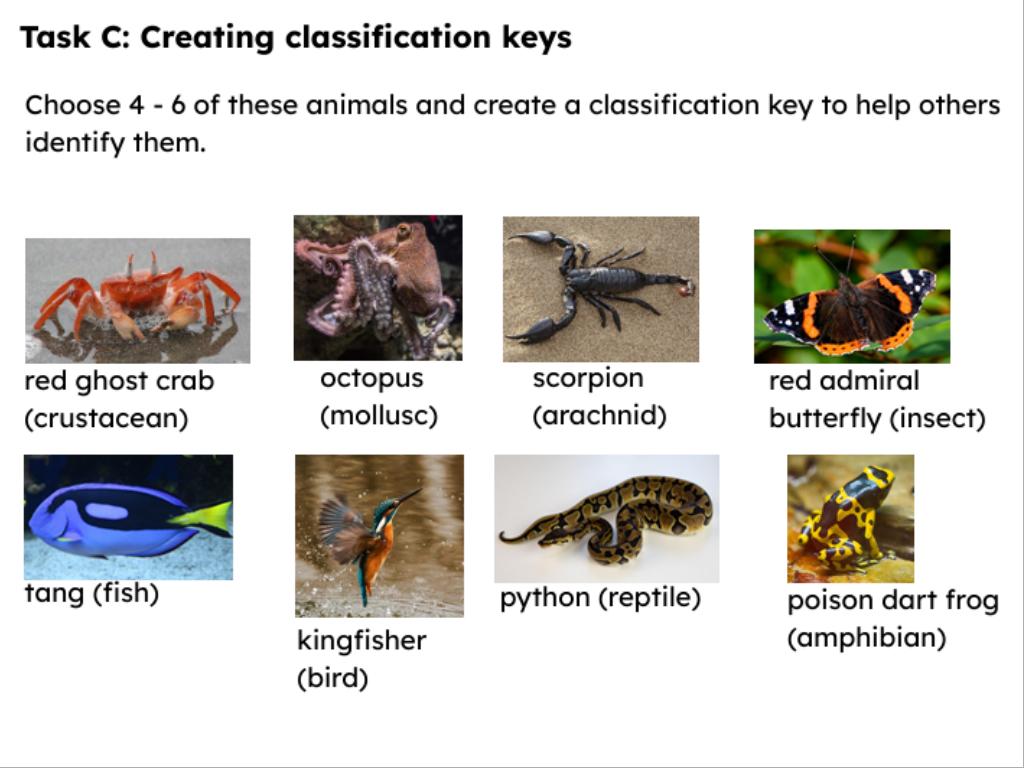
How and why we group animals