



Monday 12th January
Grammar Warm Up
LC: to identify and classify nouns with apostrophes to show belonging
Look at the sentences below where the nouns have s at the end.
Circle the nouns with s at the end.
Alice's cat is called Dinah.
My legs are sore.
The boys' football team won the cup.
Ali's car is black.
The hedgehogs were used as balls.
The teachers' staff room has a fridge.
The pot of pens fell over.
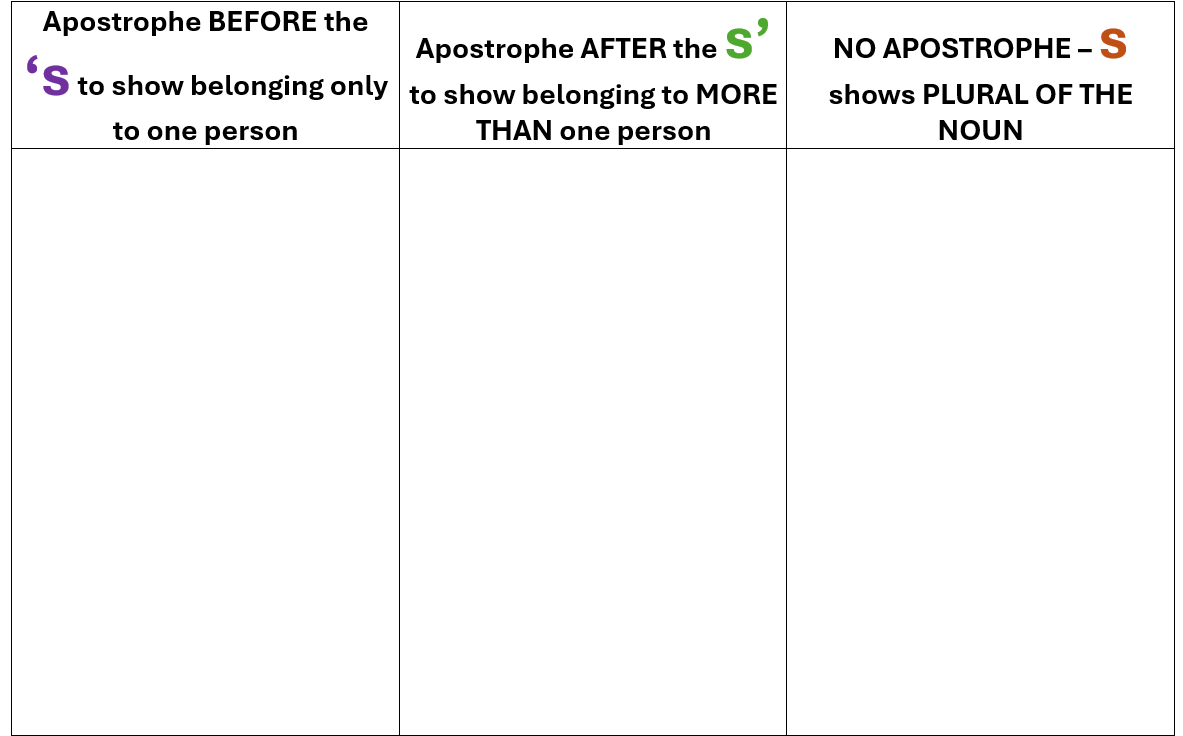
Put each noun with s into the correct part of the table.
LC: to summarise main ideas drawn from more than one paragraph and to identify key details that support this
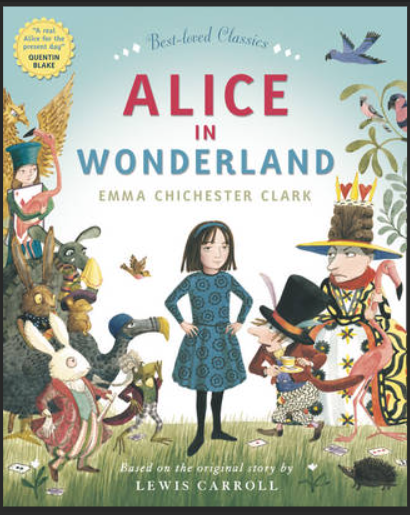
Let's read from page 38 to the end of the story.
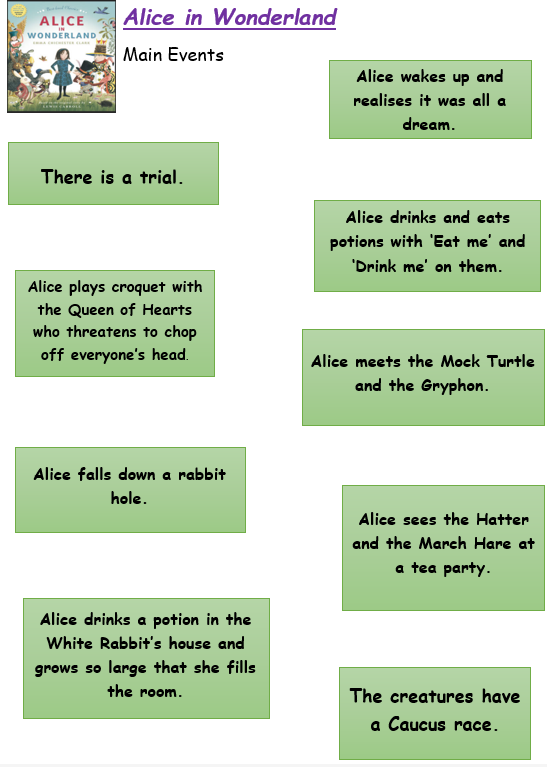
Now, put the events of the story in the correct order.
Your teacher will give you the sections to work on with your partner.
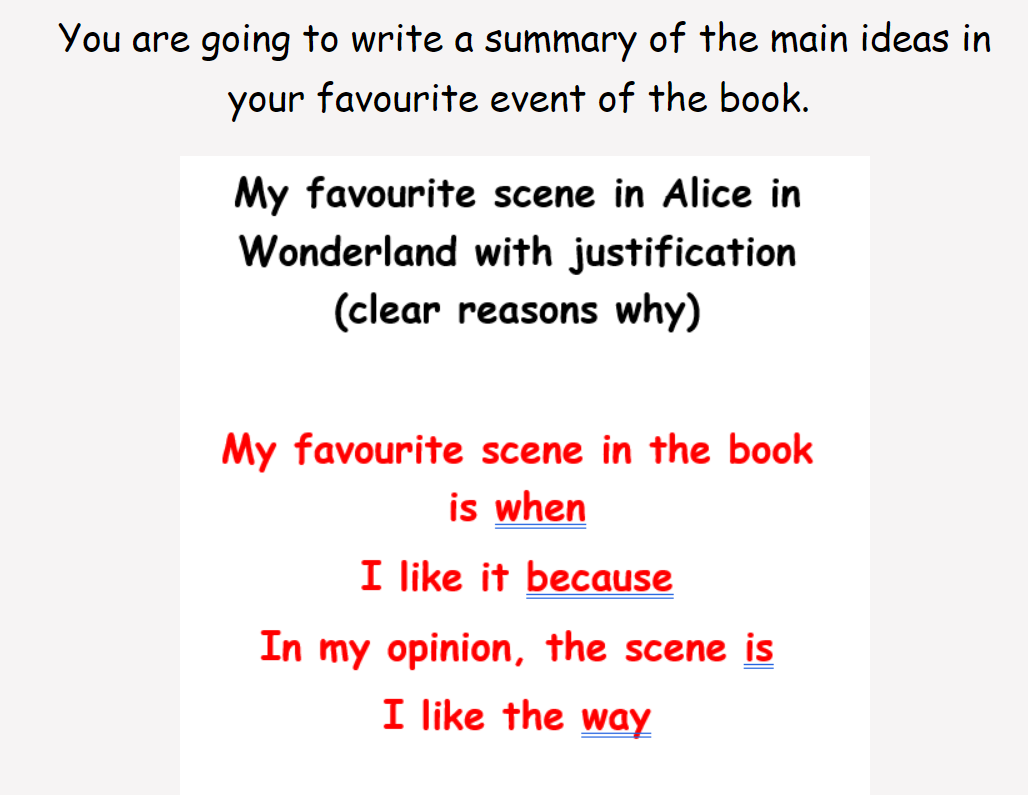
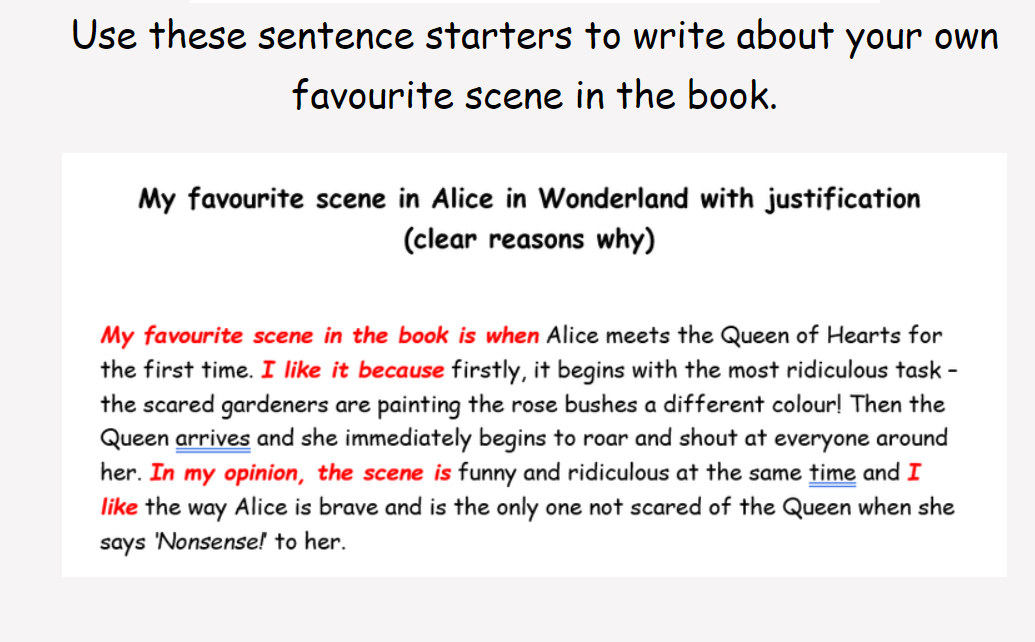
Which scene did you enjoy the most? 
Tell your partner and explain why.
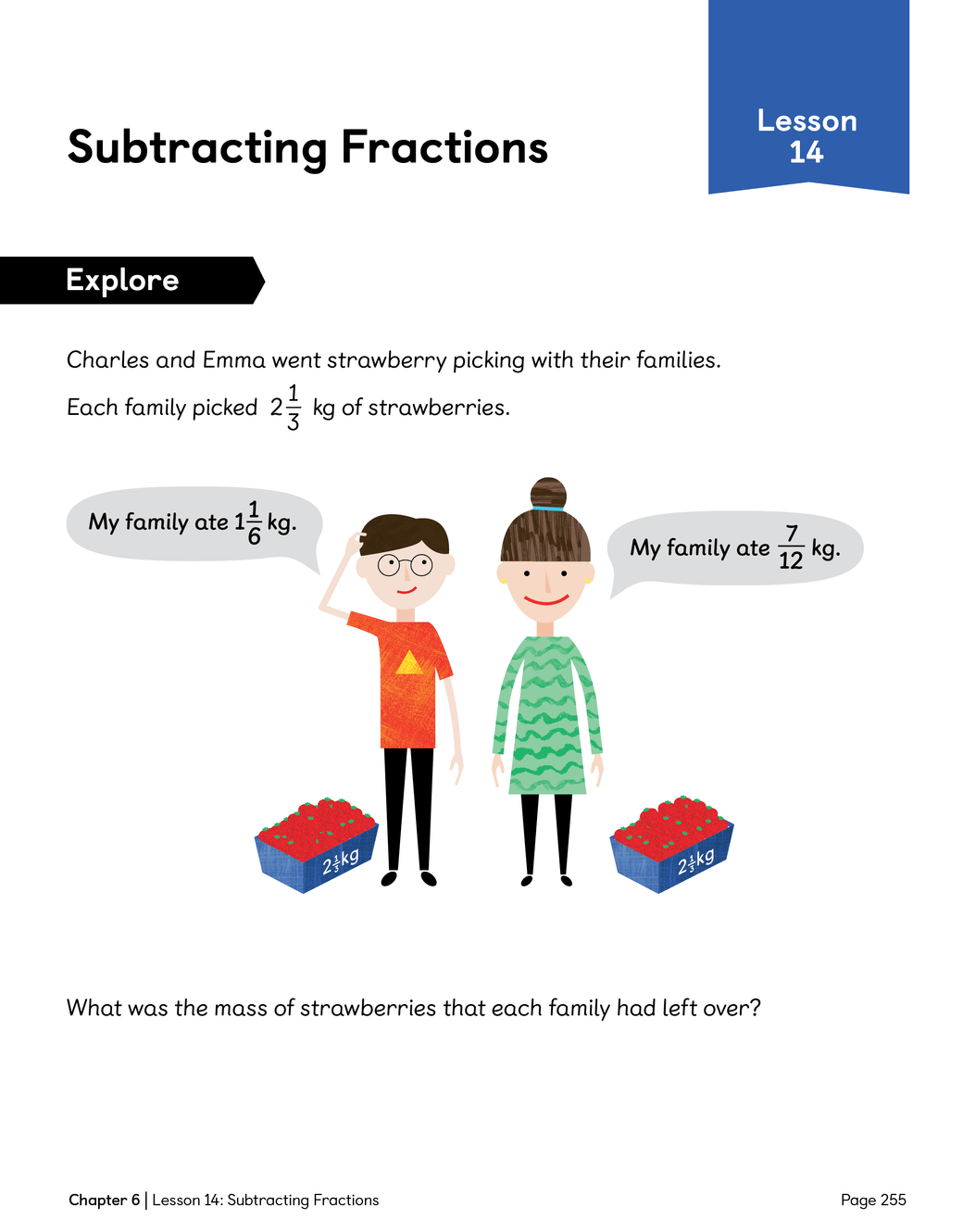
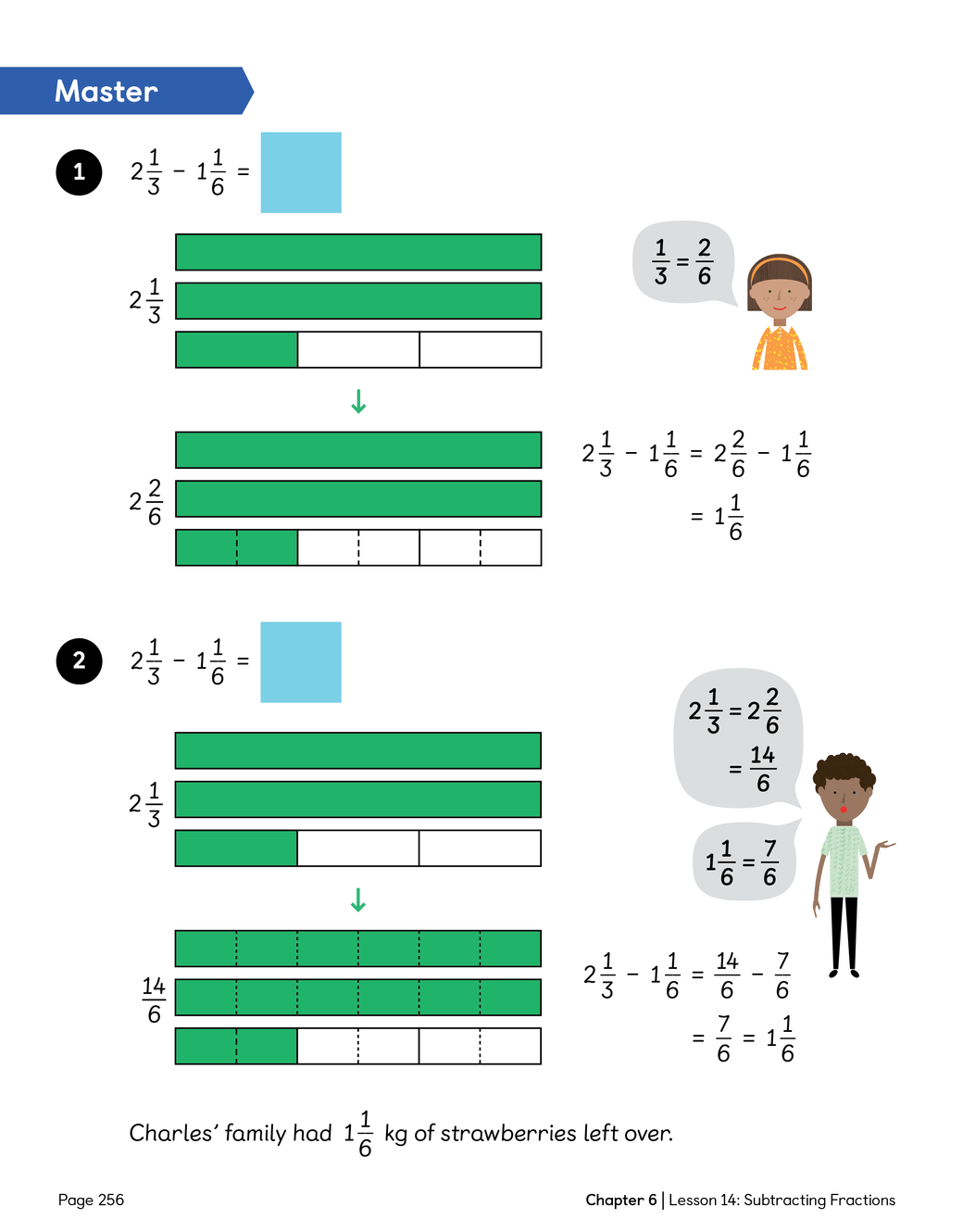
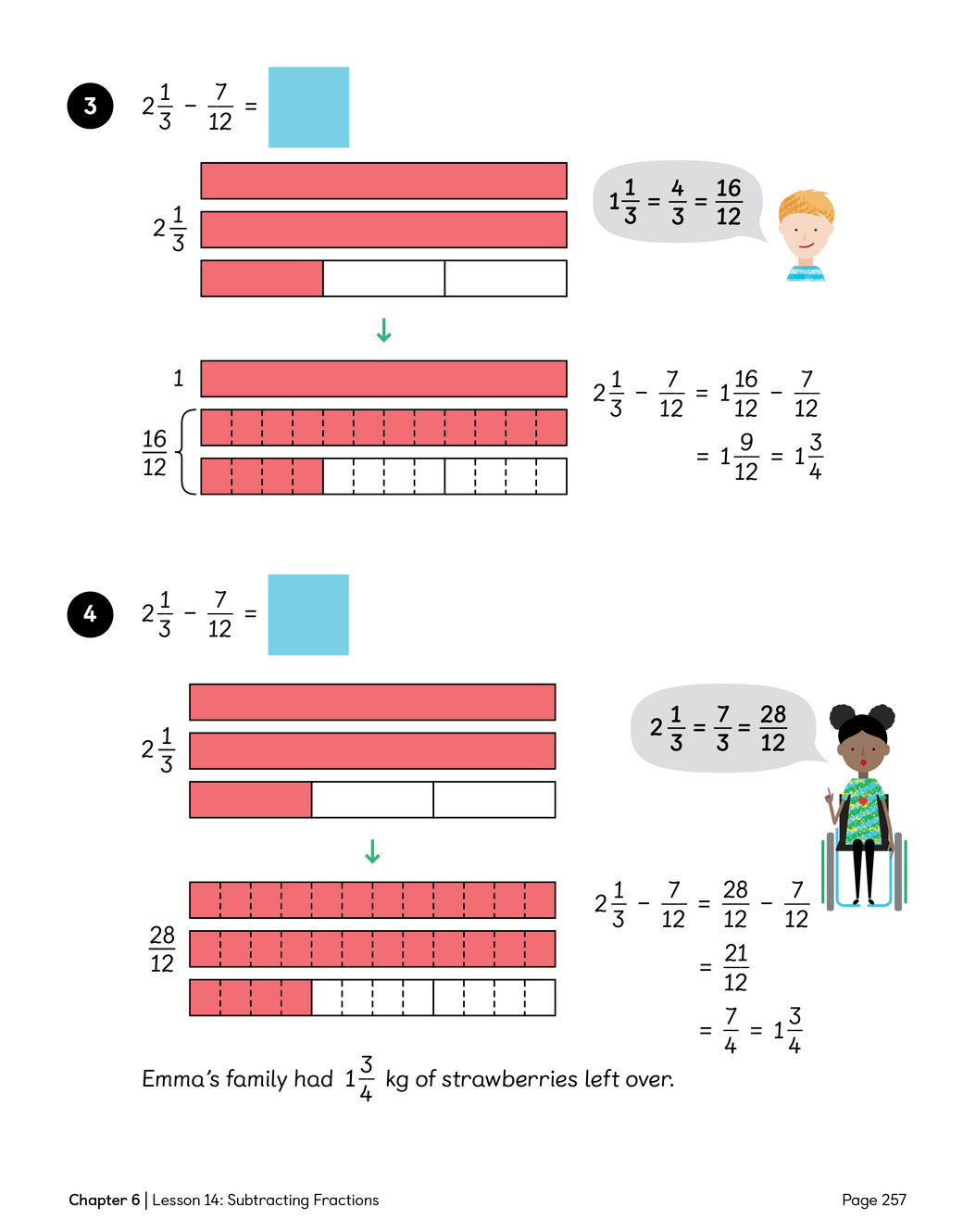
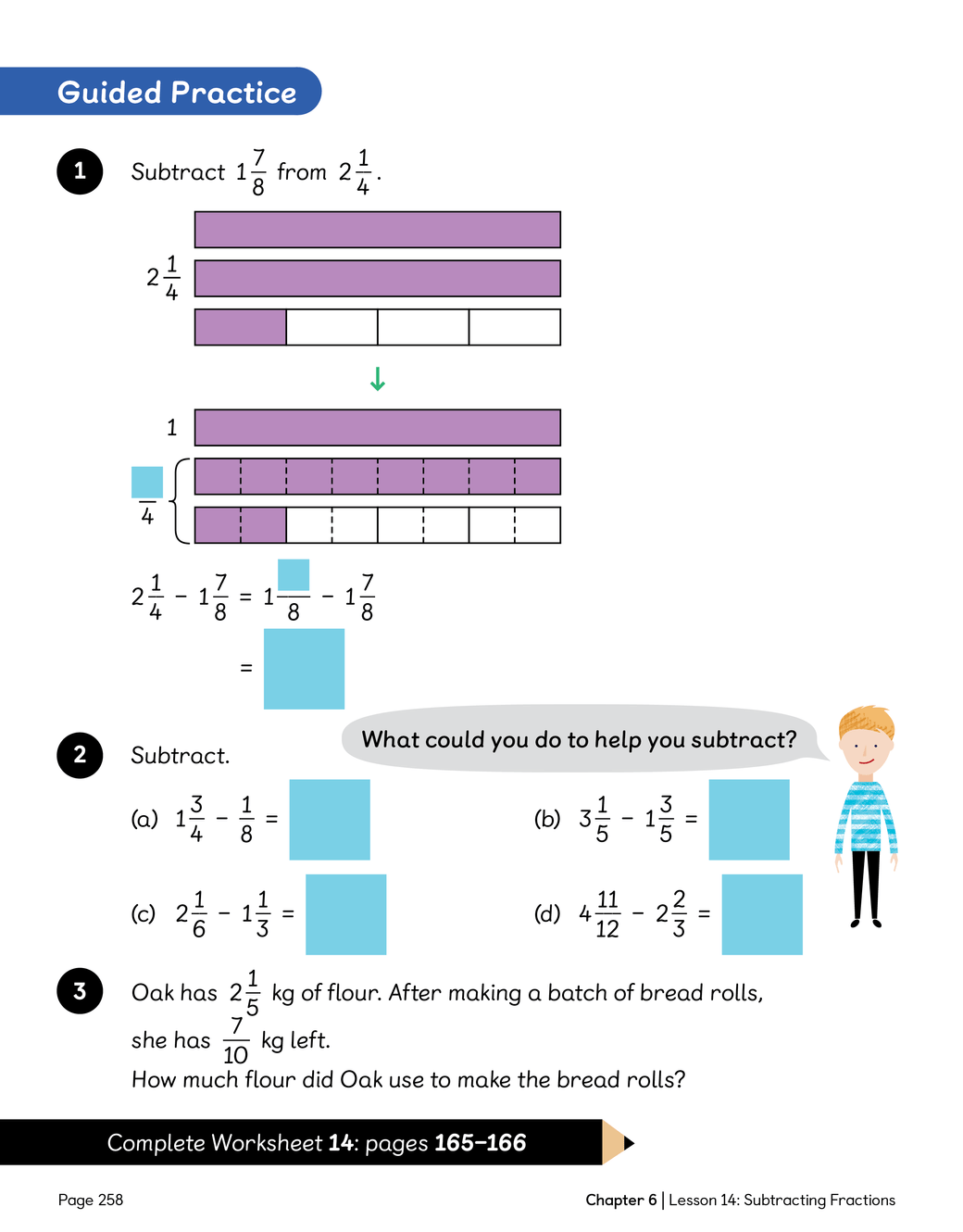
LC: To be able to subtract fractions and mixed numbers from mixed numbers with different denominators.
On Monday morning, Sam rushed into school and dropped his bag by the door. At playtime, he reached inside to get his lunch but his lunchbox was gone. Sam felt worried because his mum had packed his favourite pasta. He thought carefully about his morning. He remembered leaving the lunchbox on the kitchen table while he tied his shoes. Sam decided to check the school office in case someone had handed it in. On the way, he saw his friend Leo holding a blue lunchbox. Leo smiled and said, “Is this what you’re looking for?” Sam laughed with relief.
R- Where did Sam leave his lunchbox at home?
I-How did Sam feel when he couldn’t find his lunchbox? How do you know?
C-Why did Sam decide to go to the school office?
LC: Evaluate how authors use figurative language, considering the impact on the reader.
Can you remember what we mean by 'figurative language'?
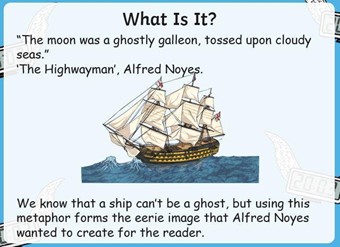
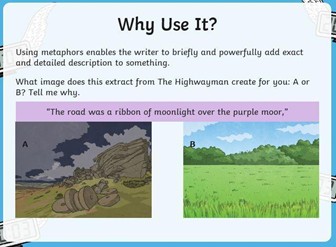
An example of this is the use of metaphors.
Metaphor is the device that compares something directly with something else in order to create a resemblance.
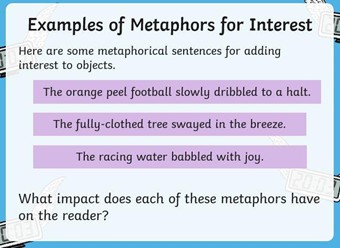
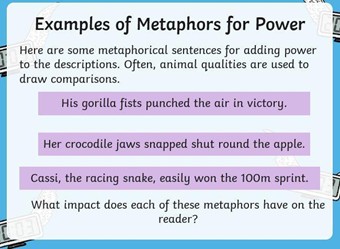
ACTIVITY: Write down the effect these metaphors have on the reader, e.g. for interest, for power or just description:
Time flew by.
Swimming in a sea of people, we braved the sales.
A tidal wave of donations flooded in after the television appeal.
Wednesday 15th January
Know about how resources are allocated and the effect this has on individuals, communities and the environment.
What are Community Resources?
The term 'community resources' covers a wide range of things that are potentially helping the community.
This could be anything as long as it provides assistance or a service to the members of the local area.
To put it simply, community resources include people, places, activities and things.
They could be businesses, organisations, public service institutions or individuals in the community.
What resources are there in our community?

Community resources can be funded in a variety of ways. They can be run by completely non-profit groups or by the government, businesses or just one person.
As long as something is supporting a community, a smaller group of it or even one single individual, that thing or person counts as part of community resources.
Use the link below to view a map of Burnley. Zoom in to identify and list all of the types of community resources you can identify.
Burnley Map