

Monday 8th December

Grammar Warm Up
LC: to use linking phrases to introduce ideas in a discussion text
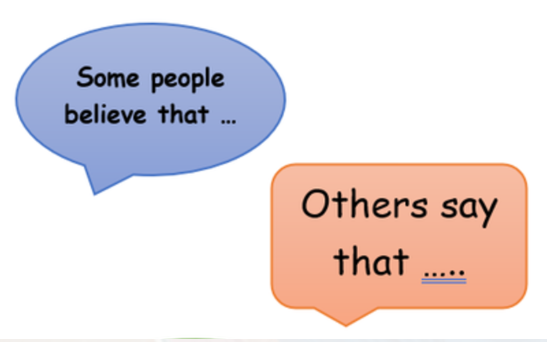
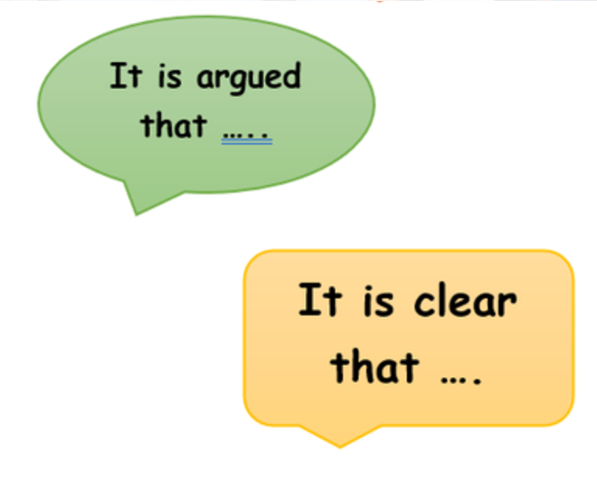
Look at the linking phrases above.
Use them to begin sentences about the positive and negative points about wearing school uniform.
Tell your talk partner:
Two reasons for wearing school uniform.
Two reasons against wearing school uniform.
Each sentence must begin with one of the linking phrases above.
LC: to identify structure of balanced discussion writing
Let's begin with our oral text map for the Junk Food topic.

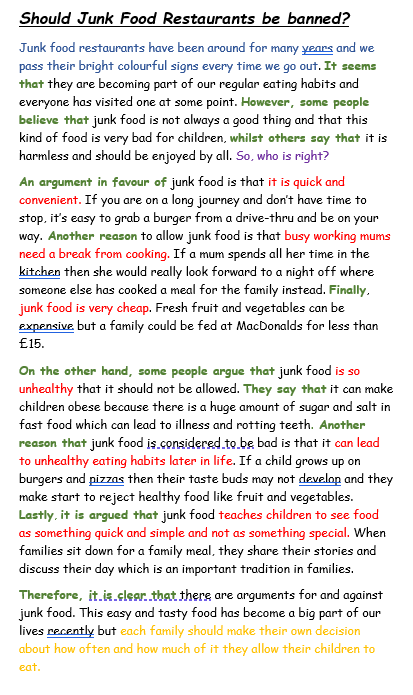
We are going to plan for the model write.
YOU will be writing a balanced discussion text (giving BOTH sides) to answer the question:
Should children wear a uniform in school?
Discuss the ideas FOR and AGAINST this topic with your partner.

Now complete 3 simple reasons FOR and AGAINST children wearing a school uniform.

Maths Review
The mystery of the missing lunchbox
At break time, Maya reached into her bag and frowned. Her lunchbox was gone. She was sure she had packed it that morning- her mum had even reminded her to take it. Maya looked around the classroom. On the windowsill, she noticed a trail of crumbs leading toward the cloakroom.
Curious, she followed the crumbs and heard a soft rustling sound. When she peeked behind the coats, she saw the culprit: the class hamster, Nibbles, happily chewing on a corner of her sandwich. Someone must have forgotten to close his cage again!
Although Maya was annoyed at first, she couldn’t help laughing. She gently picked up the lunchbox and carried Nibbles back to his cage. At least now she had a funny story to tell her friends.
R- Where did Maya find the trail of crumbs?
I- Why do you think Maya laughed at the end, even though her lunch was partly eaten?
C- Why do you think the author chose to name the hamster “Nibbles”?
LC: To describe a key character using adjectives.
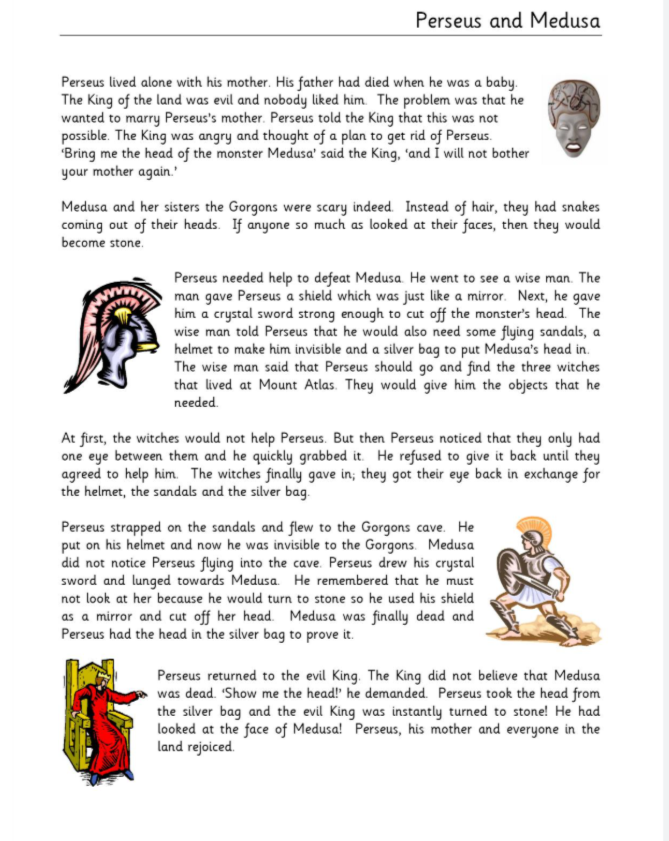
ACTIVITY: What do Perseus’s actions tell the reader about his character? In pairs, list adjectives and discuss the evidence, then we can come together as a class to discuss.

LC: How can we investigate the effects of levers?
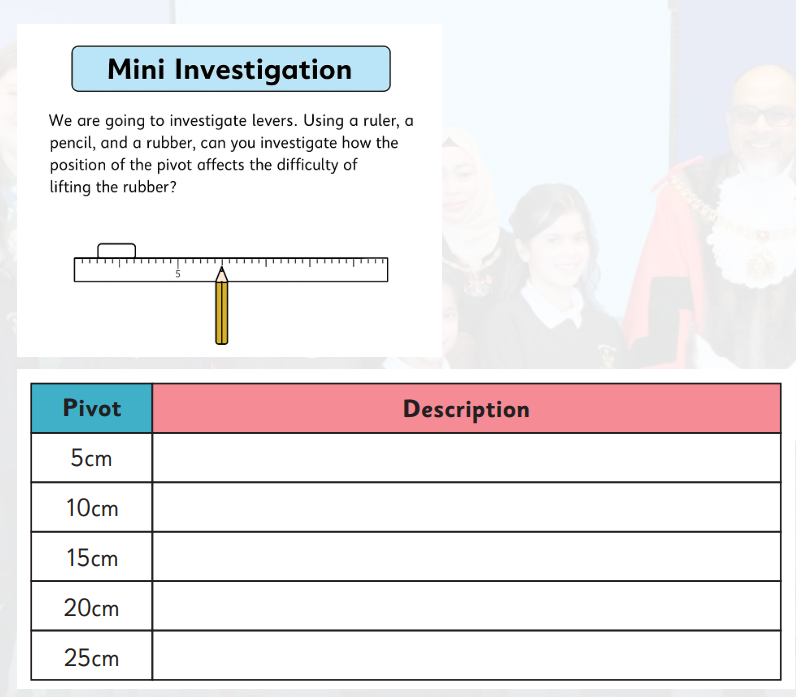
We will use a ruler as the lever, a pencil as the pivot, and a cube/coin as the load.
You will move the pivot to different positions along the ruler — for example at 5 cm, 10 cm, 15 cm, 20 cm, and 25 cm. Each time, you will try to lift the cube/coin by pushing down on the other end of the ruler.
Your job is to notice how the amount of force you need changes when the pivot position changes.
After you test each pivot position, you will write a short description in the table about what you felt — for example:
- I needed a lot of force to lift the load
- I needed more force, but not as much as at ___ cm
- I needed less force to lift the load
- only a small force was needed.
- I needed the least force to lift the load
At the end, write your finding and explain how the position of the pivot affects the force needed to lift the load.


LC: To understand the parliamentary system and how young people can make their voices heard.

The UK parliament is based in the Palace of Westminster, commonly known as the Houses of Parliament. The Parliament is split into 3 sections- the House of Commons, the House of Lords and the Monarch.
What happens in the Parliament?
The UK Parliament has four main functions:
- Scrutinising the government, checking and challenging them on the decisions they make.
- Creating and passing new laws
- Debating important issues facing the UK
- Reviewing and approving government spending – such as changes to tax.
Who is the UK Prime Minister?

MP
MP stands for Member of Parliament. An MP is a person who represents a particular area, or constituency, of the UK in Parliament.
Answer this question on your whiteboards:
Similarly to the UK Parliament, we have a pupil parliament, in school, where children can make their voices heard!
Having a voice and being able to use it is a privilege and a gift. It gives us the opportunity to influence the world around us and a way to express our beliefs. We all have the right to speak up for the change we want to see and what we want our future to look like.
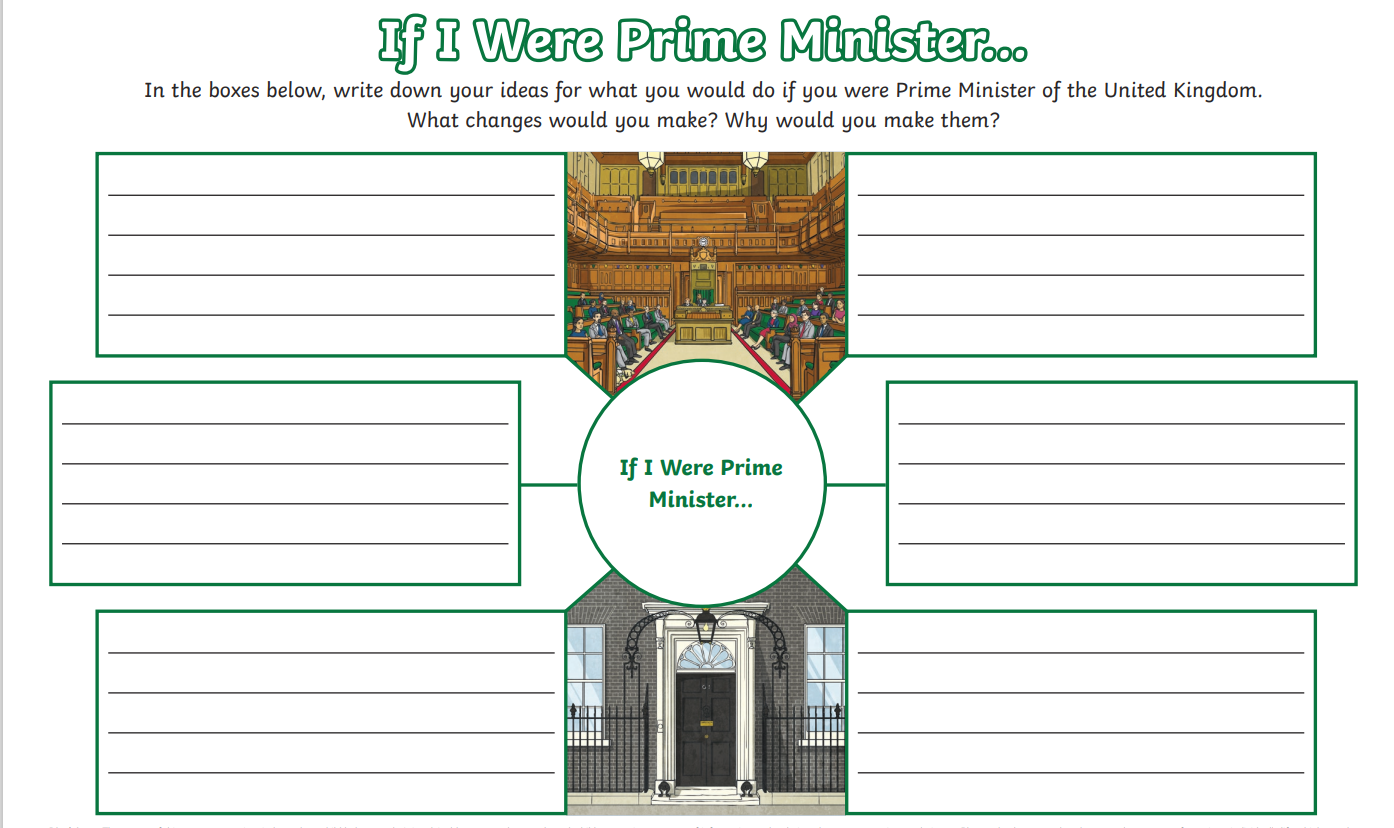
ACTIVITY: work in groups and add your ideas to the worksheet.