


Monday
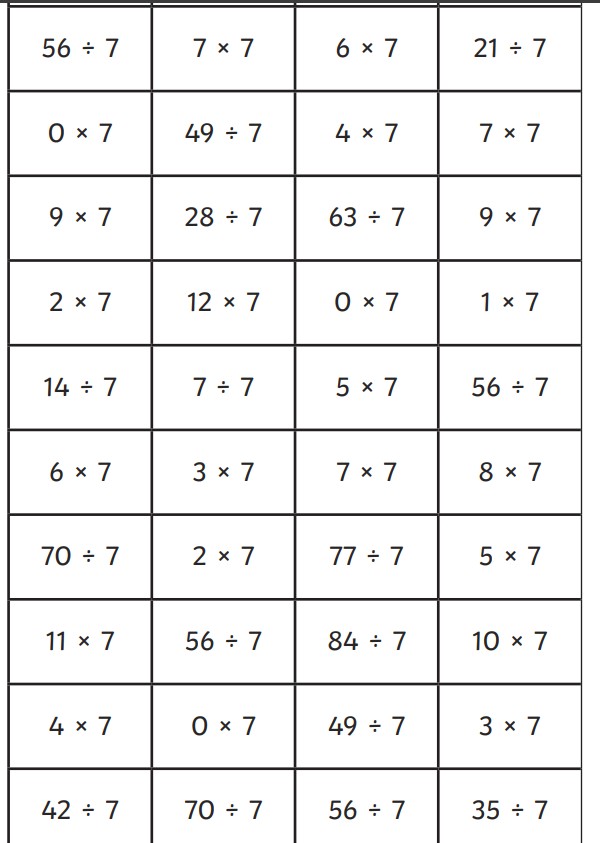
How quickly can you complete these calculations?
RIC
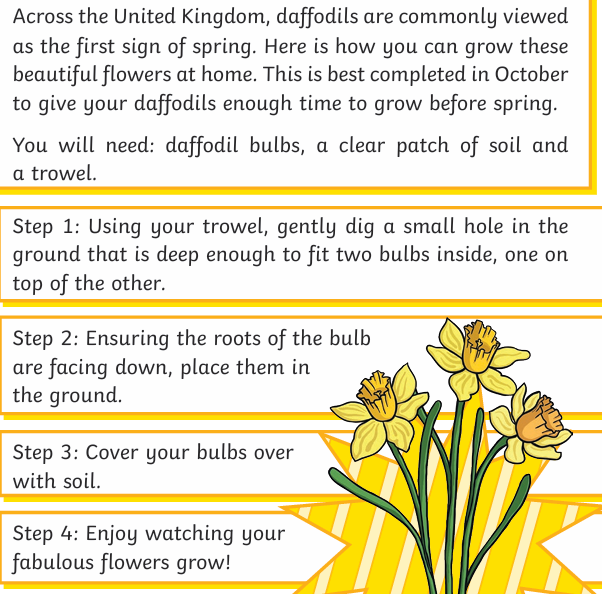
R: When is the best time to plant your daffodil bulbs?
I: Why do you think you need a clear patch of soil?
C: Find the phrase that makes you think the author really likes daffodils.
Monday 20th April 2026
LC: To analyse and evaluate how specific information is organised within a non-fiction text.
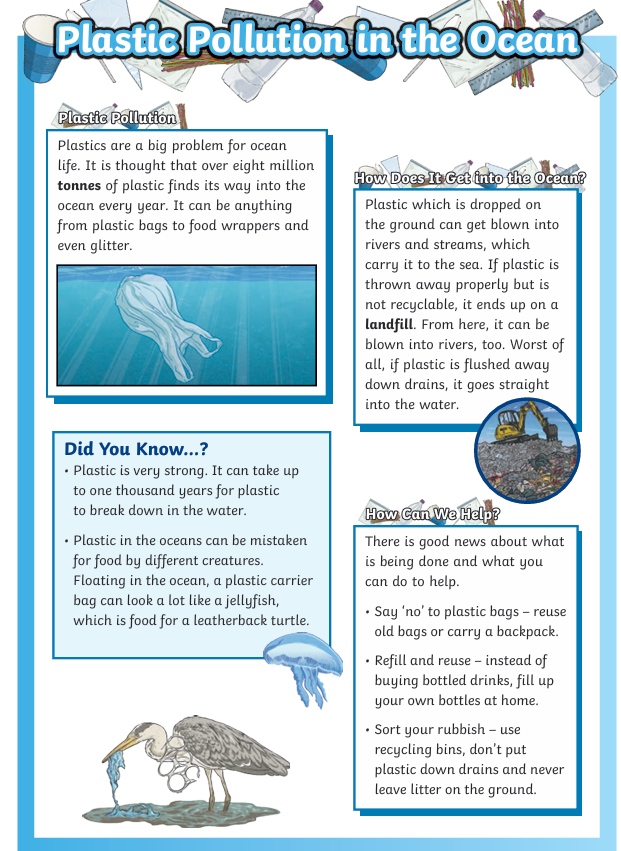
- What do you notice first?
- What different parts (features) can you see?
- Which parts are text boxes, headings, or pictures?
Quick discussion with partner (30 seconds each).
Feature hunt: Working in pairs
| Feature | Where is it? | Why is it used? |
|---|---|---|
| Sub-heading | e.g. “How Does It Get into the Ocean?” | Helps organise topics |
| Bullet points | “How Can We Help?” section | Makes advice clear and easy to read |
| Diagram/image | Turtle / jellyfish images | Helps visual understanding |
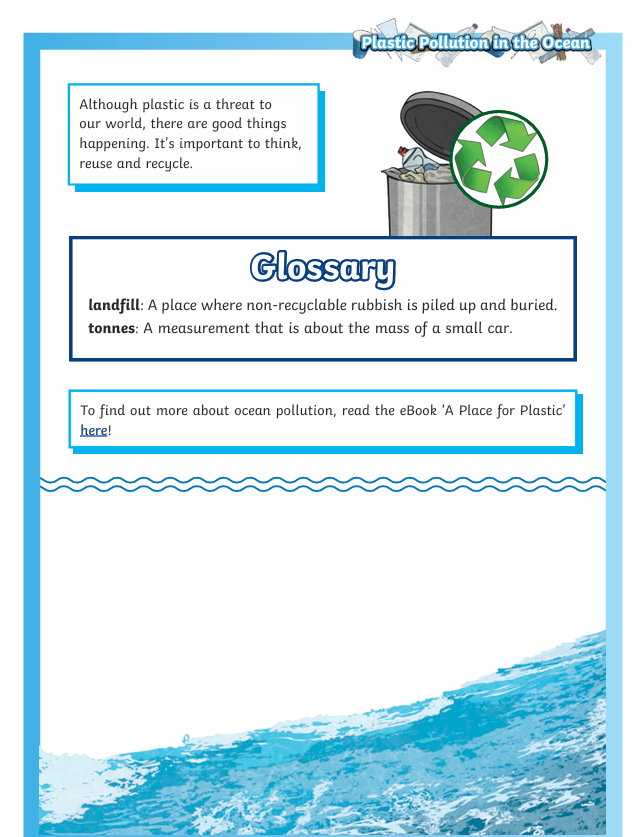
| Text box | Glossary section | Explains tricky words |
| Title | “Plastic Pollution in the Ocean” |
Shows main topic
|
- Why is the information split into boxes?
- How does the glossary help you?
- Why are bullet points used instead of paragraphs?
Independent task
Label the non fiction text with the correct Features
Sub-heading
Bullet points
Diagram/image
Text Box
title
Glossary
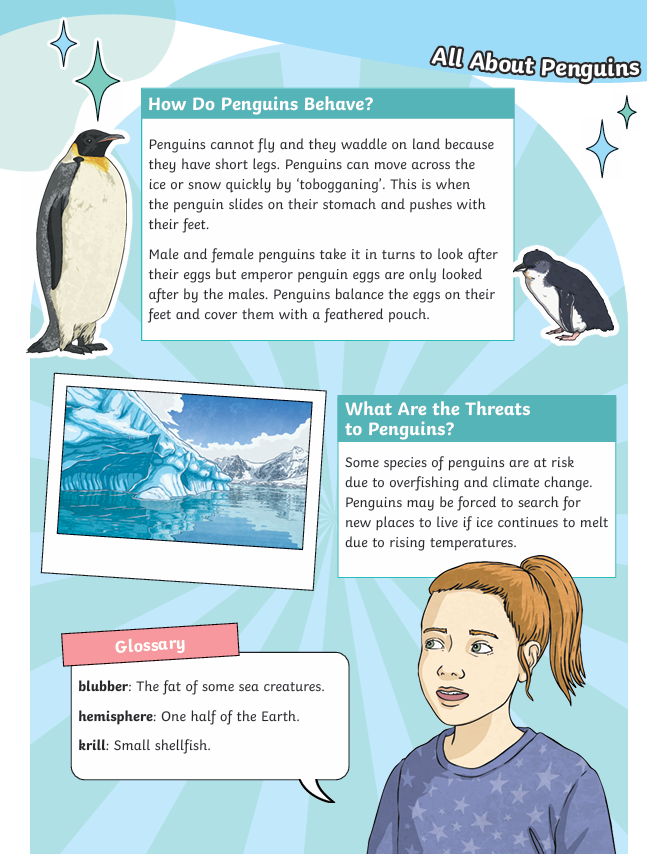
Adapted:
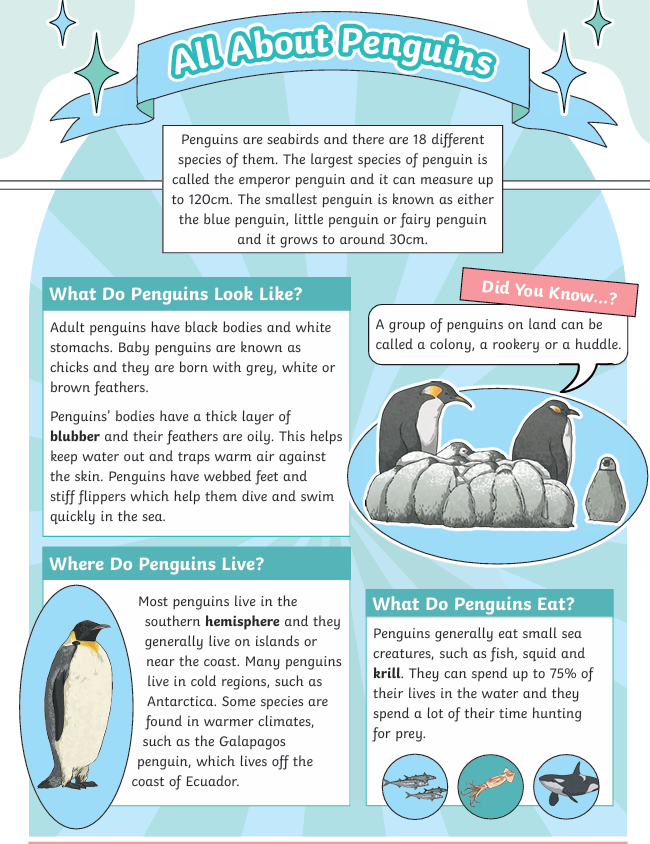
Label the non fiction text with the correct Features
Sub-heading
Bullet points
Diagram/image
Text Box
title
Fun Facts
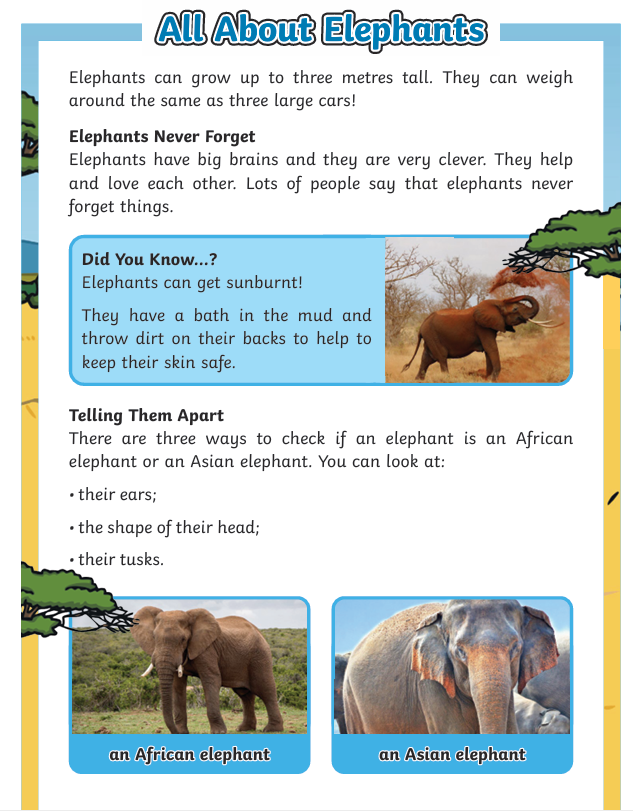
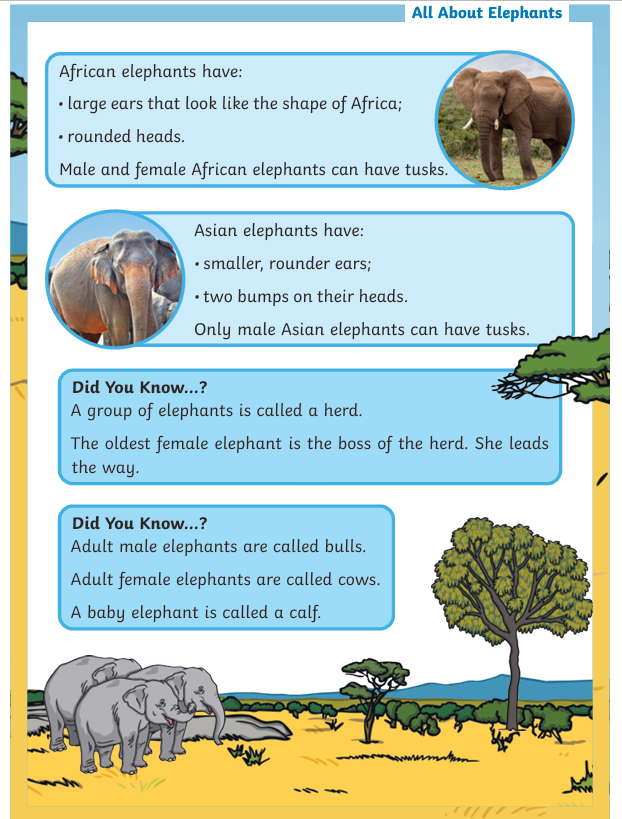
Adapted:
To recognise the difference between fiction (stories) and non-fiction (information texts).
Go on a book hunt for fiction and non fiction books. have a discussion why the books are fiction or why they are non fiction.
- How can you tell it is fiction?
- What do non-fiction books give us?
- Which do you prefer and why?
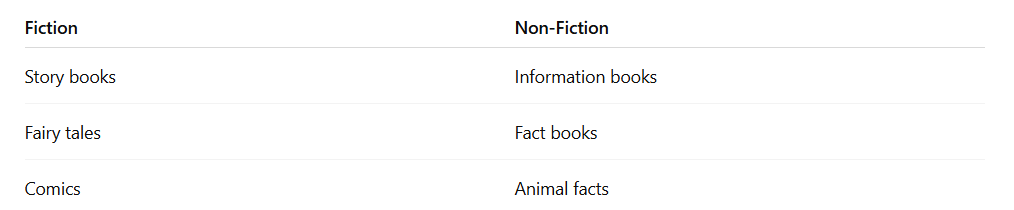
Children explain:
- “Fiction is…”
- “Non-fiction is…”
Or create their own:
- One fiction sentence
- One non-fiction sentence
Monday 20th April 2026
Grammar warmup
Inverted commas - Immerse
"Oh... Uhhh!" he spluttered. "I was just getting up, lad!"
"With you in a jiffy ..."he called to Gromit as he fell.
The lady introduced herself to Wallace. "My name's Piella. Piella Bakewell," she said.
"What d'you think, Gromit?" asked Wallace with a mouthful of mash.
LC: Make predictions based on details stated and implied.
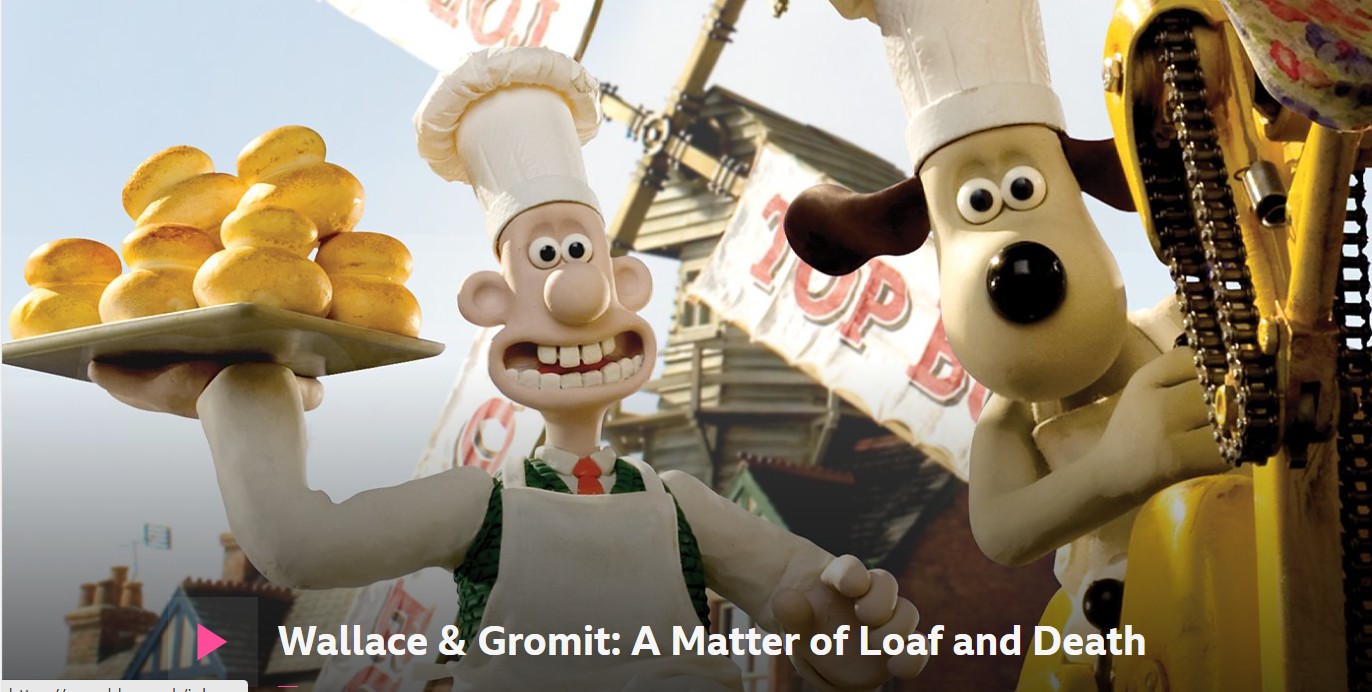
Let's watch a little more of the story.
(14:20 to 20:38)
Making a prediction.
Based on what you have learned and inferred about the characters and the events in the story so far, which of these endings do you think the author chose?
Piella will realise that Wallace is a hard working baker, who loves her. They will get married and live happily for the rest of their lives with Gromit and Fluffles.
Piella will get her revenge on her final baker and kill Wallace and Gromit.
Gromit will be the hero. He will save Wallace and Fluffles. Piella will get what she deserves and be eaten by the crocodile.
Gromit will go to the police and tell them what Piella has been up to. They will come and arrest Piella. Wallace and Fluffles will be saved.
Authors chair
In your talk partners take on the role as the author to discuss which ending did you choose and give reasons for your answer.
Now write down the ending you have predicted and the reasons for your choice.
Let's watch the end of the story and see if your prediction was correct.
Adapted
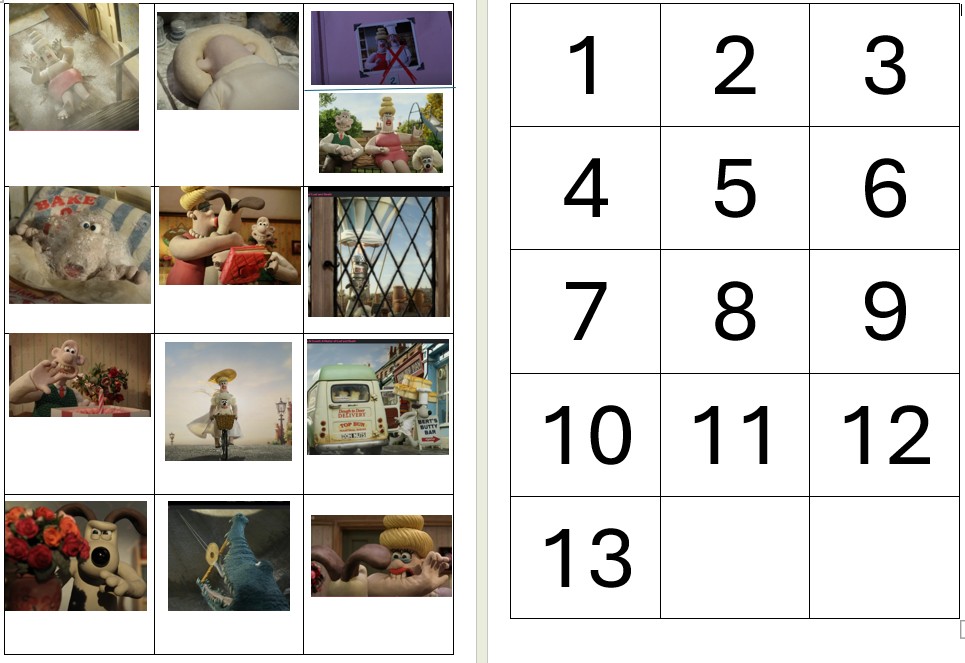
Tell your teacher what is happening in each picture. Cut them out and put the pictures in the correct order.
Tell your teacher how you think the story will end.
20.04.26
To be able to find the area of rectilinear shapes by counting squares.
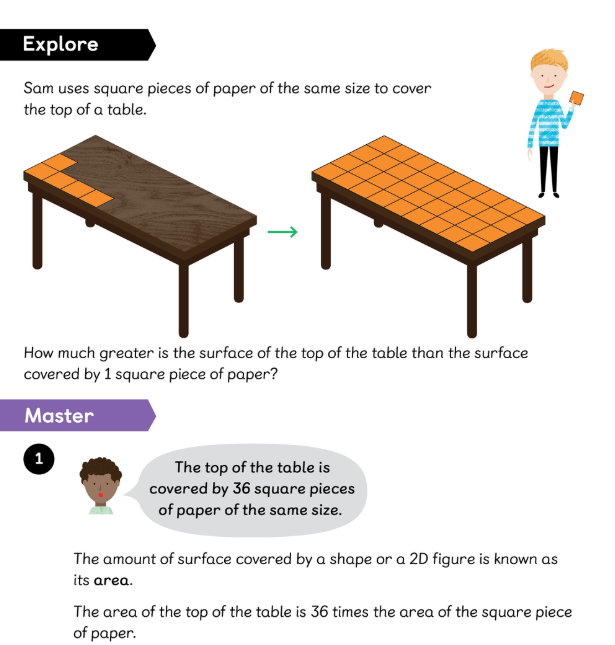
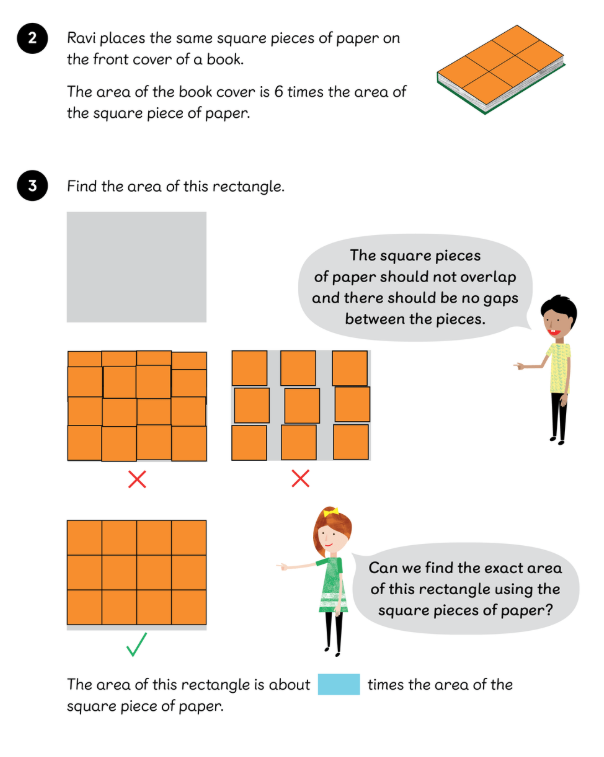
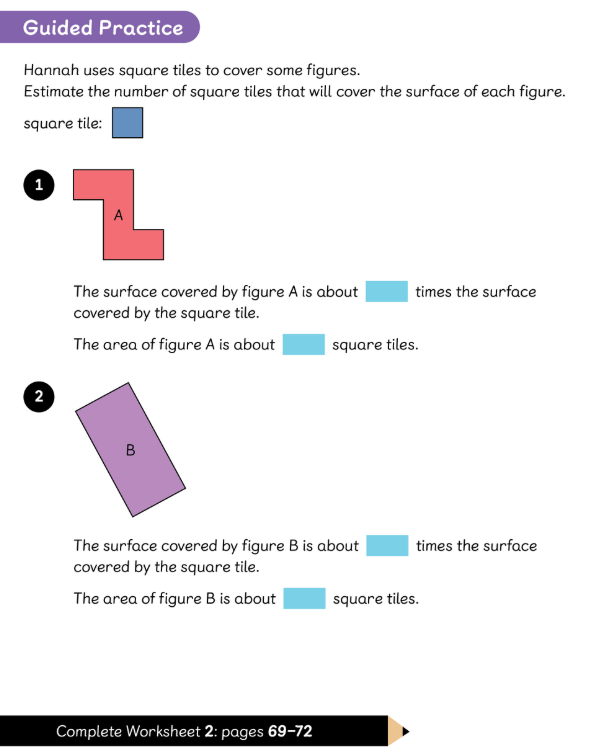
Adapted Group 2:
LC: Telling time to the hour.
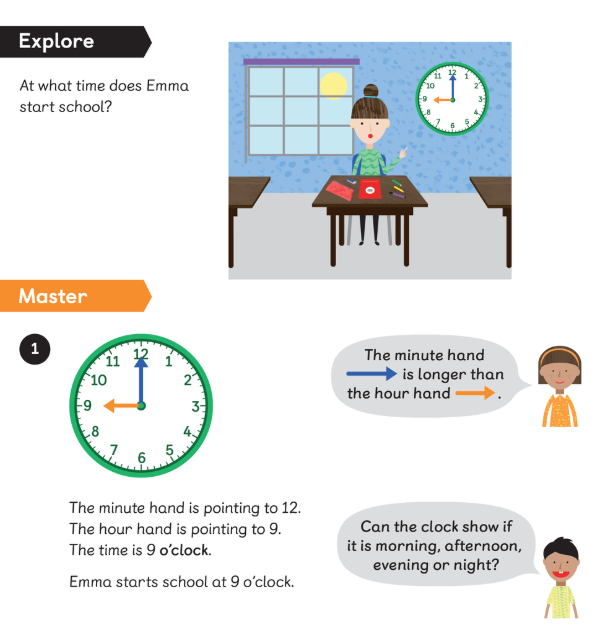
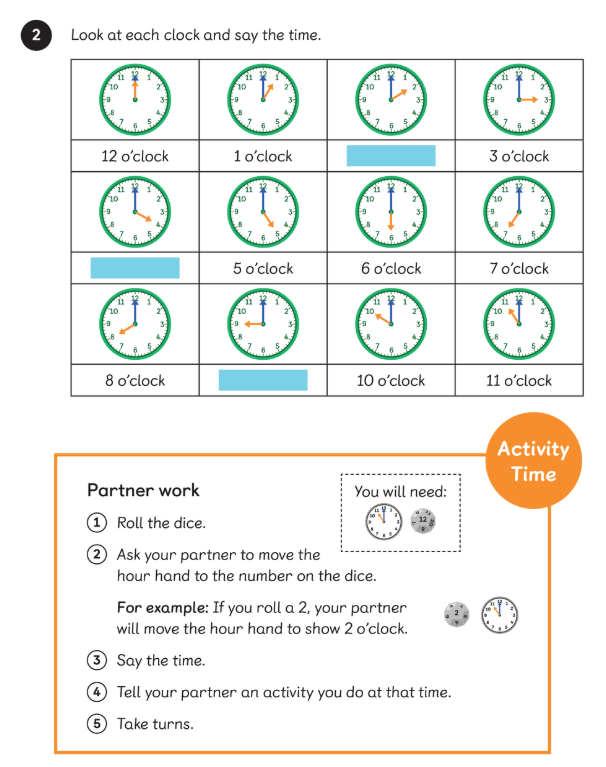
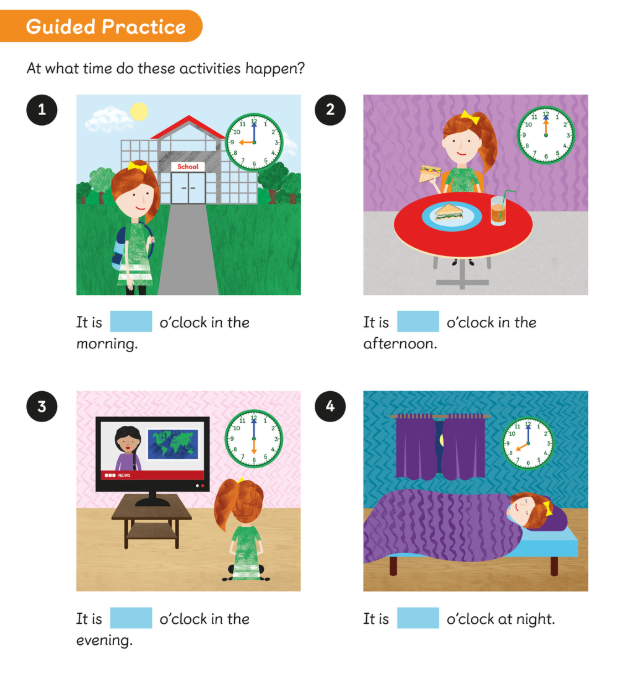
20.04.26
LC: To practise stitching.
/i/video/4K_Fathima/Running_Stitch.mp4
My Favourite Book
Introduction
Good morning everyone. Today’s assembly is about my favourite book. Books are special because they can take us to new places, teach us lessons, and help us understand the world.
Main Message
Everyone has different favourite books, and that is what makes reading exciting. Books help us learn new ideas, build imagination, and grow as people.
Talk Partner Questions
- What is your favourite book and why?
- Who is your favourite character?
- What did your book teach you?
UNCRC Links
- Article 17 – You have the right to access information and books.
- Article 31 – You have the right to relax and enjoy reading.
Reflection
Think quietly about your favourite book.
How did it make you feel?
What did you learn from it?
Let’s remember that reading helps us grow every day.