



Thursday 30th April
Grammar
LC: Use adverbs effectively in writing.
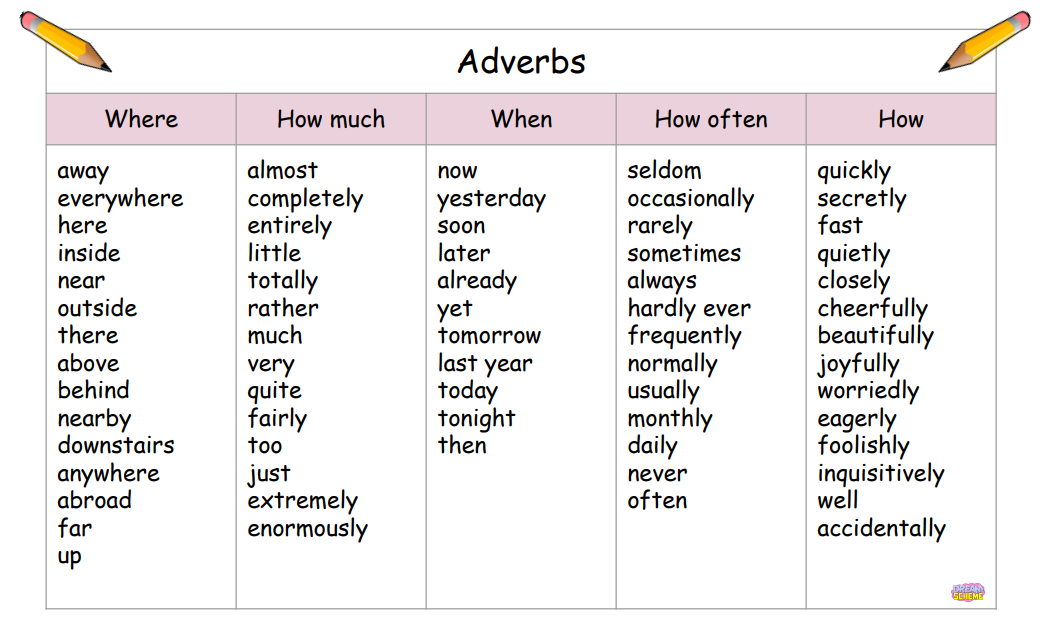
Using the word mat below, can we extend these simple sentences by adding adverbs and further information to make them more interesting?
Aunt Rowena was tattooing Uncle Egan's face.
Uncle Egan grabbed his shield and spear.
The warriors left for battle.
Activity
1. With you talk partner choose three adverbs (each one from a different group) and write them down on your whiteboards.
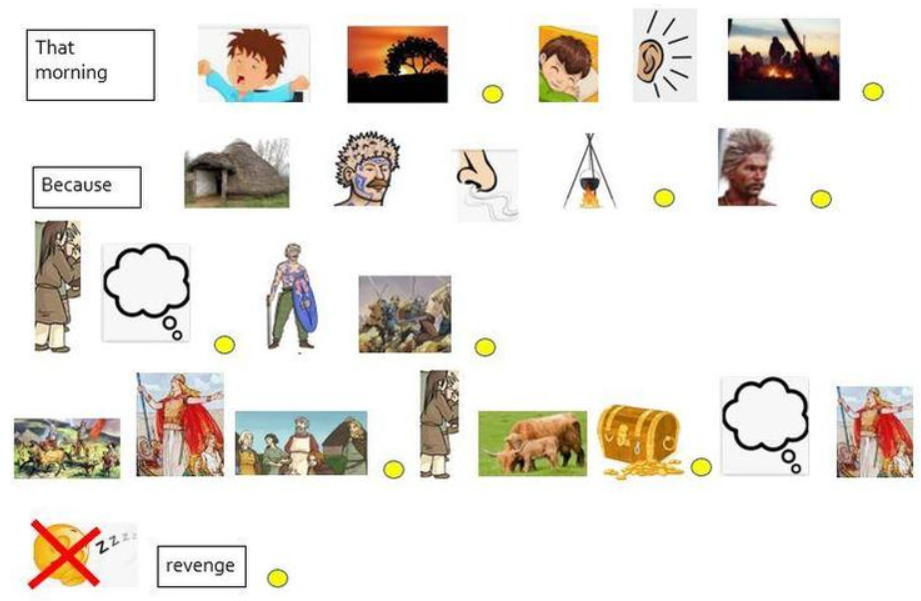
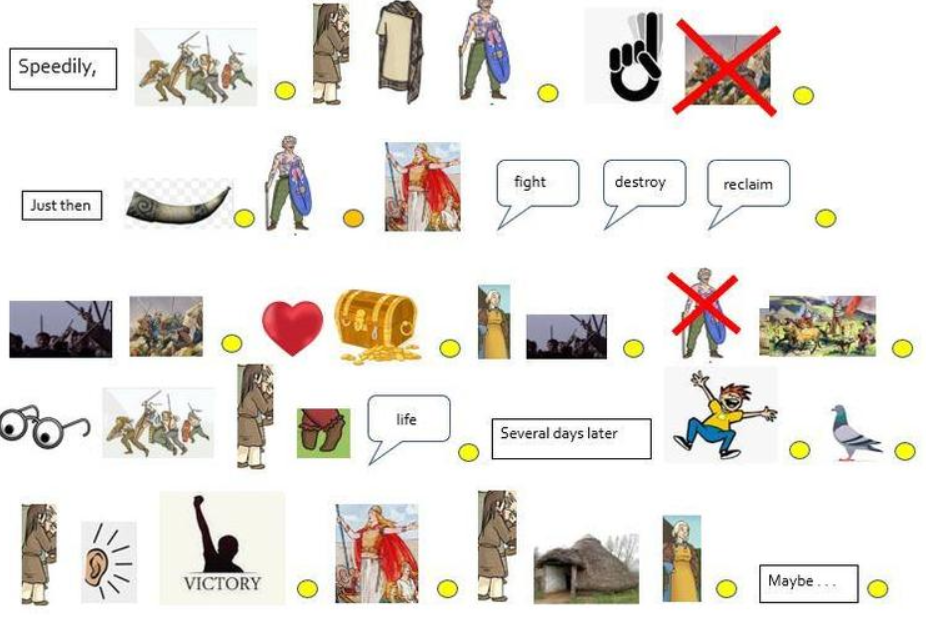
2. Write three sentences with the adverbs chosen. The sentences have to be linked the narrative we read yesterday; Queen Meredith's Revenge.
Main
Thursday 30th April 2026
LC: To retrieve information from narrative.
Let's read the narrative again.
Pay close attention... we will be taking part in a quiz very soon!
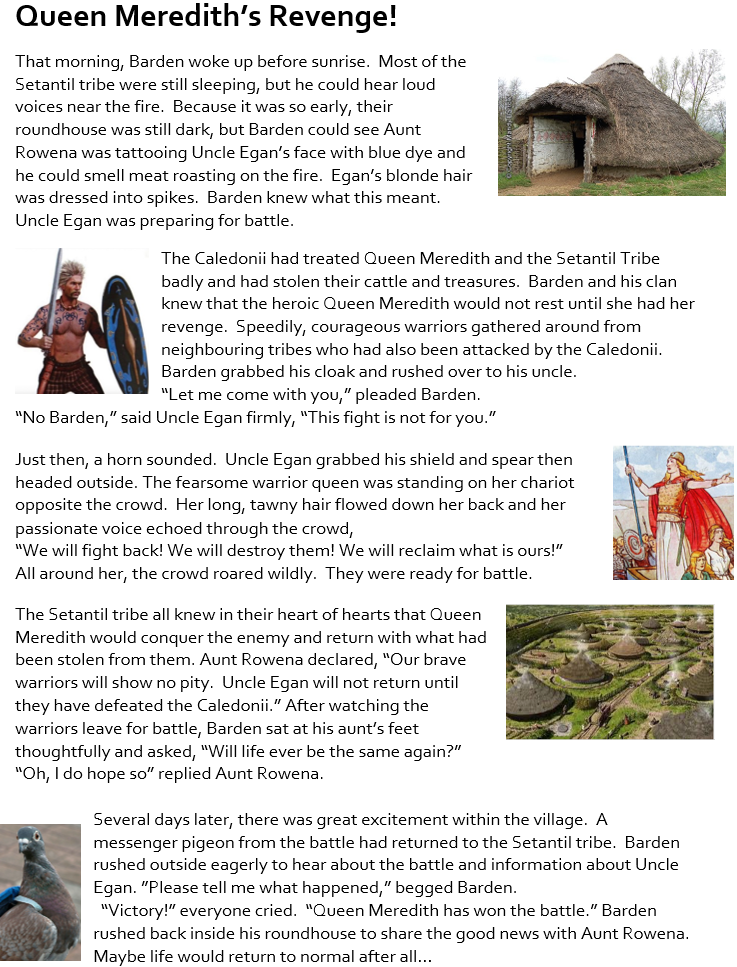
Quiz Time!
In groups of four you will answer the quiz questions (in your books).
Don't forget to write in sentences!
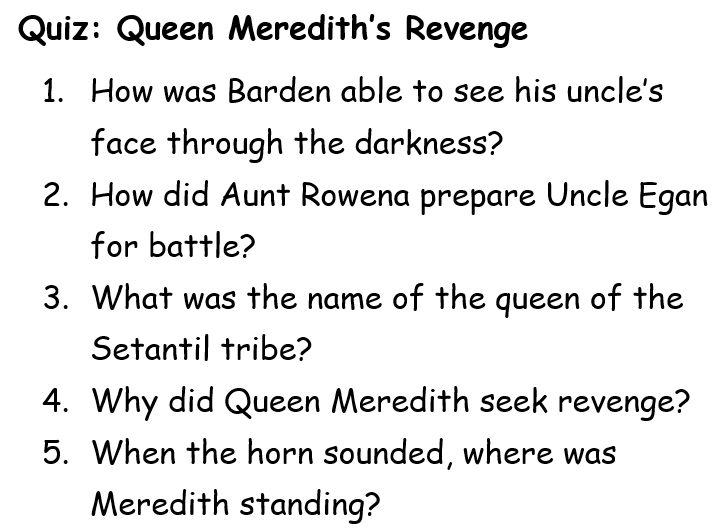
We are going to devise some actions for the narrative.
At home, use the school website to practise the actions we create today!
Review 9
RIC
A Rainy Playtime
On Tuesday, the rain fell hard on the school playground. The sky was grey and the ground was wet. At playtime, the children could not go outside, so they stayed in their classroom.
Amir played a board game with his friends while Isla read a book in the quiet corner. Mrs Green put on some music, and a few children drew pictures at their tables. Even though they missed the playground, everyone found something fun to do.
R - What day did it rain?
I- How do you think the children felt about staying inside? Give one reason.
C- Which activity would you have chosen at playtime: playing a board game or reading a book? Why?
Thursday 30th April 2026
L.C: To retrieve information from a non-fiction text.
Whole Class
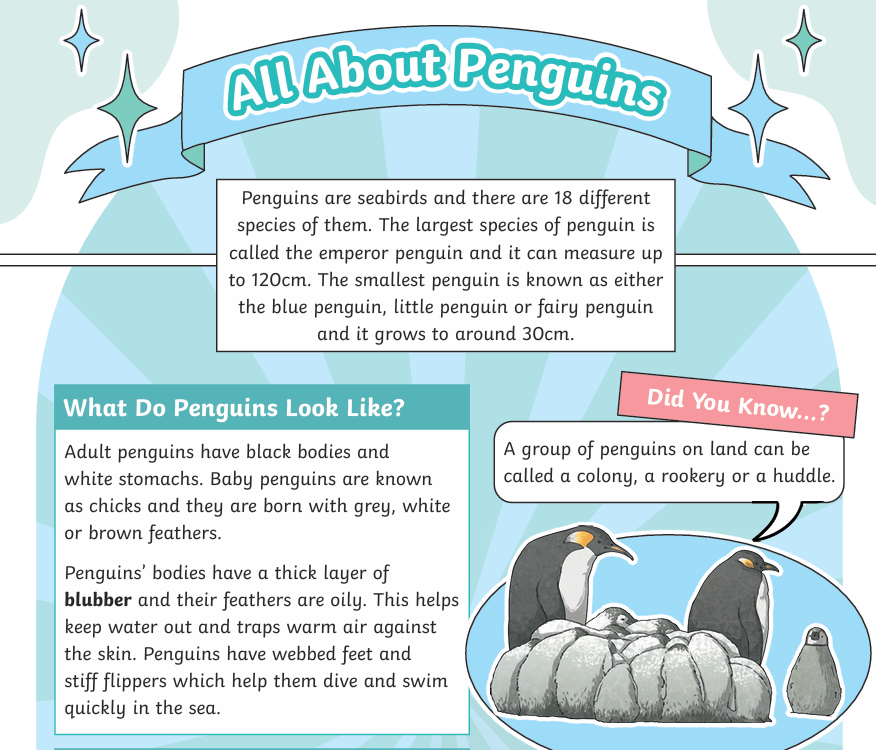
- How many different species of penguin are there?
- What is the name of the largest species of penguin?
- What colour are adult penguins’ bodies and stomachs?
Independent
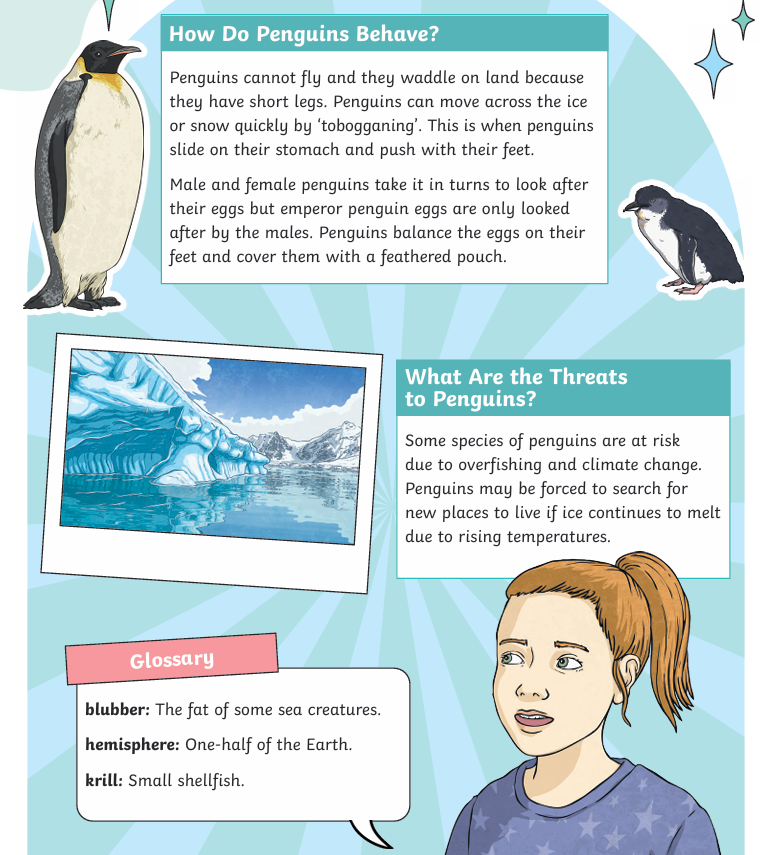
- Why do penguins waddle when they walk on land?
Penguins waddle when they walk because...
- What is the name given to the way penguins move quickly across ice or snow on their stomachs?
The name given to the way penguins move across ice on their stomachs is called...
- Which penguins look after emperor penguin eggs?
The penguins which look after emperor penguin eggs are...
- Name one threat that puts some species of penguins at risk.
One threat that puts some species of penguins at risk is...
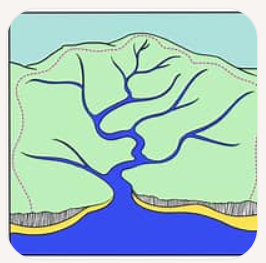
LC: To describe where rivers start (source) and end (mouth).
-
Source - The source is the start of a river.
-
Mouth - The mouth of a river is where it enters the sea or a lake.