



Friday
To be able to recognise and understand odd and even numbers.
Let’s explore.
 Let’s learn.


Activity time

To read a range of recounts organised in different ways.
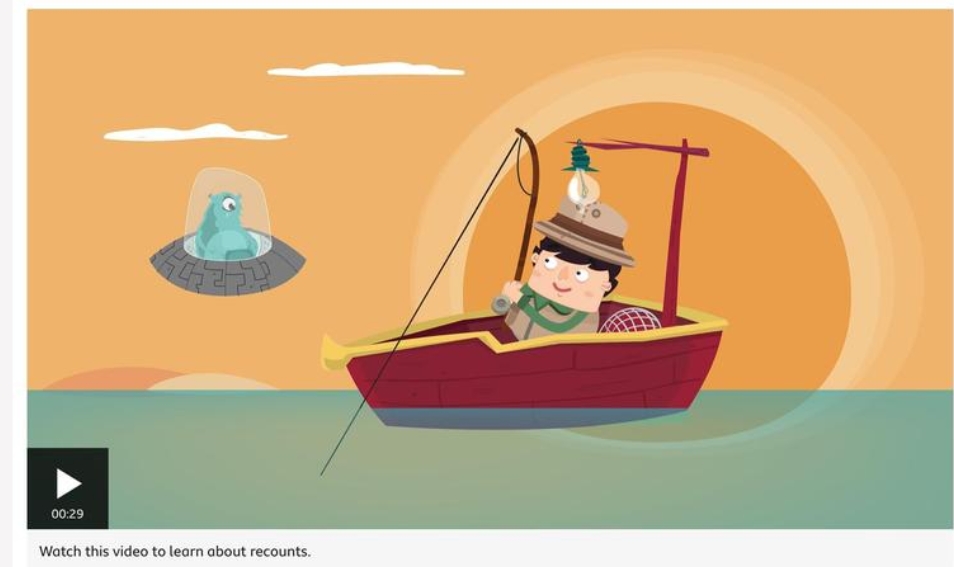
What is the recount about?
Where did they go?
Who did they see?
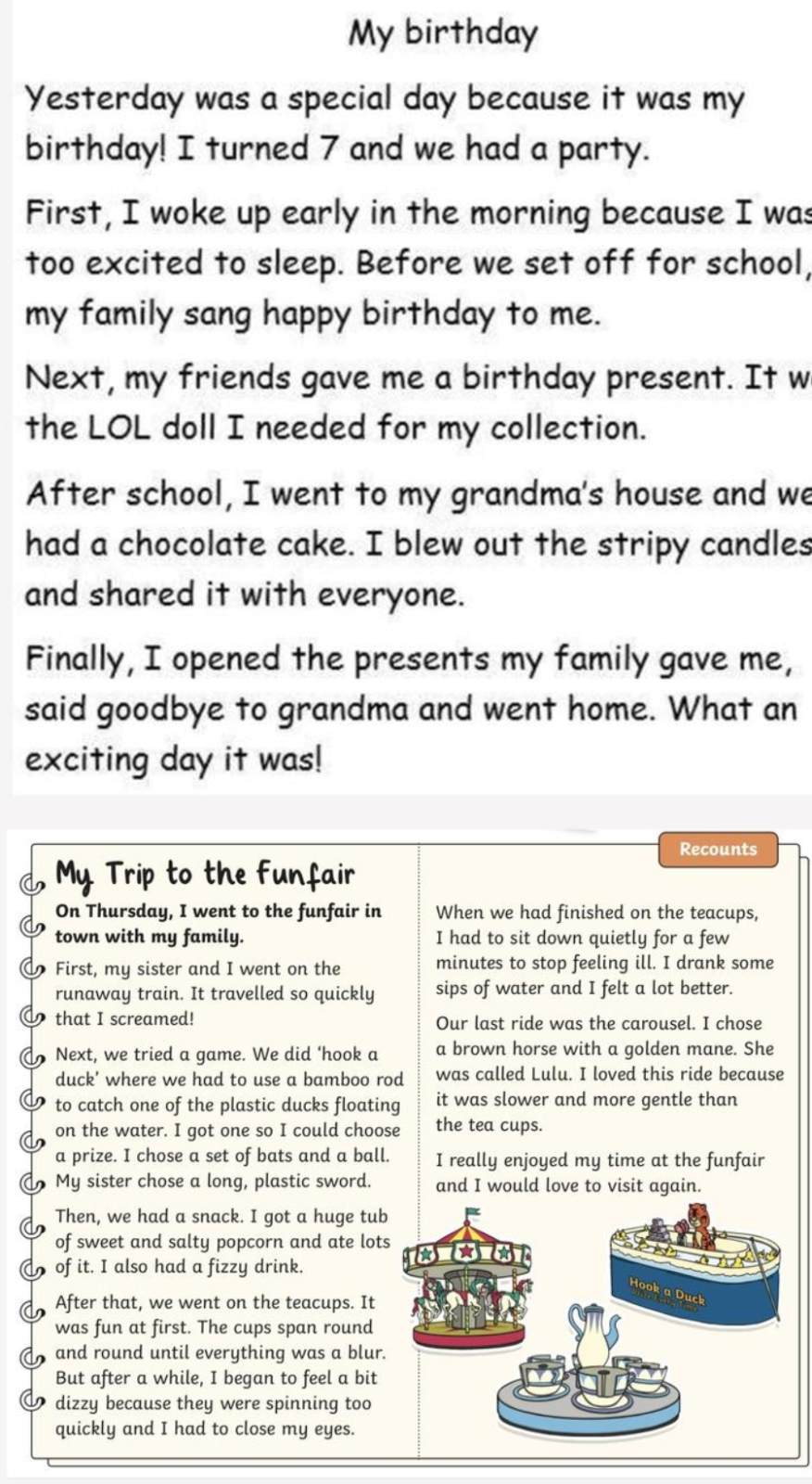
What is similar about both of these recounts?
Are there any words that are familiar to you that you have seen in the Great Explorer?
When you are writing a recount, you need to use some time adverbials to link your ideas together.
Time adverbials tell us when an action happened.
Time adverbials include words and phrases, such as: first, next, yesterday, always, soon, in the meantime. For example: After school, I like to play with my friends.
Write a list of time adverbials in your book.
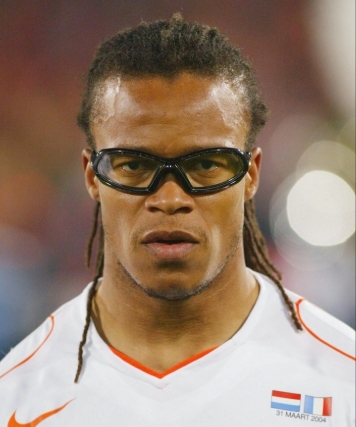
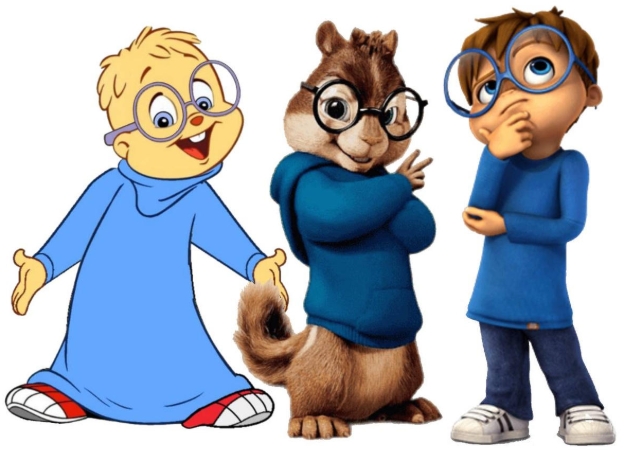
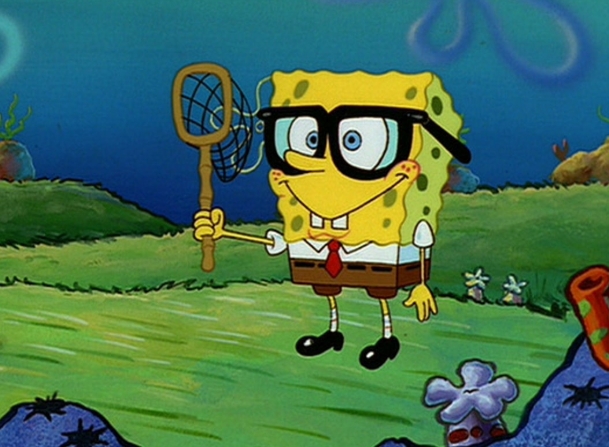
Can you think about things that people can put onto their body or on their skin; how these can affect how people feel?
Super Specs Sam
Sam was a bright, busy boy who loved running fast, building tall towers, and spotting tiny bugs in the playground. There was just one small problem…
Sam couldn’t always see things clearly.
Sometimes the ball looked blurry when it came towards him.
Sometimes the words in his reading book wiggled and jiggled on the page.
And sometimes he couldn’t spot the ladybirds that everyone else saw.
One morning, Sam’s mum handed him a shiny blue glasses case.
“Your new glasses are here!” she said.
Sam opened the case slowly.
Inside were the coolest glasses he had ever seen—bright blue frames with tiny lightning bolts on the sides.
Sam gulped.
“I don’t know…” he whispered. “What if people laugh? What if they think I look weird?”
Mum knelt beside him.
“Sam, these aren’t just glasses,” she smiled.
“These are Super Specs.”
“Super Specs?” Sam asked.
“Yes,” said Mum. “They help your eyes do super things.”
Sam thought for a moment.
Maybe Super Specs weren’t so bad.
When he walked into school wearing them for the first time, he felt a little wobbly inside.
But something amazing happened.
First, at reading time, the words on the page suddenly stood still.
He could read them clearly—every single one.
“Wow!” Sam whispered. “Super Reading Power!”
Then, during maths, he spotted the tiny numbers on the board from the back of the classroom.
“No way!” he grinned. “Super Number Power!”
At playtime, things got even better.
When the ball came flying towards him, he saw it perfectly.
He caught it easily—right in front of everyone.
“Great catch, Sam!” cheered his friends.
Sam felt his cheeks go warm with pride.
“Super Sport Power!” he laughed.
After school, Sam found a tiny ladybird on a leaf near the gate.
He picked it up gently.
“Super Spotting Power,” he whispered.
From that day on, Sam wore his Super Specs every morning.
Not because he had to—
but because they helped him see the amazing world around him.
And whenever someone asked about his glasses, Sam just smiled and said:
“They’re not glasses.
They’re my Super Specs.
-
Why were Sam’s glasses helpful?
-
How did wearing his glasses help him enjoy things more?
-
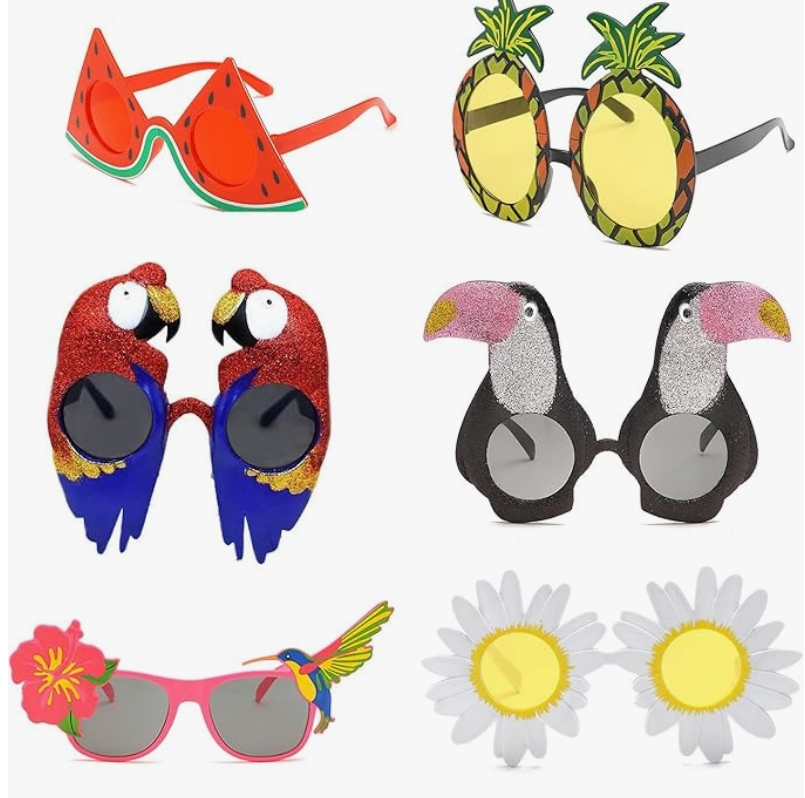
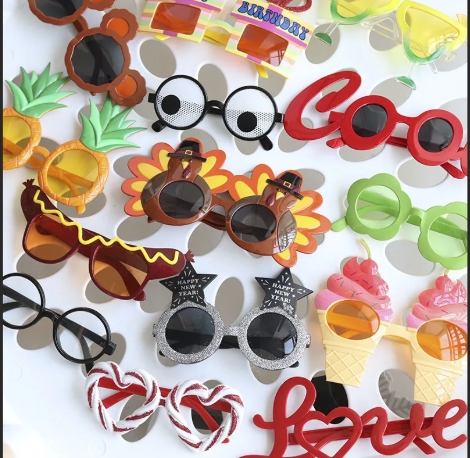
Do you know someone who wears glasses?
Take a photo of yourself on Seesaw and see how fabulous you would look like in Super Specs!
2F PSHCE glasses



Nancy McCroskey
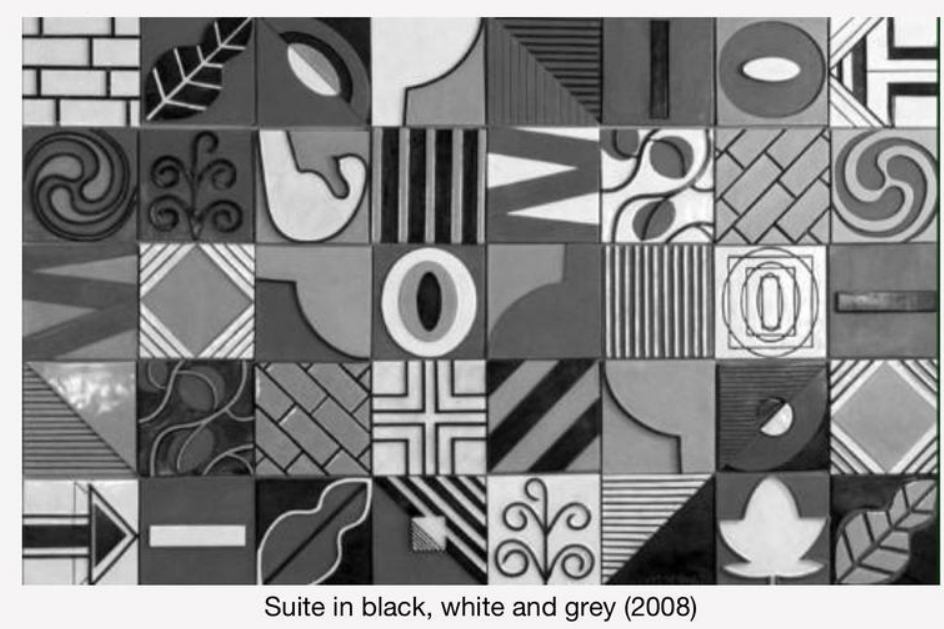
Nancy McCroskey is an American artist who repeats patterns, shapes and colours in her work. She is inspired by the patterns, lines, tones and shapes found in flowers, animals, maps and letters.
What have we learned so far?
- To observe pattern in the world around us.
- To control our drawing tool when creating lines and marks (heavy/soft, lighter/darker)
- To understand how shading can be used to create depth.
- To use rubbings to explore texture.
Today we are going to combine these skills to draw in the style of Nancy McCroskey using our favourite patterns.