

Friday
To be able to count to 20 using the key strategy of making 10 first.
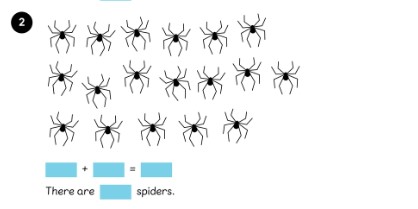
Now complete pages 91 & 92.
Adaptive Maths
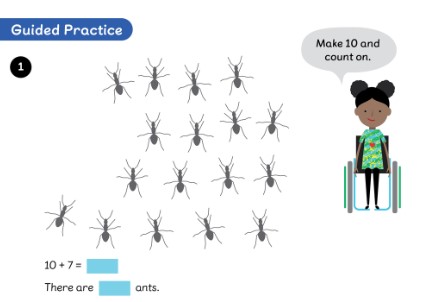
Begin by counting to 15.
Model using image below:
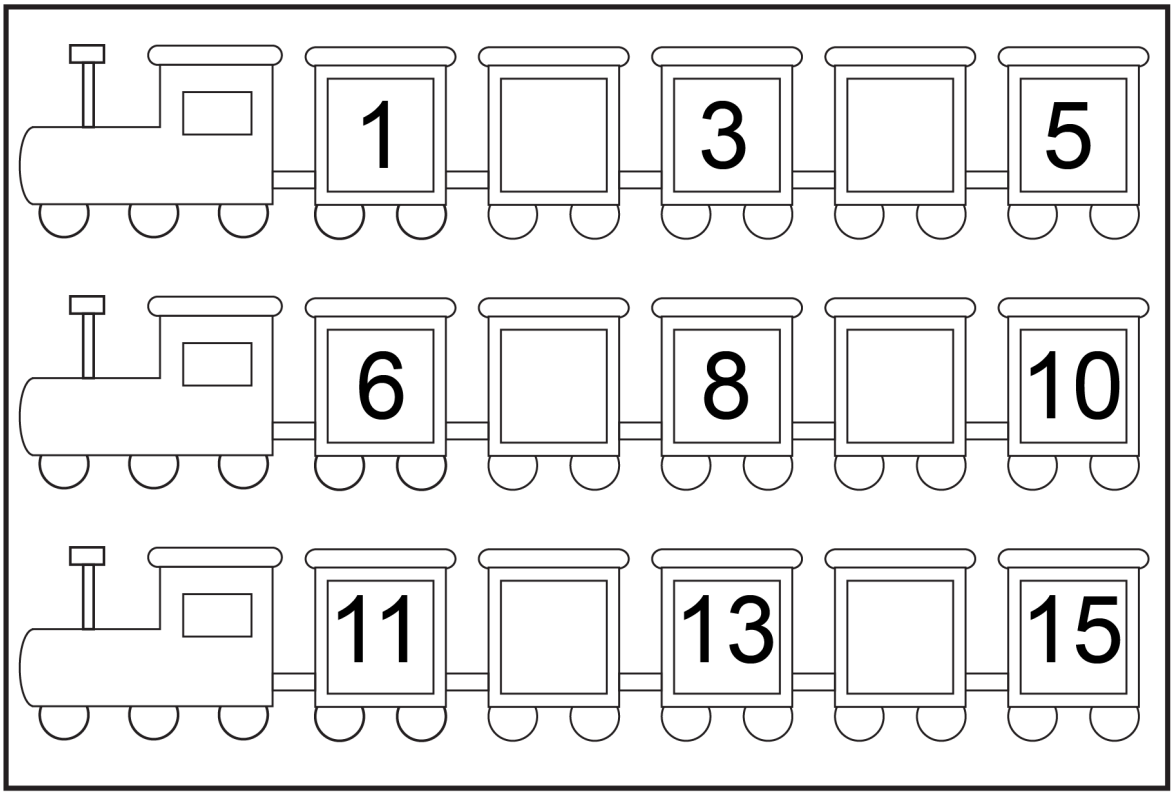
Children fill in sheet independently.
When finished they can continue to practice numbers to 15 on Top Marks Teddy Numbers.
1:1 with number line and support, complete before and after number sheet.
Grammar
To use question marks at the end of some sentences.
Can you correct and finish off the sentences.
Do you like cake
Whyareyousad
I have some meat and peas.
Are you six years old
To recall specific information from texts. To use descriptive language.
Revisit the descriptive words for each animal.
Today you are going to write a sentence, using descriptive language, about one of the animals.
Your teacher will model this first. Class vote-linking to democracy to decide which the modelled write will be on.
The stork has .....
Challenge!! Can you use the word and in your sentence.
Adaptive Teaching
Work as a group with an adult- stay in the classroom.
Copy the model and add their own description (encourage children to write phonically decodable words e.g legs, big head etc)
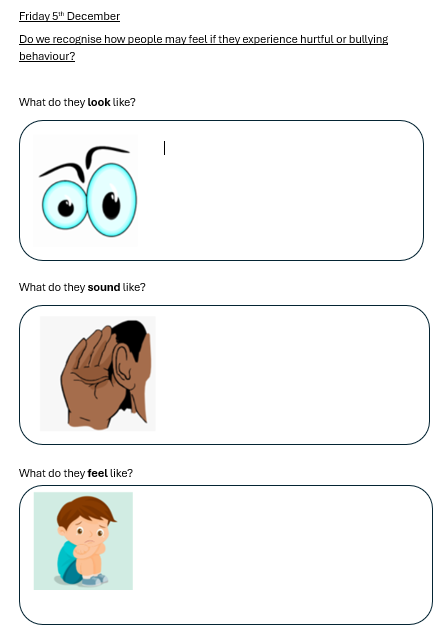
Do we recognise how people may feel if they experience hurtful or bullying behaviour?
Talking partners:
What is an example of kind behaviour?
What is an example of unkind behaviour?
What is the difference between being unkind and bullying?
What do we mean when we say #chooserespect?
What should you do if you see or experience bullying?
"Benna Makes a Noise" on Youtube read by Jill Halfpenny.
Listen to the story and pause to let the children discuss:
* When Benna can't fly or twirl round branches like the other bats can
* When Benna sees Bestie at the entrance
*When Benna sees what happens to Balbir
* When Benna's dad says that the teacher needs to know
* When Benna and Balbir hatch a plan
* When the bat teacher tells Bestie that he has been showing bullying behaviour
* When all the bats make a noise together
Now model what a person who experiences bullying may look like (particularly focus on body language) what they may sound like (quiet, shy, one words answer, etc) and what they may feel like. Then children record independently.