

Thursday 23rd April
Grammar Warm Up
LC: to blend action and dialogue to create an effective narrative
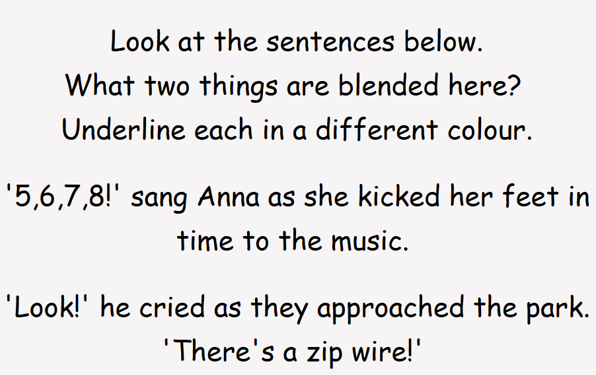
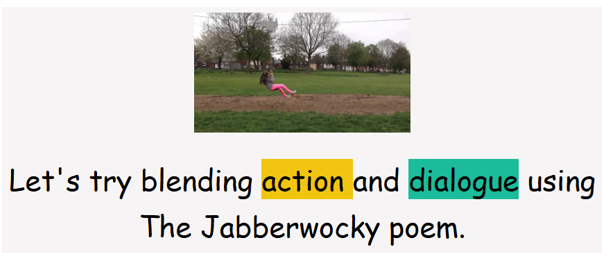
For example
'Beware the Jabberwock, my son,' the father said gravely to his boy, grasping his shoulder.
'Take that, you monstrous creature!' the son bellowed, as he struck the beast with his gleaming sword.
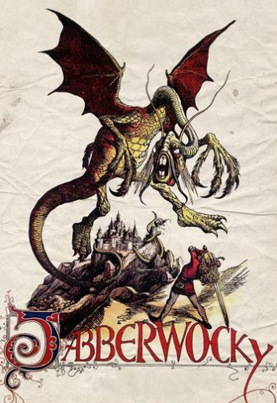
Now, finish these:
'One two! One two!' The boy .....
Looking the fearsome creature in his flaming eyes, ....
LC: to explore characters orally and select precise vocabulary to create well-structured descriptions using simile starters
We are going to add to our description of our creature with more details.
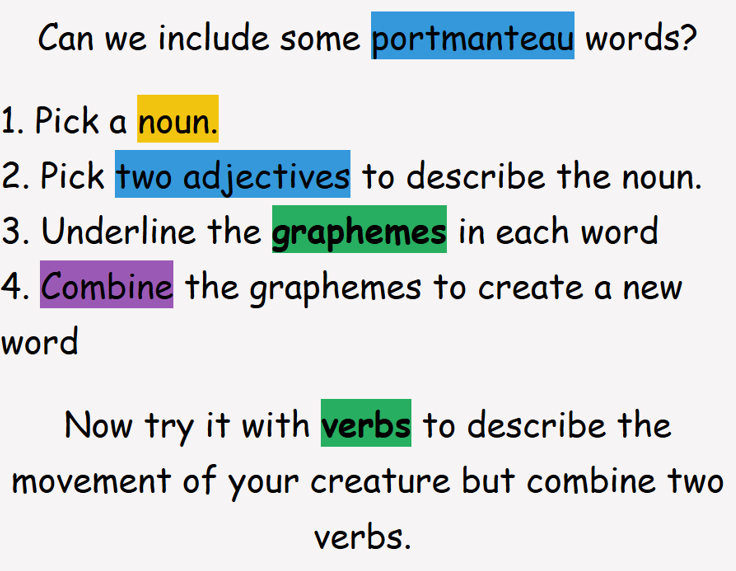
talons

sharp and giant

sharp and giant

the shiant talons of the creature
You can also try it with verbs:
thrust and attack = thrack
The creature thracked with his shiant talons.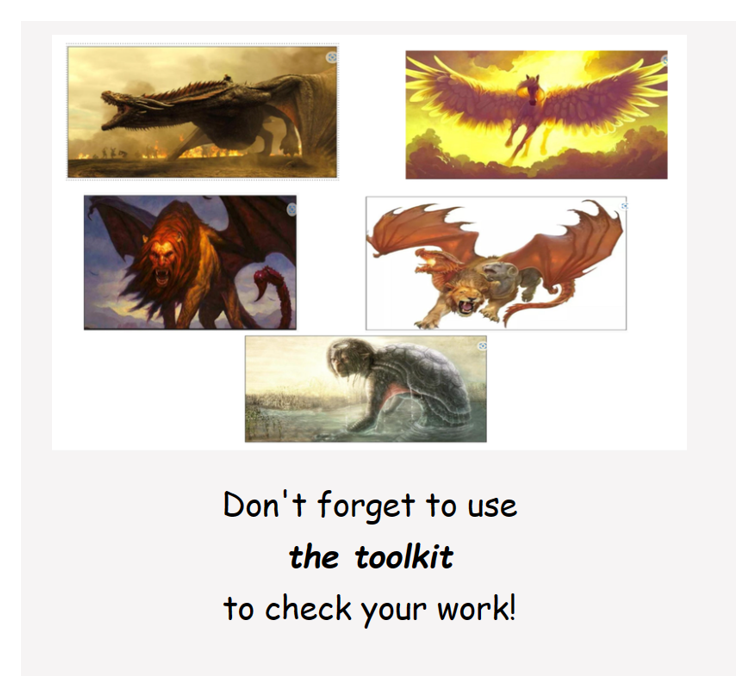

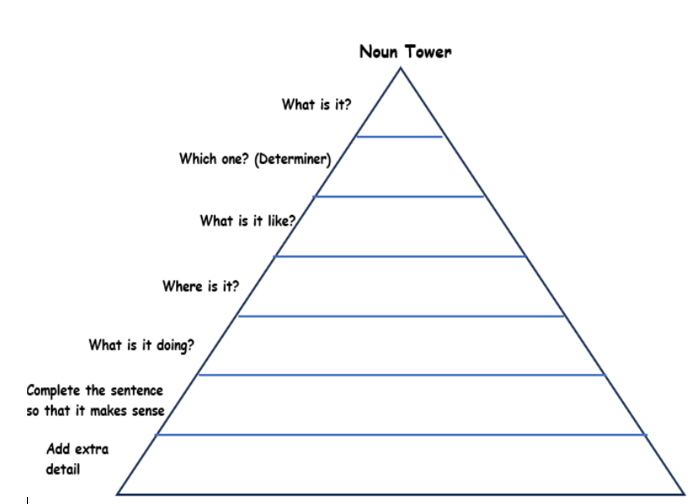
Go to Seesaw and use the words above to create a noun tower about your creature.
Now add a
simile starter
to the end of your description.
Revision-Position and movement
Position and movement revision
Complete the RIC.
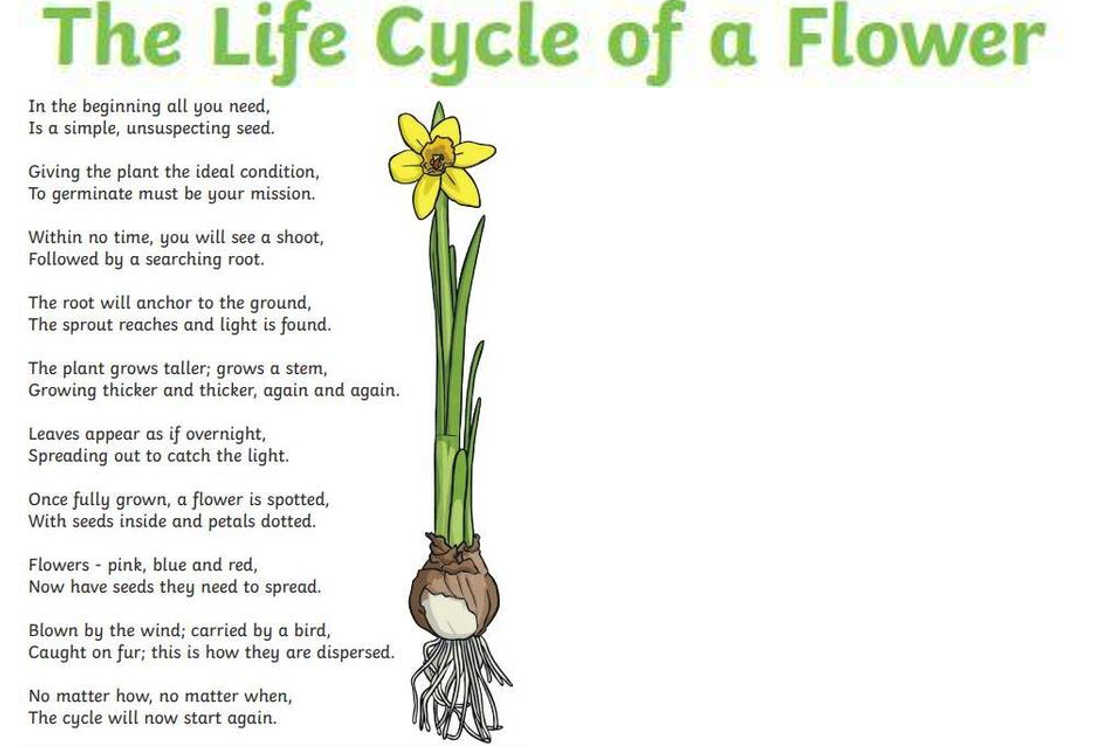
R List all of the ways that seeds are dispersed.
_____________________________________
I How does the word 'searching' help you to understand
the job of the root?
________________________________________
________________________________________
________________________________________
C Which phrase tells the reader that the life cycle is continuous?
_________________________________________
_________________________________________
LC: Know how the author’s choice of language affects the reader.
Can you remember what these words mean?
imagery simile metaphor onomatopoeia
Can you think of an example of each?
Why do writers use them?
Tell your talk partner.

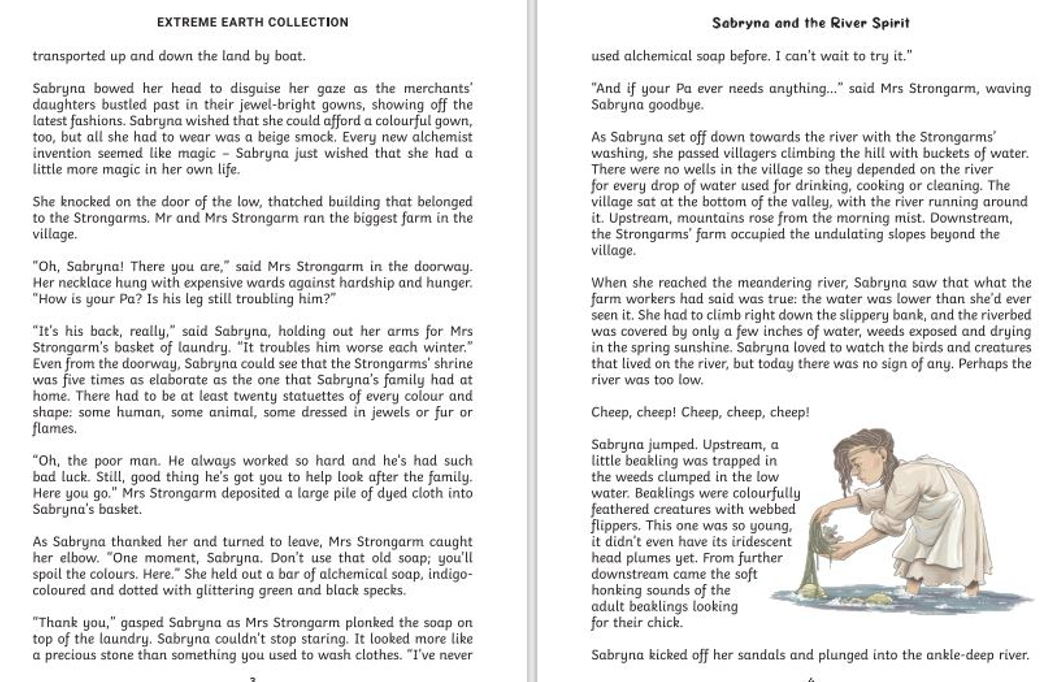
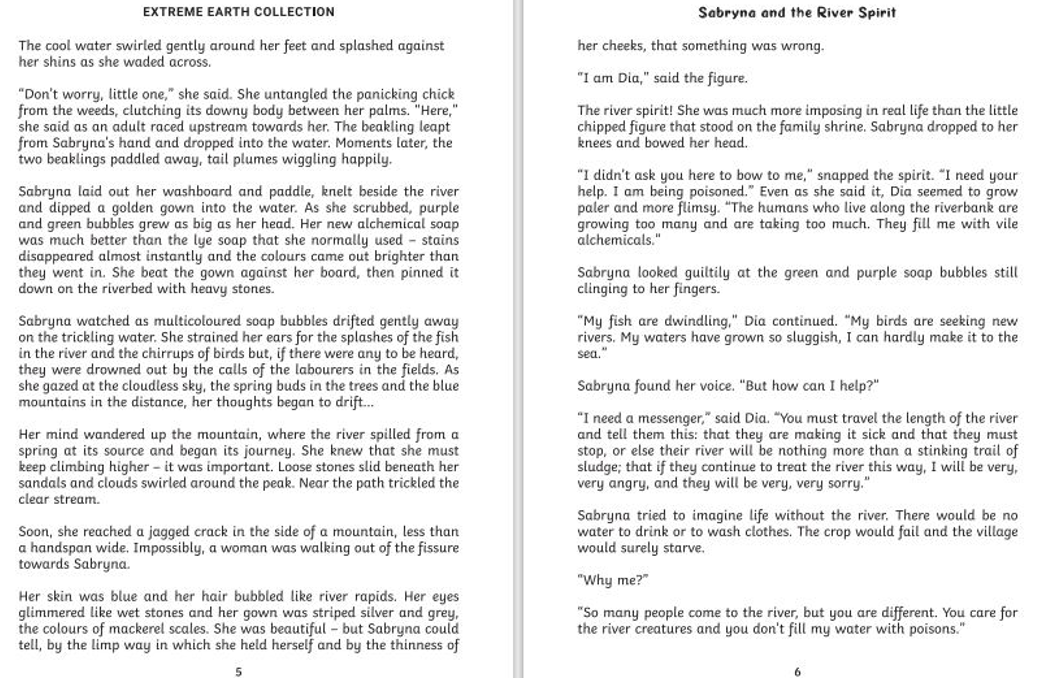
Re-read Chapter 1 of Sabryna and the River Spirit.
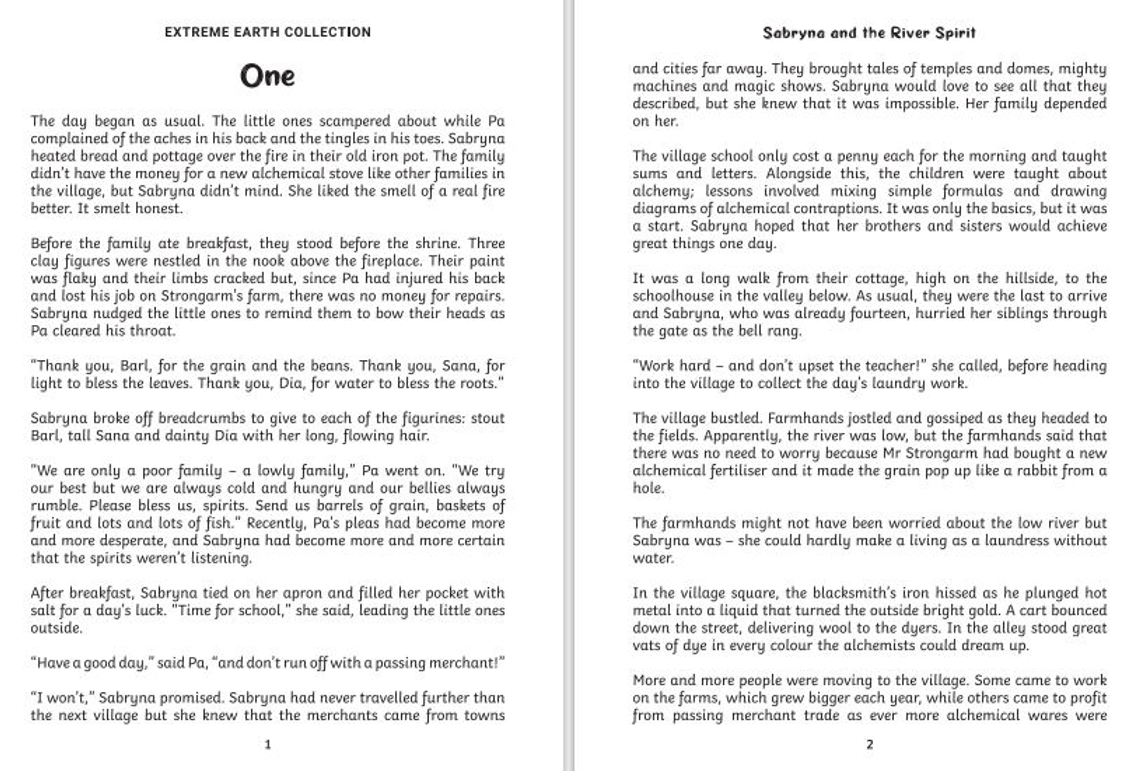
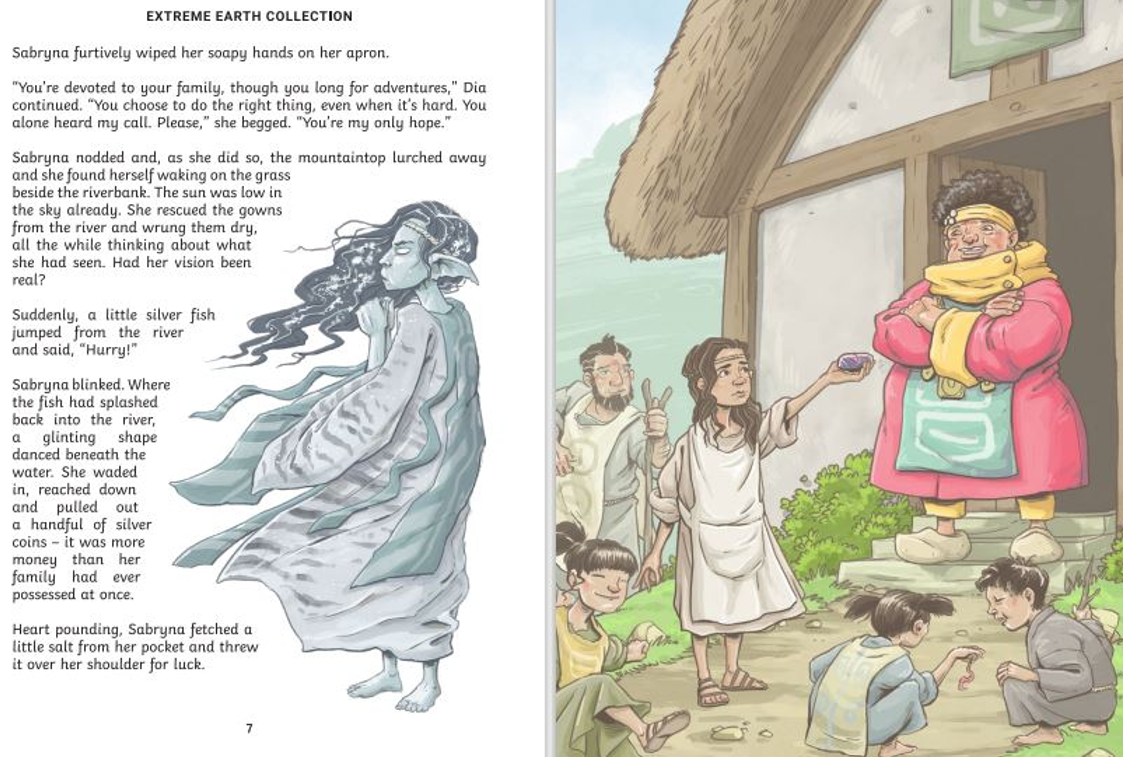
A) P2 – Find an example of onomatopoeia
B) In the same paragraph, there is a word which tells you how the wool cart is moving. Can you find it?
C) What does this word tell you about the ground underneath the wheels?
D) ‘Her hair bubbled like river rapids.’ What is the word for this type of imagery?
Can you find another example in this paragraph?
Challenge:
Read the paragraph on page 4 beginning
‘Sabryna jumped.’
What is your favourite word or phrase in this paragraph?
Explain why it captures your interest or imagination.


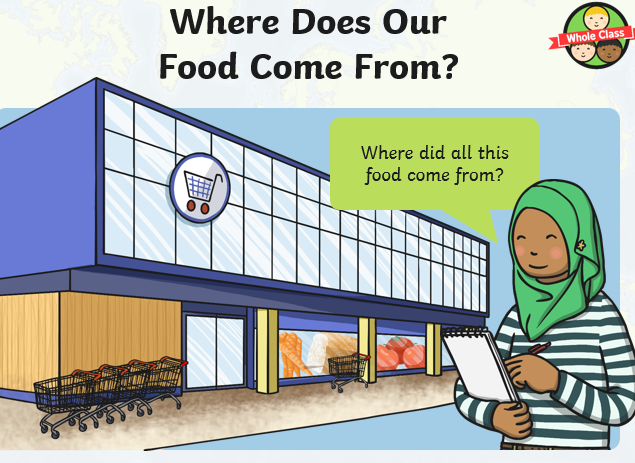
LC: to use our research skills to find out where foods are grown and reared and how some foods are caught or processed?
After reading the powerpoint above,
answer the questions on Seesaw.

Where does ALL food come from?
____________________________________________
In which part of the UK are these items grown/sourced?
Cherries – _______________________
Rhubarb – _______________________
Beef – _________________________
Tea – __________________________
From which part of the world do these foods come from?
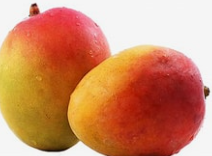
Mangoes - ___________________________
Rice - ______________________________
Bananas - ___________________________
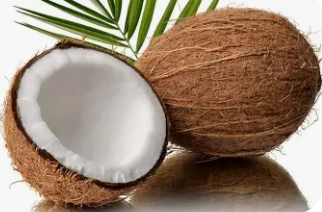
Coconut - ____________________________
Oranges - ___________________________
What is seasonality?
___________________________________________________________________________________________________________________________________________________
Which foods are at their best in April?
___________________________________________
Now let's think about how far our food travels to get to our plate!
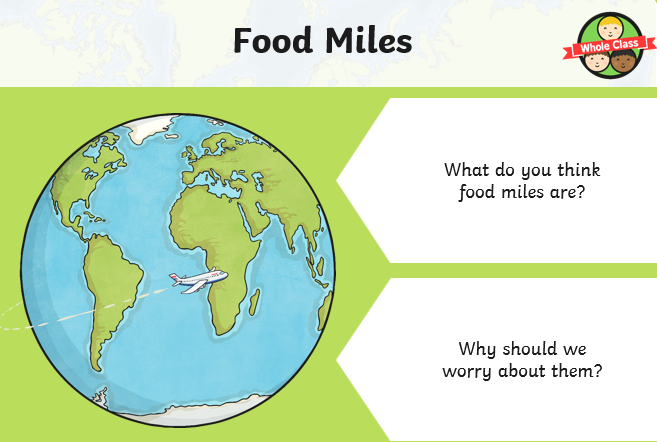
Use the calculator below to find the distances these food items have travelled to get to our plates!
How far has my food travelled?
Mangoes - _____________________
Coconuts - ____________________
Bananas - _____________________
Rice - ________________________
Oranges - ______________________