



Wednesday 9th September 2026

Task: Using mark up, add the missing commas and other punctuation. Remember that a fronted adverbial tells us when, where or how something happens.
- one sunny morning prince llywelyn went hunting
- deep in the forest gelert heard a strange noise
- without a moment of hesitation the brave dog ran towards the wolf
- when the prince returned he cried where is my baby
- behind the overturned cradle the baby was safe and sound
- with tears in his eyes the prince said gelert you saved my child
RIC

R - What was in the ornate little box?
I - What might Robert be thinking as he's clearing up the games?
C - Define the word: several.
Main
Wednesday 9th September 2026
LC: To demonstrate active reading strategies making connections within a text.
Good readers use their background knowledge to connect with what they read.

Background knowledge
ON
 Text to self

 Text to world

 Text to text

Modelled:
the mysterious benedict society pdf.pdf
Independent
Read the prologue of Cloudlanders and complete your own making connections responses in your reading journals.
Text to self -
Text to world -
Text to text -
Adapted:
LC: Listening to and discuss stories at a level beyond that at which they can read independently.

Wednesday 9th September 2026
LC: to retrieve information from a text from what is stated and what is implied.
Grammar Warm Up
LC: to know how expanded noun phrases are used in writing for effect


When we read stories, we learn information about the story in two ways.
One is what is stated clearly in the text.
The second is what is implied (suggested but not said directly or clearly).
Let's read the story together.


Let's look at what is stated clearly in the story.
With your partner, write short answers to these questions on your whiteboards:
1. Where is the story set?
2. List 2 things we learn about Llywelyn from the first paragraph.
3. Describe Gelert using 3 adjectives.
4. What happened to the Prince's wife?
5. What did Llewelyn ask Gelert to do in the second paragraph?
Now, let's read again and think about what is implied in the text.
This means that we understand a meaning in the text even though the writer has not stated it clearly.
We need evidence to support this which is a quote that we have copied from the story.
Look at the example below:


It is implied that people liked Llywelyn even though it is not written exactly in that way.
Instead, it says in the text that there was ....
' a brave and well-respected Prince called Llywelyn'
and this implies (suggests) that people liked him.
What would it imply if the writer said,
' .... a short-tempered and brutal Prince called Llywelyn'
Discuss with your talk partner.


Adapted
The Legend of Gelert
Long ago, in Wales, there lived a prince called Llywelyn. He had a brave and loyal dog named Gelert.
One day, the prince went hunting. He left Gelert at home to look after his baby.
When the prince came home, Gelert ran to meet him. The dog had blood on his mouth. The prince rushed into the baby's room and saw that the cradle had been knocked over.
“Oh no!” cried the prince. “Where is my baby?”
He thought Gelert had hurt the baby. In his anger, the prince struck Gelert with his sword.
Then the prince heard a little cry. He looked behind the cradle and found his baby safe and sound. Nearby lay a wolf. Gelert had fought the wolf to protect the baby.
The prince realised that Gelert had saved his child. He was very sad that he had hurt his loyal friend.
The prince buried Gelert and made a special grave to remember him. The place became known as Beddgelert, which means “Gelert's grave.”
The lesson of the story: We should not make decisions when we are angry. We should find out what has really happened first.
Questions
- What was the name of the dog?
- Who did Gelert look after?
- What animal did Gelert fight?
- How did the prince feel at the end?
- What can we learn from the story?


Ancient Greek vase paintings are one of the oldest forms of art in the western world. The earliest decorative pottery dates from the seventh millennium BC. Making vessels from fired clay was the most widespread creative industry in ancient Greece. A variety of shapes and forms were created, many of which continue to inspire the design of our own household objects today.


Greek architecture is considered a part of classical architecture, which also encompasses Roman architecture. The Greek style was defined by its uniformity, simplicity, proportions, and harmony.
Generally speaking, Greek architecture refers to the ancient buildings designed and developed by the ancient Greek cities and civilisations that existed throughout the Greek mainland.
We have a lot to thank ancient Greece for—the Olympics, Western medicine, democracy, and, of course, Greek architecture. The ancient civilisation, which encompassed the mainland, the Greek islands, and other areas along the Mediterranean (from modern-day Slovenia to western Turkey), produced precise and monumental buildings that have influenced thousands of years of architecture. These designs emphasised perfection over innovation, creating simple yet beautiful structures that are still referenced in modern designs.


Facts About Ancient Greek Sculptures:
- One of the most famous sculptures was called “Statue of Zeus at Olympia.” This statue was found in Athens.
- The statues of gods and goddesses were worshiped by the people.
- Terracotta figures were very large, larger than most statues.
- Gems were used to decorate the statues.
- Artists would sculpt gods, goddesses, mythical creatures, people and even figures from books.


A mythology creature such as the Griffin.
Griffins were mythical creatures with the head and wings of an eagle and the body of a lion. They probably originated in Near Eastern art and mythology, though they arrived in Greece at a very early period. According to the Greeks, the Griffins lived at the very edge of the world, where they hoarded gold and battled the legendary race of the one-eyed Arimaspians.


Medusa
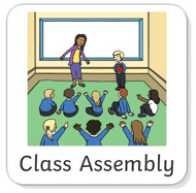
Think, Pair, Share: Belonging
Think: What does it feel like to belong somewhere? Think of a time when someone made you feel welcome.
Pair: Tell your partner about your special place or group. What do people do to help you feel that you belong?
Share: How can we help someone new feel like they belong in our class?
Key message: We all belong, and we can help others feel welcome, safe and included.