

Monday 23rd February 2026

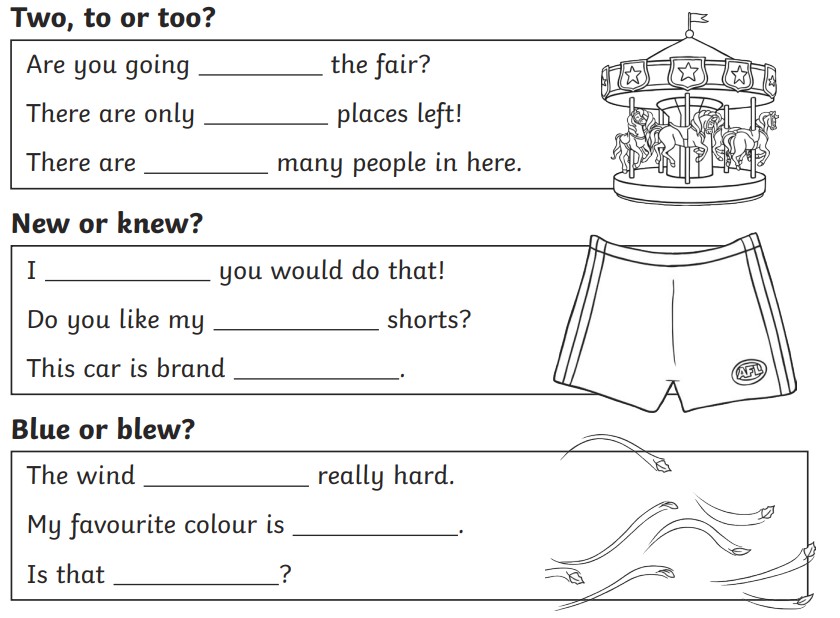
Homophones
Choose the correct homophone to complete each sentence.

Monday 23rd February 2026
LC: To use a narrative toolkit to write a scene (independent)
Watch up to 6 minutes of the clip below.
Take notes of what is happening.
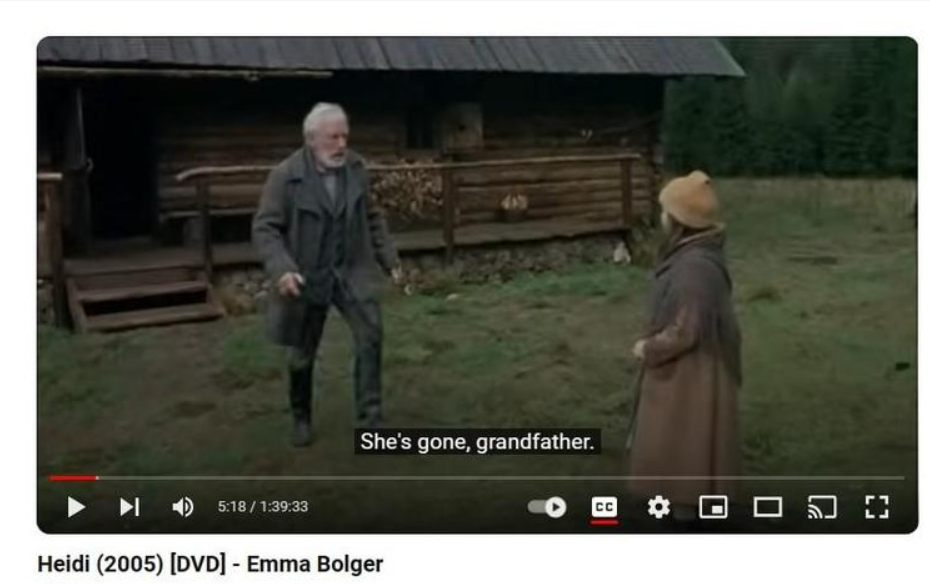
/i/video/4K_Fathima/Heidi.mp4
Task: Using your notes of the clip up to minutes and the narrative toolkit write the scene.
Remember to use the toolkit we create.
Toolkit for a narrative: character and setting.
- Third person, present tense
- Character alone with thoughts during the journey – apprehensive/excited
- Character is given a warning by a stranger of the dangers of where they are going
- Fronted adverbials for where – At her side, Up close,
- Objects are described as cold and bitter giving a sense of isolation and loneliness e.g. hard, wooden bench, unrelenting wind
- Character and parent view the land/their new home.
- Description using powerful adjectives, e.g. rolling gunmetal waves, forbidden part of the universe
- Sense of awe with the characters, e.g. A hushed voice full of awe and wonder.
- Parent keen for the response of the child – ‘What do you think?’ Only a little speech used.
- Adverbs, e.g. she said breathlessly … really caught her eye
- Further description of what can be seen – use of powerful verbs – hummed, shrouded
- Similes – like a ladder reaching right up to space
- adverb sentence starter
Adapted:
LC: To orally retell a narrative.
Re-read chapter 2 and orally retell the story using colourful semantics. Then write your sentences down.
RIC
 R
R I
I C
C Monday 23rd February 2026
LC: Scan for dates, numbers and names to retrieve information.
What skills do we use to retrieve information from texts?
Shared read: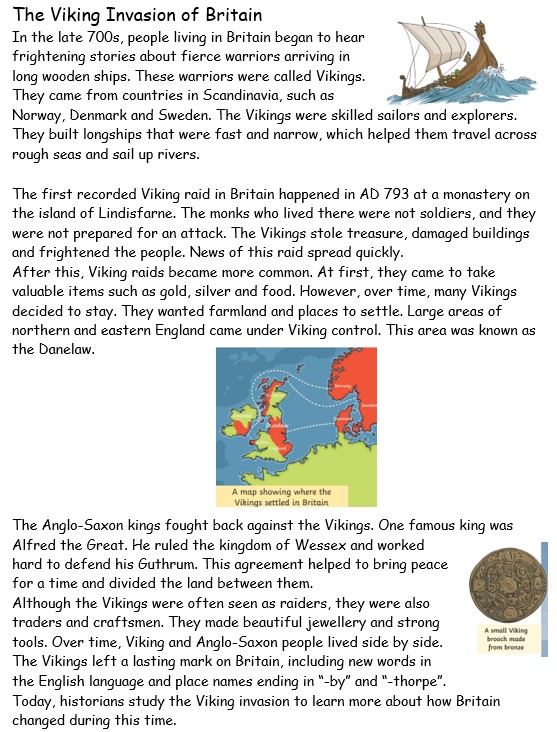
Using our retrieval skills, we will find information in the text and record it.
My turn:
Which three countries did the Vikings come from?
In what year did the first recorded Viking raid in Britain take place?
Your turn (start on a new line for each answer):
Where did the first recorded raid happen?
What kinds of things did the Vikings steal in their early raids?
What was the name of the area of England controlled by the Vikings?
Which Anglo-Saxon king fought against the Vikings?
Name one way the Vikings have influenced Britain that we can still see today.
Adapted
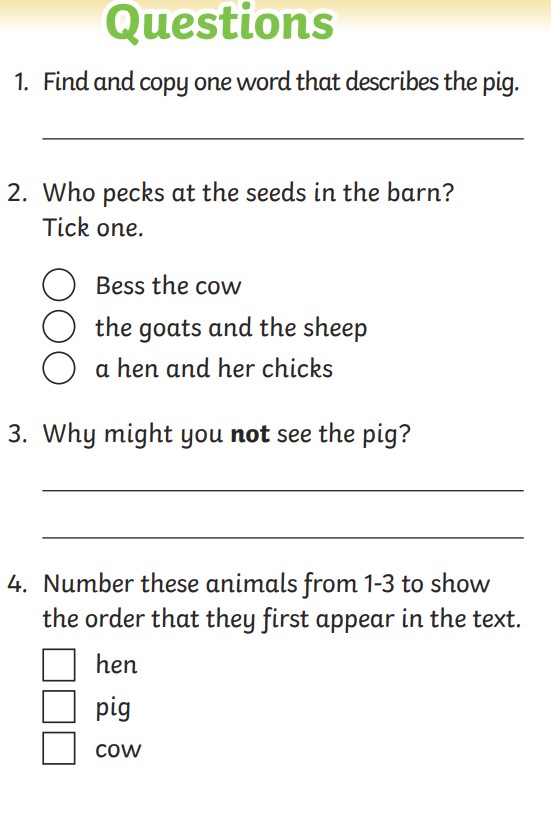
🐶 The Lost Puppy
Sam was playing in the park with his red ball. The sun was shining, and the birds were singing in the trees.
Suddenly, Sam heard a small sound. “Woof! Woof!” It was coming from behind a big bush.
Sam walked over to look. Behind the bush, he saw a tiny brown puppy. The puppy had a blue collar and big floppy ears. It looked scared and hungry.
Sam gently picked up the puppy. “Don’t worry,” he said. “I will help you.”
Sam took the puppy to the park office. The lady at the desk smiled. “This puppy belongs to Mrs Green,” she said. “She has been looking everywhere!”
Soon, Mrs Green came running into the office. “Oh, thank you!” she said, hugging the puppy. Sam felt proud and happy.
📖 Retrieval Questions
-
What was Sam playing with?
-
Where was Sam playing?
-
What sound did Sam hear?
-
Where was the puppy hiding?
-
What colour was the puppy’s collar?
-
How did the puppy feel?
-
Where did Sam take the puppy?
-
Who did the puppy belong to?
-
How did Sam feel at the end of the story?
Adapted
Monday 26th February 2026
LC: To use a narrative toolkit to write a scene (independent)
Take notes of what is happening.
/i/video/4K_Fathima/Heidi.mp4
Task: Using your notes of the clip up to minutes and the narrative toolkit write the scene.
Remember to use the toolkit we create.
Toolkit for a narrative: character and setting.
- Third person, present tense
- Character alone with thoughts during the journey – apprehensive/excited
- Character is given a warning by a stranger of the dangers of where they are going
- Fronted adverbials for where – At her side, Up close,
- Objects are described as cold and bitter giving a sense of isolation and loneliness e.g. hard, wooden bench, unrelenting wind
- Character and parent view the land/their new home.
- Description using powerful adjectives, e.g. rolling gunmetal waves, forbidden part of the universe
- Sense of awe with the characters, e.g. A hushed voice full of awe and wonder.
- Parent keen for the response of the child – ‘What do you think?’ Only a little speech used.
- Adverbs, e.g. she said breathlessly … really caught her eye
- Further description of what can be seen – use of powerful verbs – hummed, shrouded
- Similes – like a ladder reaching right up to space
- adverb sentence starter
23.02.26
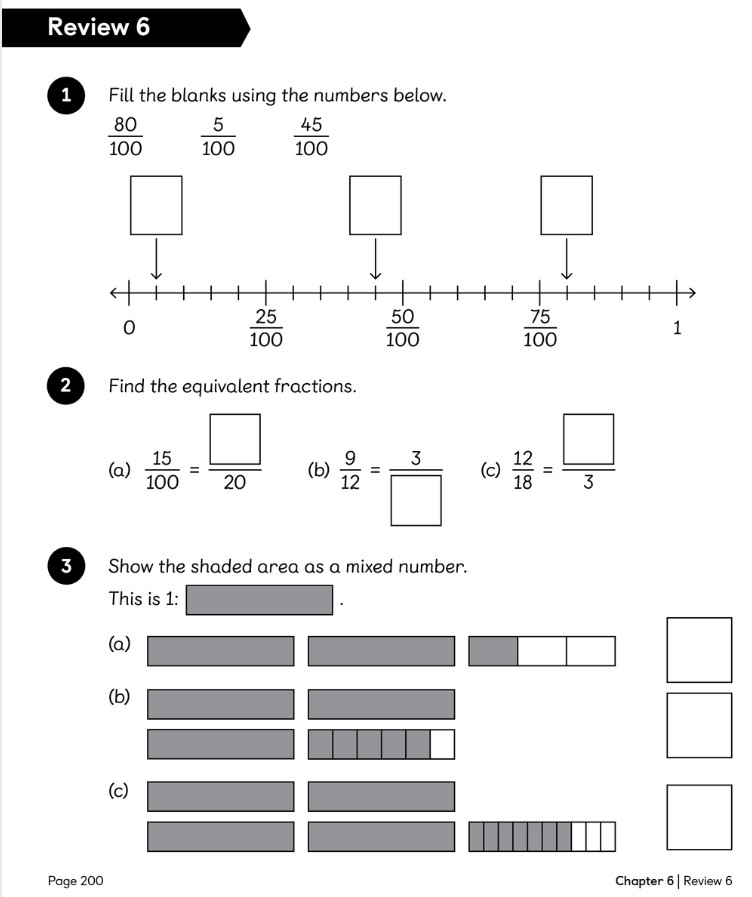
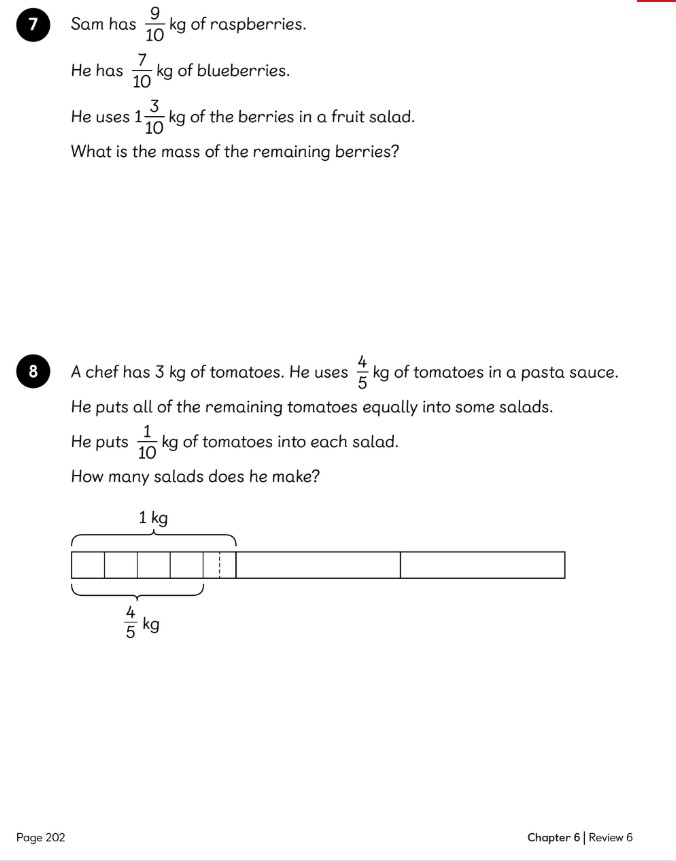
Today we will review our learning about fractions.
Do you remember what equivalent fractions are? Do you remember how to recognise and calculate equivalent fractions.
Do you remember how to simplify fractions?
Do you remember what an improper fractions is?
Do you remember what a mixed number is?
Do you remember how to convert each of them into the other?
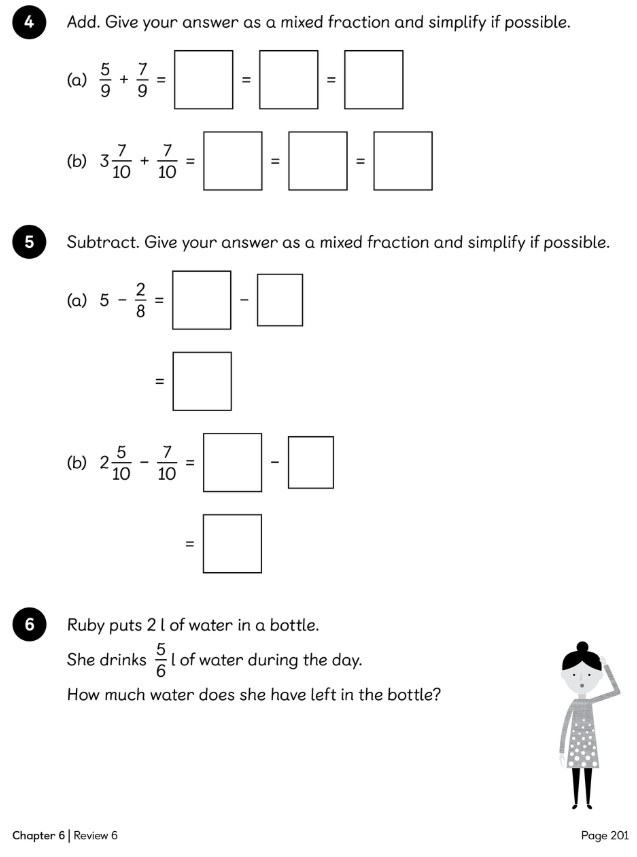
Do you remember how to add fractions? Do you remember how to add fractions and mixed numbers?
Do you remember how to subtract fractions? Do you remember how to subtract fractions and mixed numbers?
What strategies do we need to use to help us decide what maths is needed to solve word problems?
Now let's apply all that learning:
Review 6, pages 200-202

Monday 26th February 2026
LC: To design a healthy food product: Stage 4.
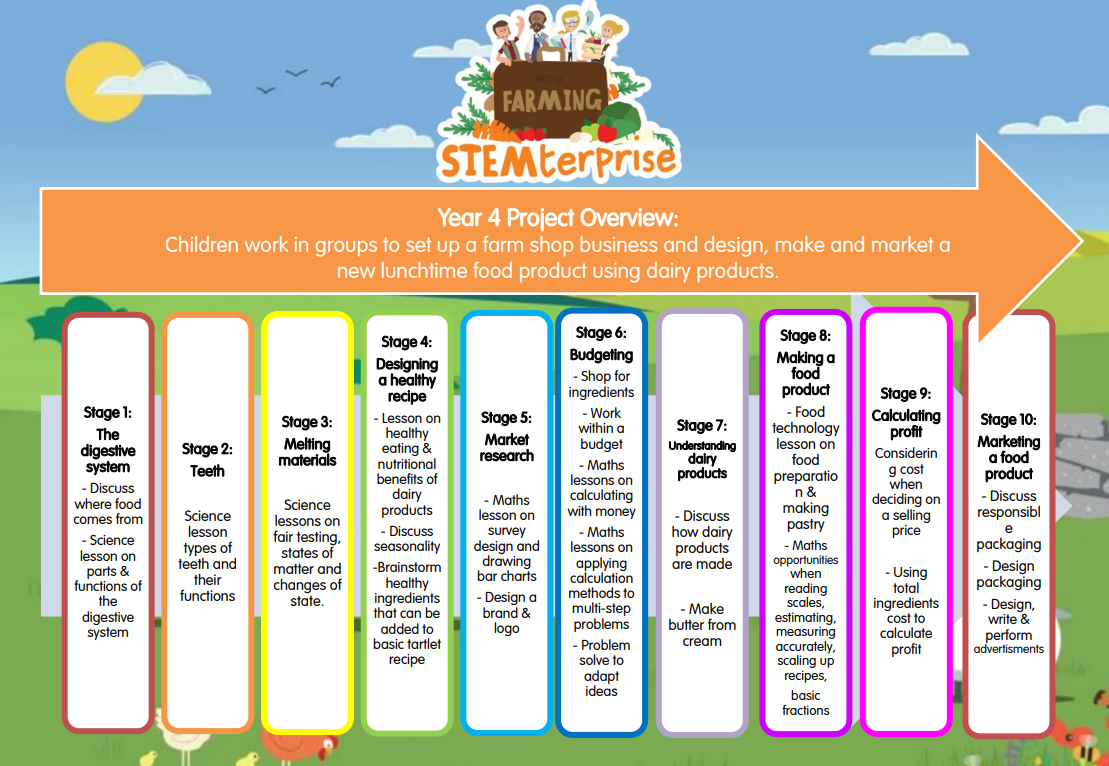
farming stemterprise year 4 stage 4 1 .pdf