

PSHCE
At Stoneyholme, PSHCE encompasses: Health and Wellbeing, Relationships and Living in the Wider World. During PSHCE lessons, children learn about themselves, other people, rights and responsibilities and relationships. PSHCE/RHE gives children the knowledge, skills and attributes to keep themselves healthy and safe, teaching skills to prepare them for life beyond Stoneyholme.
PSHCE stands for Personal, Social, Health and Citizenship Education.
RHE stands for Relationships and Health Education.
I am a Stoneyholme citizen because...
- I have the confidence to use my core beliefs and positive influences to make the right choices
- I know what to expect from a healthy, loving relationship
- I know how to look after myself both physically and emotionally, understanding how and who to seek help from when I need it
- I feel I am a valued member of society and embrace diversity
- I can lead an independent life and show resilience to manage any challenges that come my way through the journey of life
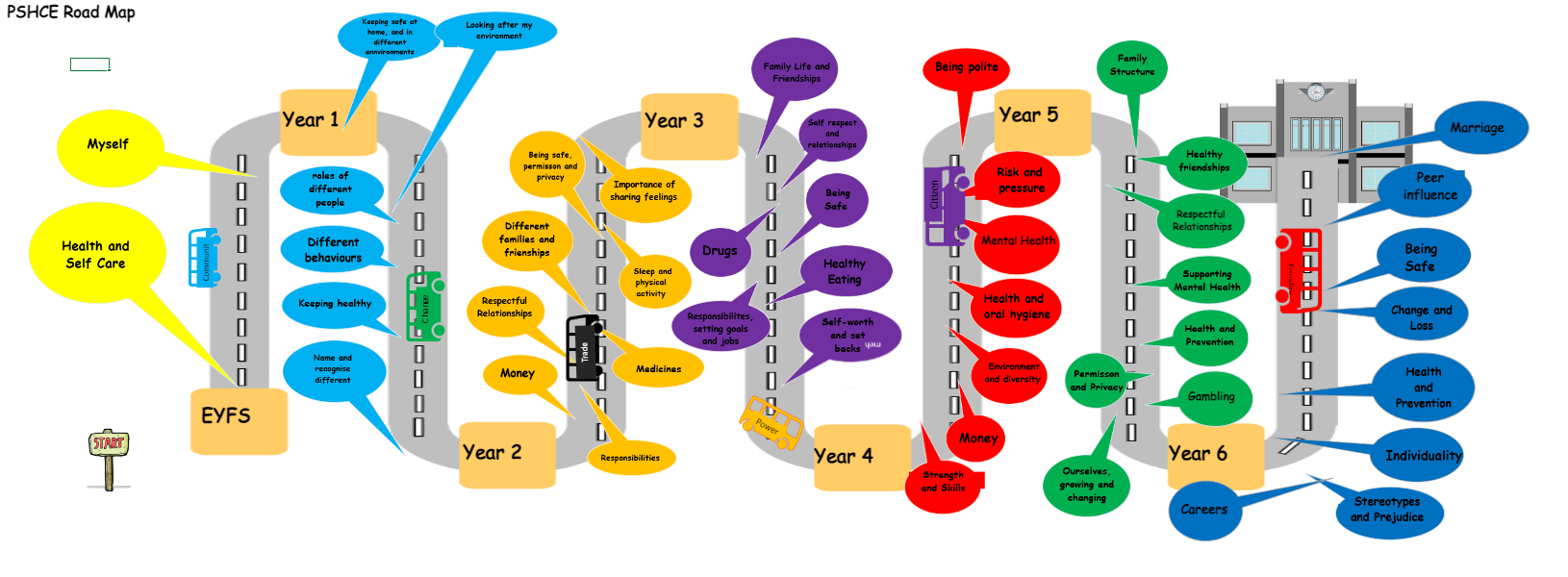
Road Map
Curriculum Overview

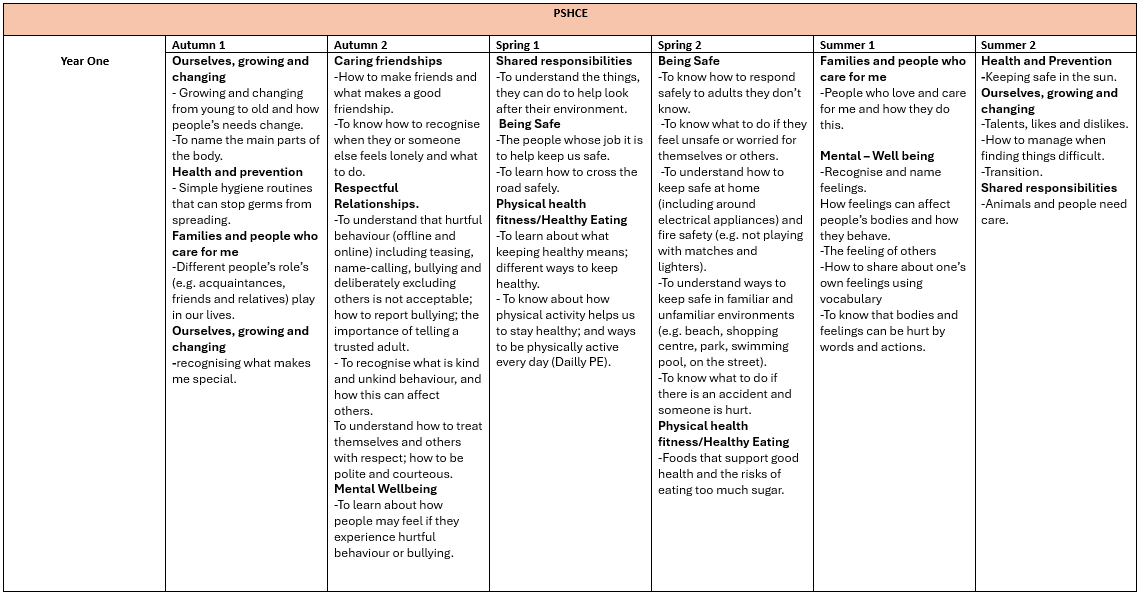
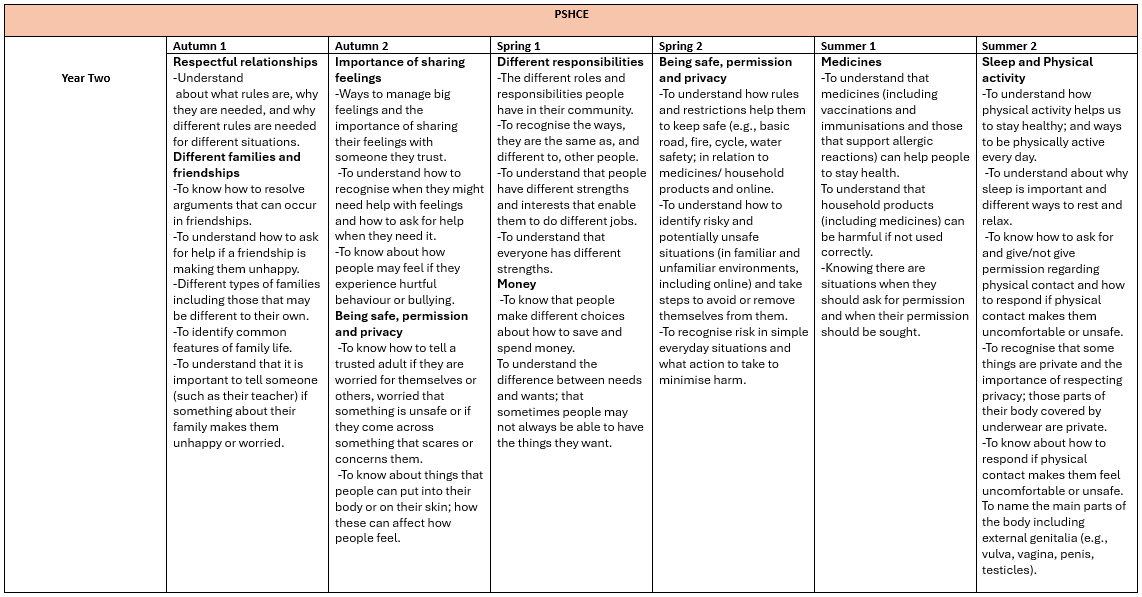
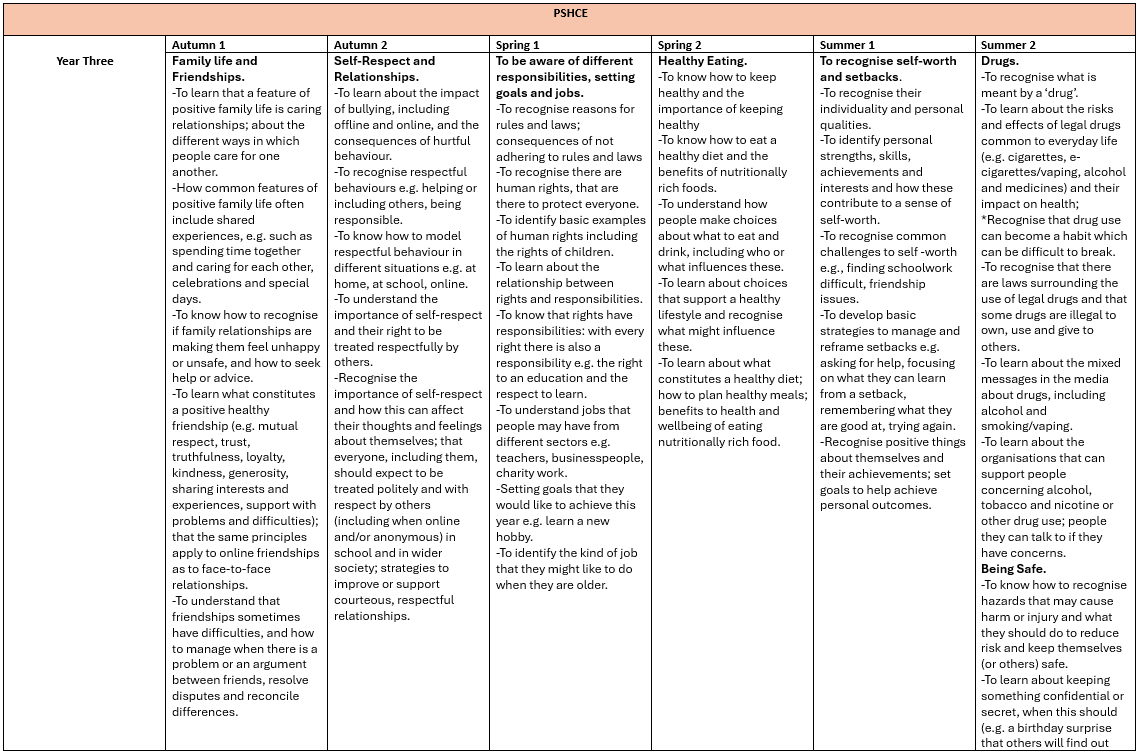



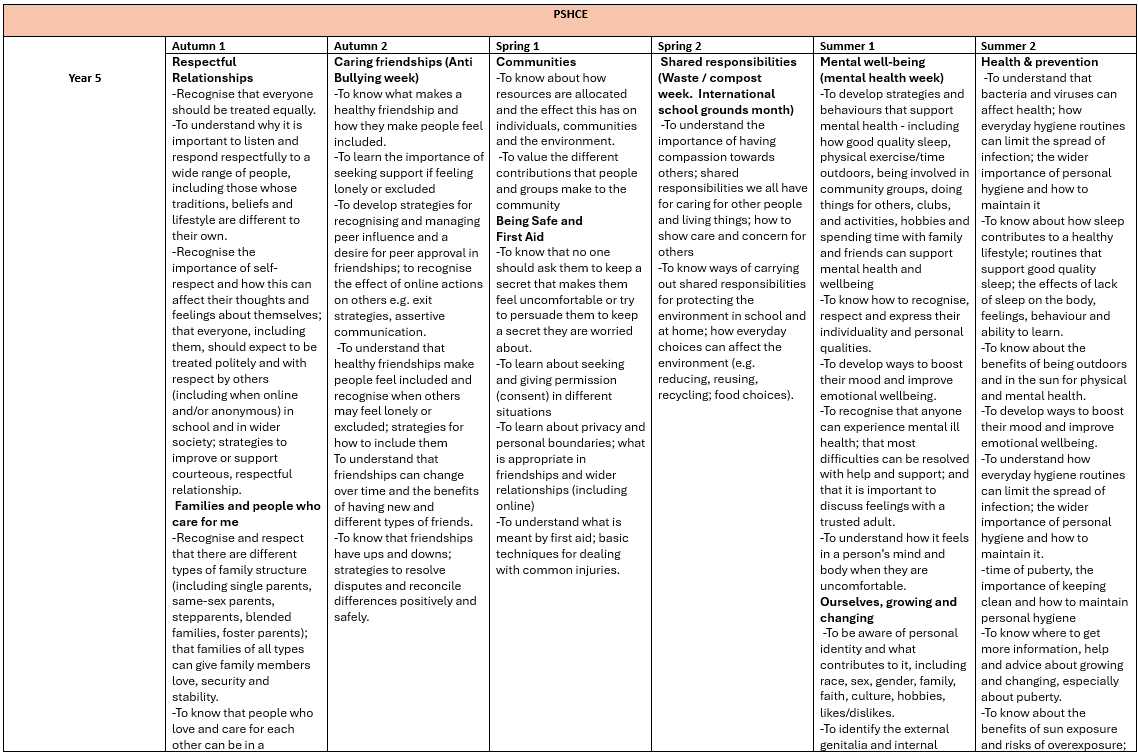
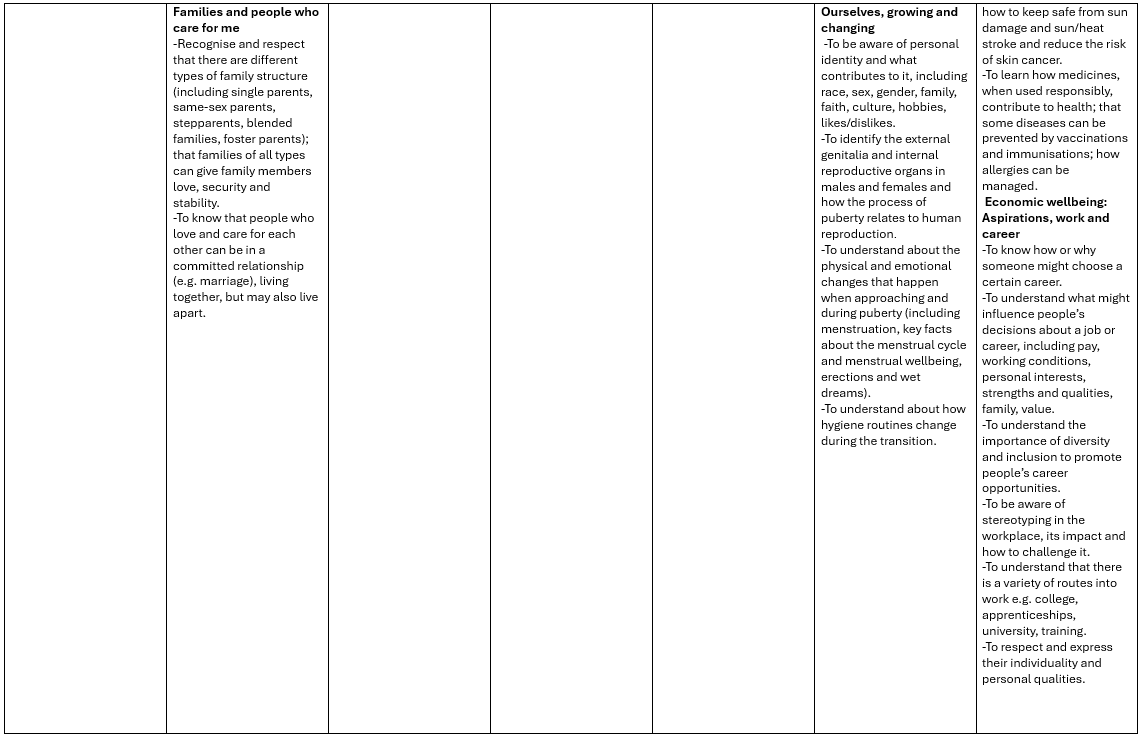
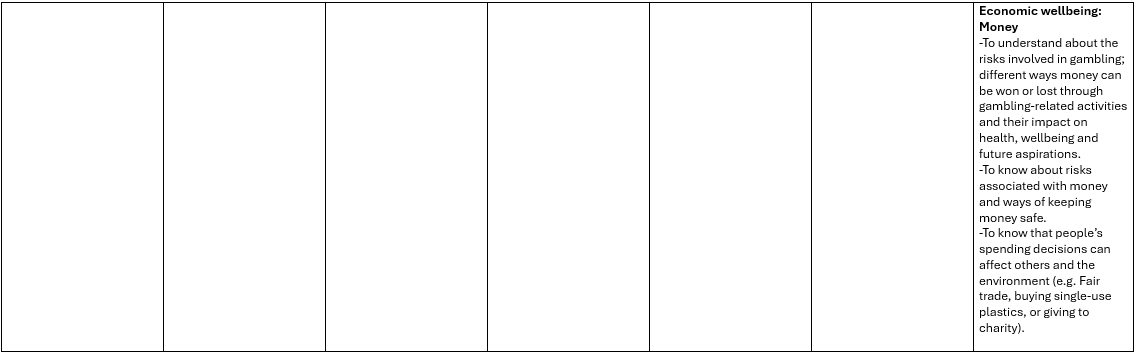
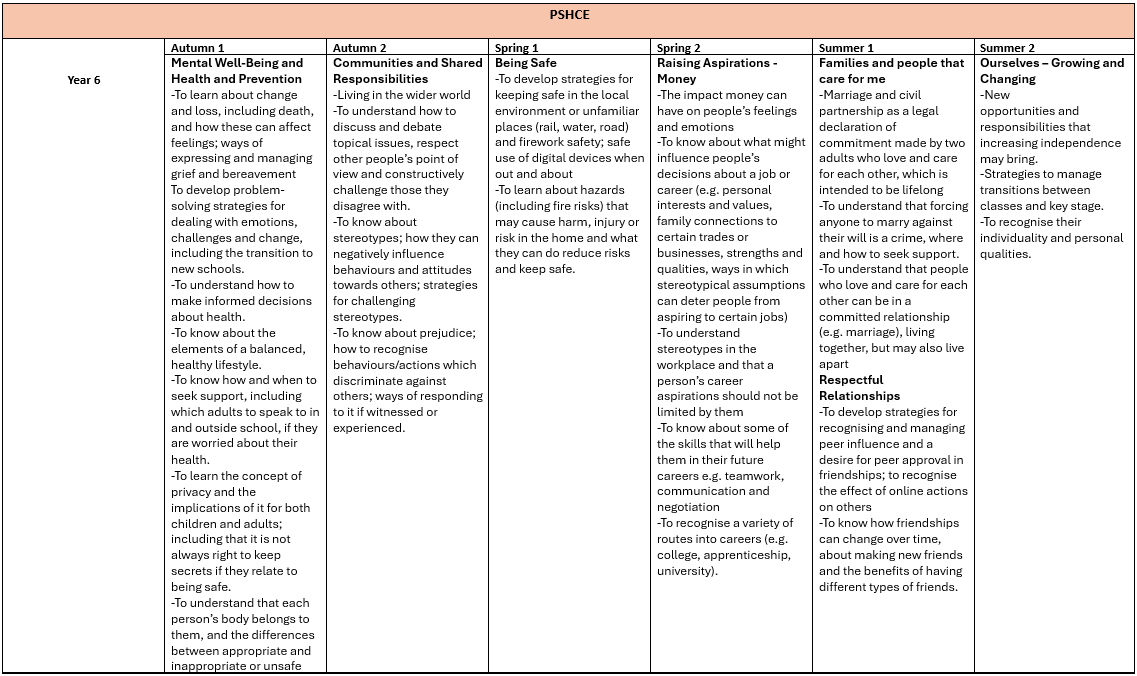

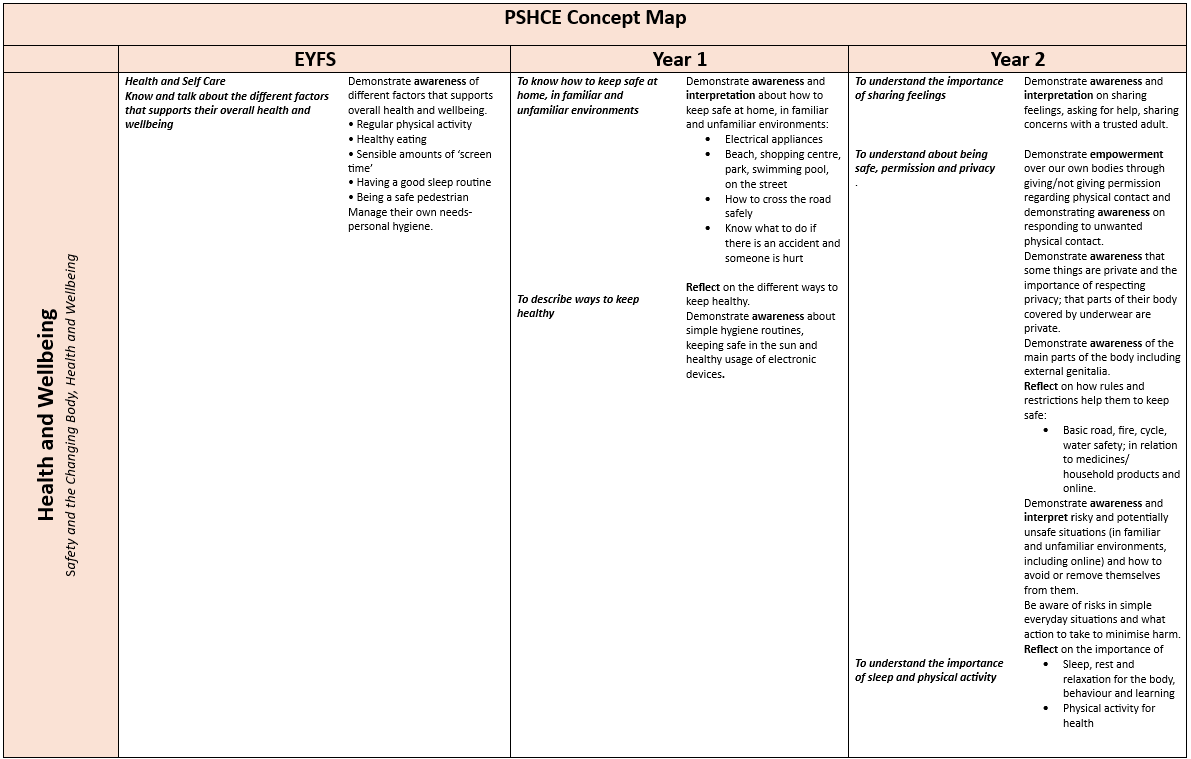
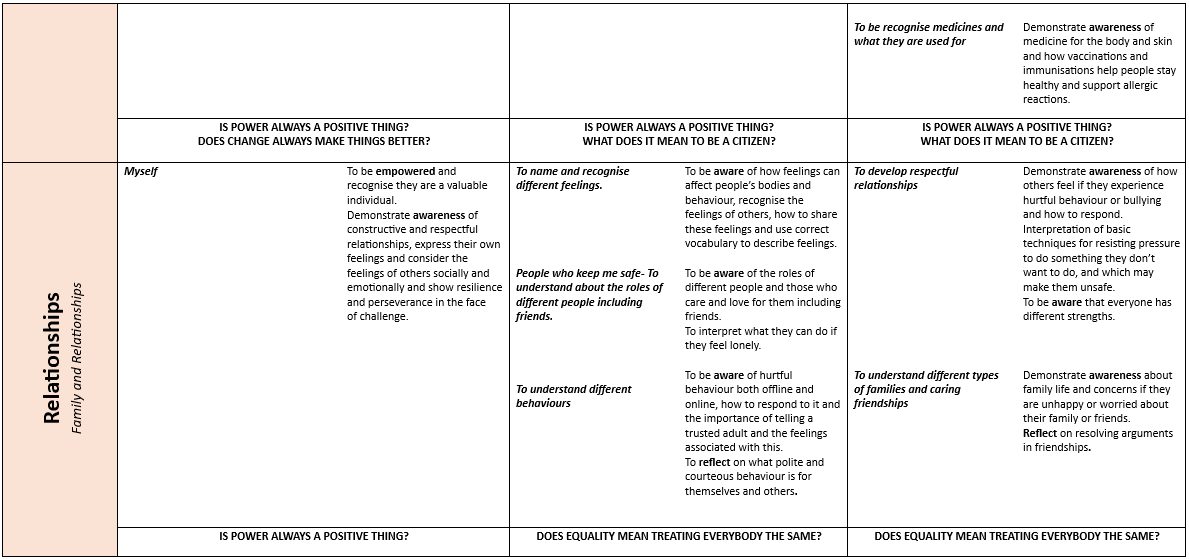
Together, substantive and disciplinary concepts help students not only know more but also remember more. At Stoneyholme Community Primary School, children learn about their health and wellbeing, safety, the changing body, family and relationships, citizenship and economic wellbeing (substantive concepts) through interpretation of themselves, awareness of issues that affect themselves and others, reflection and empowerment that gives them the opportunities to make their own choices for their lives whilst at Stoneyholme and beyond (disciplinary concepts).


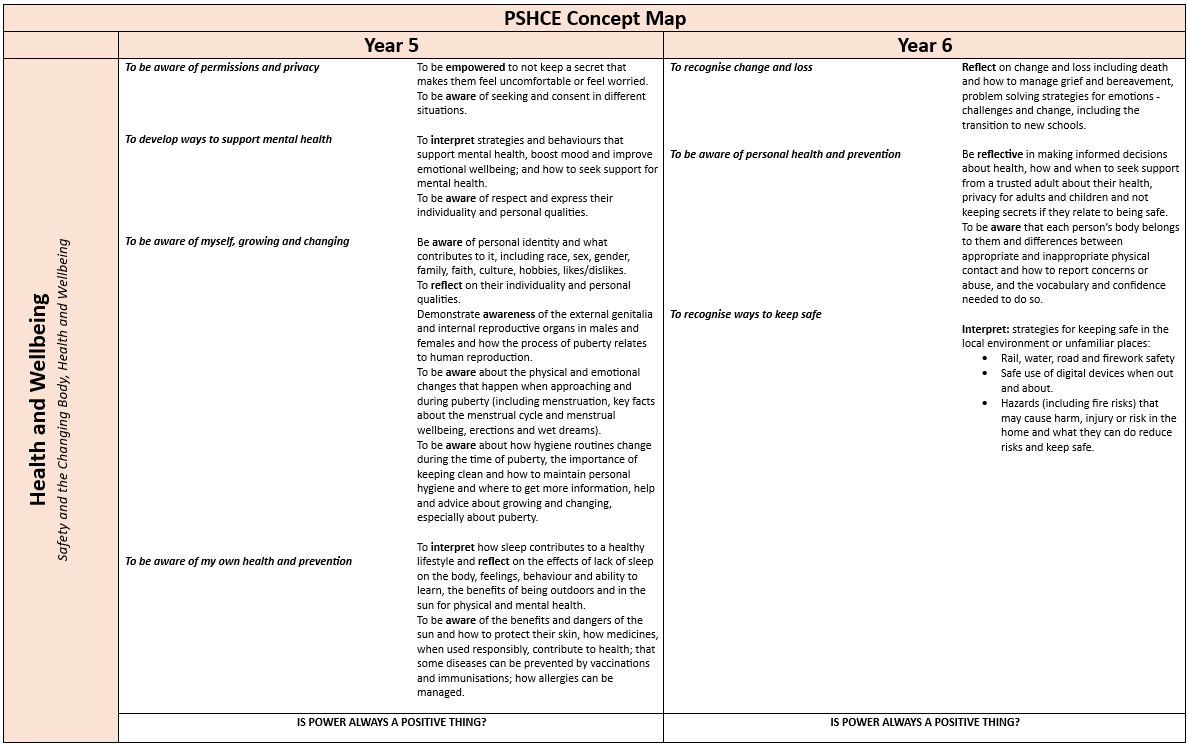
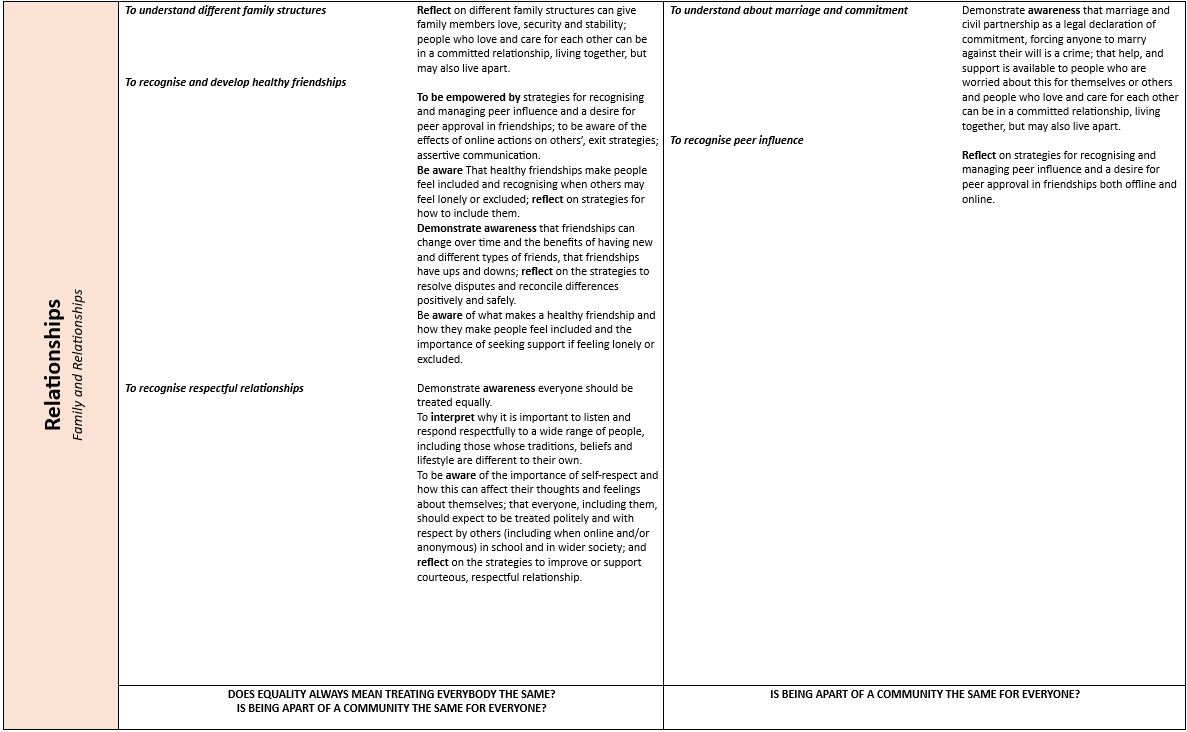
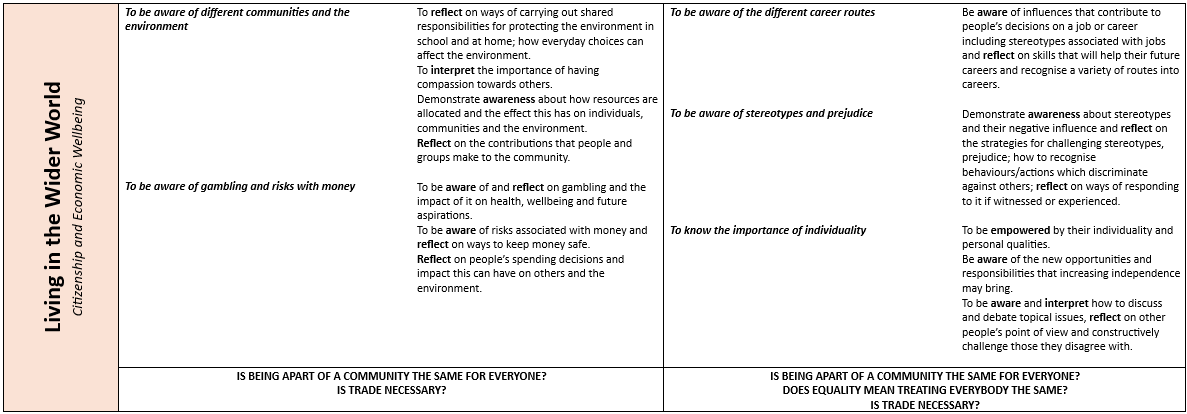
Situational Report
a situational report on pshce.pdf
Policy
PSHCE Policy
Vision
PSHCE education at Stoneyholme will equip children and young people with knowledge, understanding, attitudes and practical skills to live healthy, safe, productive, fulfilled, capable and responsible lives.
PSHCE comprises all aspects of the school's planned provision to promote children's personal and social development, including health and wellbeing. At the heart of this is the UN Convention on the Rights of the Child. (UNCRC)
Intent
At Stoneyholme Community Primary School, we aim to provide a broad and balanced PSHCE ‘Learning for Life’ curriculum with high-quality teaching at the core. Recognition is given to the importance of PSHCE in everyday life, both now and in the future, including in relationships, employment, living in a community, keeping safe, and growing and changing.
Teaching and learning will be enriching, purposeful and conducted in a safe secure learning environment ensuring children know more and remember more.
We intend that all pupils will be:
- Prepared for adult life by supporting them through their physical, emotional, mental, social, spiritual and moral development.
- Supported to make informed and safe life choices with confidence, which they can use as they move through their lives beyond Stoneyholme.
- Taught through our ‘Learning for Life’ PSHCE curriculum the building blocks needed to develop positive and safe relationships, including relationships with family and friends and relationships online.
- Supported to understand how to treat each other with kindness, consideration and respect.
- Given the information and vocabulary, they need to make good decisions about their own health and wellbeing and to seek support as soon as a need arises.
Through our PSHCE curriculum, we deliver statutory Relationships Education and Health Education alongside wider personal, social, health and citizenship learning. Our separate RHE policy explains the school’s approach to the delivery of Relationships Education and Health Education.
Implementation
Knowledge/Skills:
- In PSHCE, at Stoneyholme School, we implement a knowledge and skills led PSHCE curriculum. Pupils will be given regular opportunities to apply their knowledge & skills in PSHCE lessons, across subjects and in the wider roles in school, through a range of practical, collaborative and written work
Progression:
- Planning and teaching will ensure that pupils receive the statutory Relationships Education and Health Education curriculum, alongside wider non-statutory PSHCE learning, appropriate to each year group.
- Teachers will plan lessons that build upon pupils’ existing knowledge and skills and ensure there is deep understanding so that all children master learning and development.
- Adaptive planning will incorporate the knowledge and skills needed by pupils in each class and year group, meeting the needs of all children.
Concepts:
- PSHCE will offer pupils a meaningful way of communicating, understanding and developing in social, cultural, emotional, relational, moral and physical dimensions of the world in which they live
- They will also be informed as to how to make safe choices, respect themselves, form and maintain worthwhile and satisfying relationships
Vocabulary:
- Our intent for vocabulary in PSHCE is to expose all pupils to year-group-specific PSHCE language.
- Teachers will share this at the start of the topic or lesson.
- Pupils will be expected to use vocabulary both verbally and in written form to discuss, reason and communicate about the topics and issues covered.
- Teachers will allow children to verbalise their thought processes and encourage the use of correct terminology and vocabulary when doing this
Delivery of the curriculum
The PSHCE curriculum is delivered through a variety of different ways:
- PSHCE sessions, which are taught weekly for one hour.
- Class assemblies, class discussions and debates.
- Assemblies.
- Awareness days and weeks.
- Enrichment activities during lunchtime and at the end of the day.
- Cross-curricular links, including PE, Science, RE, Maths and Computing.
- Picture News, a weekly resource featuring a current news story, an image and a thought-provoking question for discussion.
Evidence is recorded in a class floor book, and children’s work and engagement in PSHCE are uploaded to their class page every half term.
Impact
Pupil voice
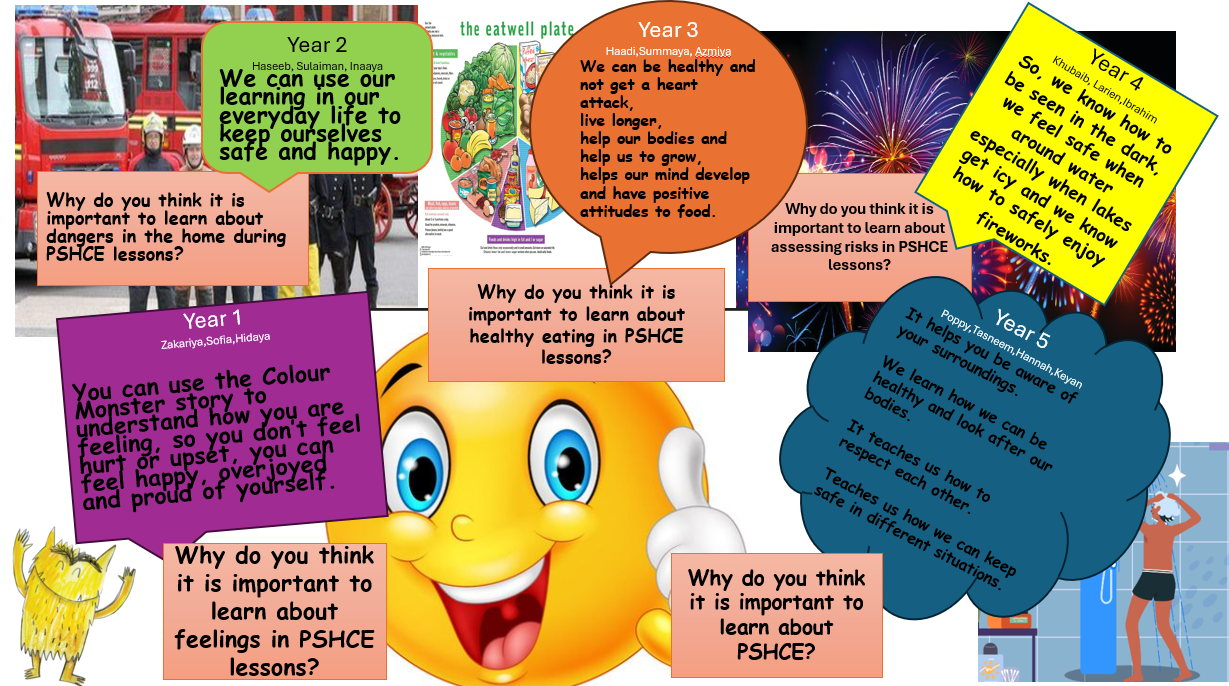
It is important to listen to the voices of everyone in the school community. Children's responses during PSHCE lessons and monitoring by the subject leader will be used to assess the impact of our current curriculum and make changes where necessary to continue to engage and inspire the children. The Pupil Parliament is a platform for pupils to discuss relevant and current issues, and Picture News is used to encourage debate about current issues.
Knowledge
Children will learn about personal, social and emotional development, including the importance of family life, valuing stable and loving relationships based on the British values of mutual respect, individual liberty, tolerance, rule of law and democracy, understanding personal physical development at an age-appropriate time, and living in the wider world and community.
Skills
Children will have the resilience and emotional tools to understand the world in which they live, manage successful relationships, live safely online and offline, and manage their growing and changing bodies. Children will grow, learn and develop healthy behaviours and relationships in the world and country in which they live.
Cultural capital
Our children face environmental, emotional, cultural and humanitarian challenges. Children will explore British Values and their impact on their lives through engagement with current affairs. This includes democracy, the rule of law, individual liberty, mutual respect and tolerance of those with different faiths and beliefs. They will consider how these values help them to respect others, embrace diversity and contribute positively to society. They will engage with adults from different career backgrounds, faiths and religions during PSHCE lessons and activities.
Assessment and monitoring
Our PSHCE curriculum is planned and organised to ensure progression. We use the following methods to track pupils’ progress in PSHCE:
- Key questioning to assess prior knowledge and current understanding.
- Pupil discussions within class about their learning.
- Pupil interviews about their learning with the subject leader.
- Monitoring of floor books, knowledge organisers, long-term plans and the website.
- Lesson drop-ins by the subject leader.
RHE Policy
Relationship and Health Education Policy
RE stands for Relationship Education which is statutory in Primary Schools. At Stoneyholme Primary School, we are teaching Relationship and Health education as RHE, aspects of this are taught in PSHCE lessons and other interlink with different subjects.
Statutory Requirements
At Stoneyholme Primary School, we are committed to ensuring that the needs of all pupils are appropriately met and that every pupil understands the importance of equality and respect. All Relationships and Health Education (RHE) is taught without bias and in accordance with our legal responsibilities, including those set out in the Equality Act 2010.
As a primary school, we are required to provide statutory Relationships Education to all pupils, as set out in Section 34 of the Children and Social Work Act 2017. Health Education is also statutory for primary school pupils. These subjects are taught at Stoneyholme Primary School through our RHE and PSHCE curriculum, in accordance with the Department for Education's current statutory guidance.
This policy has been updated with regard to the Department for Education’s revised statutory guidance, Relationships Education, Relationships and Sex Education (RSE) and Health Education, which came into effect on 1 September 2026.
The teaching of additional, non-statutory Sex Education is not compulsory in primary schools. At Stoneyholme Primary School, we do not provide additional, non-statutory Sex Education.
Within the National Curriculum for Science, we teach pupils about the main external body parts, the changes humans experience as they develop to old age, and reproduction in some plants and animals. Parents can request further information about these Science topics if required. Parents cannot withdraw their child from National Curriculum Science.
Other related topics that fall within the statutory requirements for Health Education, such as puberty and menstrual wellbeing, are included within PSHCE lessons. These statutory topics are taught in an age-appropriate and sensitive manner, taking account of pupils’ needs and backgrounds.
Definitions
Relationshhips Education
Within this policy, as in the DfE guidance, Relationships Education is defined as teaching about the fundamental building blocks and characteristics of positive relationships, with particular reference to respectful friendships, family relationships, and relationships with other children and with adults, including online.
Health Education
For the purpose of this policy, Health Education is defined as teaching pupils about physical health and mental wellbeing, focusing on recognising the link between the two and being able to make healthy lifestyle choices.
Parents
Parents cannot withdraw their child from statutory Relationships Education or Health Education. Parents also cannot withdraw their child from the biological aspects of human growth and reproduction taught as part of the National Curriculum for Science. Parents can contact the school to request further information about the curriculum.
Vision
PSHCE/RHE Education at Stoneyholme will equip children and young people with knowledge, understanding, attitudes and practical skills to live healthy, safe, productive, fulfilled, capable and responsible lives.
Intent
Through our PSHCE/RHE programme, we aim to provide children with the knowledge, skills and understanding they need to lead confident, healthy, independent lives and to become informed, active and responsible citizens. In providing children with an understanding of healthy and respectful relationships and appropriate boundaries, we consider effective RHE to be a fundamental part of our approach to supporting pupils to grow into confident, caring, responsible and respectful young citizens.
Implementation
At Stoneyholme Primary School, RHE is taught within the Personal, Social, Health, Citizenship, Education (PSHCE) curriculum. In addition, some aspects of the RHE programme will be covered through:
- Science curriculum
- Computing
- Assemblies
- Stories
- PE in the context of health and hygiene
RHE is Learning for Life about personal, physical, moral and emotional development. It should teach children and young people to develop and form positive values, attitudes, personal and social skills, and increase their knowledge and understanding of how to make informed decisions and life choices. Our RHE curriculum the aims are to:
- provide our pupils with the knowledge to recognise what is healthy and unhealthy
- equip pupils with specific scientific health and relationship vocabulary
- enable pupils to come forward to report or seek advice if they are concerned or feel unsafe about themselves or others
- have a clear understanding of their human rights in the wider world and online
- have a deeper understanding and respect for ethnicity, culture, religion and others’ life choices
- have high aspirations and make a positive contribution to our community
- develop a robust character and strong sense of self
Our Curriculum
Our RHE curriculum is embedded within our PSHCE curriculum. The statutory objectives for Relationships and Health Education are set out in Appendices 1 and 2. The RHE curriculum is linked to our school values, British Values and Prevent, and an overview of our curriculum is set out in Appendix 3. We have developed the curriculum considering children’s age, needs and feelings.
Delivery of the Curriculum
Our Relationships and Health Education programme will be delivered in an age-appropriate and sensitive manner by class teachers, through assemblies and discussion.
The curriculum is taught in classes, except for some content being covered in single-sex groups, such as menstrual hygiene. Some aspects and objectives are interlinked with other subjects, and aspects of Relationships Education are taught as stand-alone PSHCE lessons.
We aim to provide a learning atmosphere where children feel safe and relaxed, and where they feel confident to engage in discussions around potentially sensitive subjects and themes.
Pupils with special educational needs will be given the opportunity to fully participate in RHE lessons, and a differentiated programme will be provided where necessary to ensure that all pupils gain a full understanding.
Ground rules in class and across the school are essential when discussing sensitive subject matter and teaching RHE. At the start of each year, the class will create a group agreement. Clear ground rules are established in partnership with the class, then reinforced at the start of each relevant lesson. These are likely to include the following:
- Listen politely to each other.
- Everyone gets a turn to speak, if they want to.
- Everyone has a right not to speak.
- Everyone’s contribution is respected.
- We don’t ask or have to answer any personal questions.
- We use anatomically correct language when we have learnt it
Dealing with sensitive issues and difficult questions
Pupil’s questions will be dealt with honestly and sensitively and in an age-appropriate way.
If staff are faced with a question, they do not feel comfortable answering within the classroom, techniques such as distancing, emailing a response to the question, or creating a time to talk to a child individually will be used. Children may also be signposted back to parents/carers and the teacher will contact the parents/carers to give a context to the conversations that have been held in class.
If any questions raise safeguarding concerns, teachers will refer to the Designated Safeguarding Lead and follow the school’s safeguarding procedures.
Since RHE incorporates the development of self-esteem and relationships, pupils’ learning does not just take place through the taught curriculum but through all aspects of school life including the playground. It is important then that all staff understand they have a responsibility to implement this policy and promote the aims of the school at any time they are dealing with children.
Impact
RHE will be monitored by the subject leader through book and planning scrutiny, evidence on the website and pupil interviews. Pupils’ development and progress will be monitored through assessment systems.
Written by: Melanie Lawson
Date: June 2021
Reviewed and updated by: Jenna Bradshaw
Date: October 2026
Next review date: October 2027
Appendix 1
Statutory Requirements for Relationship Education
Families and people who care for me
Children should know:
- That families are important for children growing up safe and happy because they can give love, security and stability.
- The characteristics of safe and happy family life, including commitment to each other in times of difficulty, protection and care for children and other family members, and the importance of spending time together and sharing each other’s lives.
- That others’ families, either in school or in the wider world, sometimes look different from their family, but that they should respect those differences and know that other children’s families are also characterised by love and care.
- That stable, caring relationships are at the heart of safe and happy families and are important for children’s security as they grow up.
- That marriage and civil partnerships represent a formal and legally recognised commitment of two people to each other which is intended to be lifelong.
- How to recognise if family relationships are making them feel unhappy or unsafe, and how to seek help or advice from others if needed.
Caring friendships
Children should know:
- how important friendships are in making us feel happy and secure, and how people choose and make friends.
- the characteristics of friendships, including mutual respect, truthfulness, trustworthiness, loyalty, kindness, generosity, trust, sharing interests and experiences and support with problems and difficulties.
- that healthy friendships are positive and welcoming towards others, and do not make others feel lonely or excluded.
- that most friendships have ups and downs, and that these can often be worked through so that the friendship is repaired or even strengthened, and that resorting to physically or verbally aggressive behaviour is never right.
- how to recognise who to trust and who not to trust, how to judge when a friendship is making them feel unhappy or uncomfortable, managing conflict, how to manage these situations and how to seek help or advice from others, if needed.
Respectful relationships
Children should know:
- How to pay attention to the needs and preferences of others, including in families and friendships, and understand that balancing different people’s needs and wishes can sometimes be complicated.
- The importance of setting and respecting healthy boundaries in relationships with friends, family, peers and adults.
- How to communicate effectively and manage conflict with kindness and respect, express their needs and boundaries assertively, and manage feelings such as disappointment and frustration.
- The difference between being assertive and being controlling, and between being kind to others and neglecting their own needs.
- The importance of respecting others, even when they are very different from them (for example, physically, in character, personality or backgrounds), or make different choices or have different preferences or beliefs.
- Practical steps they can take in a range of different contexts to improve or support respectful relationships.
- The conventions of courtesy and manners.
- The importance of self-respect and how this links to their own happiness. Pupils should have opportunities to consider how to develop self-esteem and a strong sense of identity through their skills and interests.
- About different types of bullying (including cyberbullying), the impact of bullying, responsibilities of bystanders (primarily reporting bullying to an adult) and how to get help.
- What stereotypes are, how they can be unfair, negative or destructive or lead to bullying, and how to challenge them.
- How to seek help when needed, including when concerned about violence or harm, or when unsure who to trust.
Online safety and awareness
Children should know:
- That people sometimes behave differently online, including by pretending to be someone they are not.
- That the same principles apply to online relationships as to face-to-face relationships, including the importance of respect for others online, including when people are anonymous.
- The rules and principles for keeping safe online, how to recognise risks, harmful content and contact, and how to report them.
- How to critically consider their online friendships and sources of information, including awareness of the risks associated with people they have never met.
- How information and data are shared and used online.
- That online content can be misleading or harmful, and how to question information they encounter online and seek help when something worries them.
- The importance of being careful when sharing personal information, photographs or other images online, and knowing that shared content may be copied or passed on without their control.
- Where and how to seek help and report concerns about online content, contact or behaviour.
Being safe
Children should know:
- What sorts of boundaries are appropriate in friendships with peers and others (including in a digital context).
- About the concept of privacy and the implications of it for both children and adults, including that it is not always right to keep secrets if they relate to being safe.
- That each person’s body belongs to them, and the differences between appropriate and inappropriate or unsafe physical and other contact.
- How to respond safely and appropriately to adults they may encounter (in all contexts, including online), including adults they know and those they do not know.
- How to recognise when a relationship is harmful or dangerous, including how to recognise who to trust and who not to trust.
- How to report abuse, concerns about something seen online or experienced in real life, or feelings of being unsafe or feeling bad about any adult, using the vocabulary and confidence needed to do so.
- How to ask for advice or help for themselves or others, and to keep trying until they are heard. Where to get advice, for example from family, school and/or other sources.
- How to recognise emotional, physical and sexual abuse, understand that abuse is never a child’s fault, and know how to report concerns and seek help from a trusted adult.
These areas of learning are taught within the context of family life, taking care to ensure that there is no stigmatisation of children based on their home circumstances
Appendix 2
Statutory Requirements for Health Education
Genral wellbeing
Children should know:
- that there is a normal range of emotions (e.g. happiness, sadness, anger, fear, surprise, nervousness) and scale of emotions that all humans experience in relation to different experiences and situations. They should understand that worrying and feeling down are normal, affect everyone at different times, and are not in themselves a sign of a mental health condition.
- how to recognise and talk about their emotions, including having a varied vocabulary of words to use when talking about their own and others’ feelings.
- how to judge whether what they are feeling and how they are behaving is appropriate and proportionate.
- the benefits of physical activity, time outdoors and helping others for health, wellbeing and happiness, including the benefits of community participation.
- simple self-care techniques, including the importance of rest, time spent with friends and family and the benefits of hobbies and interests.
- isolation and loneliness can affect children and that it is very important for children to discuss their feelings with an adult and seek support.
- that bullying (including cyberbullying) has a negative and often lasting impact on mental wellbeing, and how to seek help for themselves or others.
- that change and loss, including bereavement, can cause a range of feelings; that grief is a natural response to bereavement; and that everyone grieves differently.
- where and how to seek support (including recognising the triggers for seeking support), including whom in school they should speak to if they are worried about their own or someone else’s mental wellbeing or ability to control their emotions (including issues arising online).
- that it is common to experience mental health problems and that seeking support early can help.
Wellbeing online
Children should know:
- that for most people the internet is an integral part of life and has many benefits
- about the benefits of balancing time spent online, the risks of excessive time spent on electronic devices and the impact of positive and negative content online on their own and others’ mental and physical wellbeing
- how to consider the effect of their online actions on others and know how to recognise and display respectful behaviour online and the importance of keeping personal information private
- why social media, some computer games and online gaming, for example, are age restricted
- that the internet can also be a negative place where online abuse, trolling, bullying and harassment can take place, which can have a negative impact on mental health
- how to be a discerning consumer of information online including understanding that information, including that from search engines, is ranked, selected and targeted
- where and how to report concerns and get support with issues online
Physical health and fitness
Pupils should know:
- the characteristics and mental and physical benefits of an active lifestyle
- the importance of building regular exercise into daily and weekly routines and how to achieve this; for example, walking or cycling to school, a daily active mile or other forms of regular, vigorous exercise
- the risks associated with an inactive lifestyle (including obesity)
- how and when to seek support including which adults to speak to in school if they are worried about their health
Healthy eating
Pupils should know:
- what constitutes a healthy diet (including understanding calories and other nutritional content)
- the principles of planning and preparing a range of healthy meals
- the characteristics of a poor diet and risks associated with unhealthy eating (including, for example, obesity and tooth decay) and other behaviours (e.g., the impact of alcohol on diet or health)
Drugs, alcohol and tobacco
Pupils should know:
- the facts about legal and illegal harmful substances and associated risks, including smoking, vaping, alcohol use and drug-taking
Health and prevention
Pupils should know:
- how to recognise early signs of physical illness, such as weight loss or unexplained changes to the body.
- about safe and unsafe exposure to the sun, and how to reduce the risk of sun damage, including skin cancer.
- the importance of sufficient good-quality sleep for health, the amount of sleep recommended for their age, and practical steps for improving sleep, such as not using screens in the bedroom. They should understand the impact of poor sleep on weight, mood and ability to learn.
- about dental health and the benefits of good oral hygiene, including brushing teeth twice a day with fluoride toothpaste, cleaning between teeth, and regular check-ups at the dentist.
- about personal hygiene and germs, including bacteria and viruses, how they are spread and treated, and the importance of handwashing.
- the facts and scientific evidence relating to vaccination and immunisation. Teaching should be aligned with when vaccinations are offered to pupils.
Basic first aid
Children should know:
- how to make a clear and efficient call to emergency services if necessary, including the importance of reporting incidents rather than filming them.
- concepts of basic first aid, for example dealing with common injuries and ailments, including head injuries.
Developing bodies
Children should know:
- about growth and how the body changes and develops throughout the human lifecycle, including puberty as a stage in this process.
- the correct names of body parts, including the penis, vulva, vagina, testicles, scrotum and nipples. Pupils should understand that these body parts are private and learn how to understand and express their own boundaries.
- the key facts about the menstrual cycle, including physical and emotional changes.
Personal safety
Children should know:
- about hazards, including fire risks, that may cause harm, injury or risk, and ways to reduce risks.
- how to recognise risk and keep safe around roads, railways, including level crossings, and water, including the water safety code
Pupil Voice